Daring Greatly
"If we can share our story with someone who responds with empathy and understanding, shame can't survive."
— Brené Brown, Daring greatly (2012)
Daring Greatly argues that vulnerability—“exposure, uncertainty, and emotional risk”—is not weakness but a route to courage, connection, and meaningful work.[1] The title comes from Theodore Roosevelt’s speech “Citizenship in a Republic,” whose “man in the arena” passage frames Brown’s case for showing up despite uncertainty.[2] Drawing on more than a decade of qualitative research and hundreds of interviews, Brown explains shame, scarcity, and “shame resilience” in a plain, conversational register.[1] The chapters treat myths of vulnerability, the “vulnerability armory,” applications in schools and workplaces, and wholehearted parenting.[3] According to the publisher’s catalog (accessed 21 October 2025), the book is a #1 New York Times bestseller with more than two million copies sold.[2]
| Daring Greatly | |
|---|---|
| File:Daring-greatly-brene-brown.jpg | |
| Full title | Daring Greatly: How the Courage to Be Vulnerable Transforms the Way We Live, Love, Parent, and Lead |
| Author | Brené Brown |
| Language | English |
| Subject | Vulnerability; Shame; Leadership; Parenting; Personal development |
| Genre | Nonfiction; Self-help |
| Publisher | Gotham Books |
Publication date | 11 September 2012 |
| Publication place | United States |
| Media type | Print (hardcover, paperback); e-book; audiobook |
| Pages | 287 |
| ISBN | 978-1-59240-733-0 |
| Website | penguinrandomhouse.com |
Chapter summary
This outline follows the Gotham Books first edition hardcover (2012), ISBN 978-1-59240-733-0.[4][5][2][6]
📉 1 – Scarcity: looking inside our culture of "never enough". The chapter opens with a morning‑to‑night vignette that names the “never enough” loop—waking up thinking there wasn’t enough sleep and going to bed feeling not enough was done—an idea Brown connects to Lynne Twist’s work on scarcity and to more than a decade of qualitative interviews she conducted at the University of Houston. She describes how this chronic deficit scanning shows up across families, schools, and workplaces: time feels short, certainty feels out of reach, and perfection becomes the false safety goal. Rather than a personal failing, scarcity is framed as a cultural atmosphere that rewards comparison and constant evaluation. Brown maps three typical channels through which it spreads—shame (“not good enough”), comparison (“better than/less than”), and disengagement (checking out to avoid hurt)—and shows how each narrows curiosity and courage. Everyday systems amplify it: performance scorecards, social media metrics, and productivity scripts that quietly tie worth to output. She also reinterprets narcissism as a shield against the fear of being ordinary, fueled by the need for admiration to prove value. The practical thread running through the chapter is how attention gets hijacked by threat appraisal, making people self‑protect rather than open. The result is a cycle in which armored behavior feels safer moment to moment but corrodes connection over time. Vulnerability breaks that cycle by replacing evaluation with engagement—choosing presence, boundaries, and “enough” as the conditions under which courage can show up.
🧩 2 – Debunking the vulnerability myths. Brown leads with a third‑grade classroom image: a clear glass marble jar in the center of the room, marbles added for small acts of reliability and care and removed for breaches—her concrete way to show that trust grows in increments. From there she tests four persistent myths. First, “vulnerability is weakness” falls apart when set against real contexts—creative work, hard conversations, and leadership—where uncertainty and emotional exposure are prerequisites for progress. Second, “I don’t do vulnerability” is revealed as wishful thinking, because uncertainty and risk are features of everyday life; the choice is not whether to be vulnerable but whether to be intentional about it. Third, “vulnerability is letting it all hang out” gets corrected with boundaries and discernment: disclosure is not the same as connection, and people must earn the right to hear a story. Fourth, “we can go it alone” ignores that support and mutuality are the scaffolding for courage; asking for help is presented as a high‑skill behavior, not a failure. The marble‑jar metaphor ties these points together by turning trust into an observable process—small, specific deposits over time rather than grand gestures. The chapter’s through‑line is that myths persist because they promise control and protection; in practice they produce isolation, defensiveness, and stalled work. Vulnerability, by contrast, operates as a mechanism for learning and belonging: it invites reciprocal risk, builds trust one small act at a time, and keeps people in the arena long enough to grow.
🎯 3 – Understanding and combating shame.
🛡️ 4 – The vulnerability armory.
⚙️ 5 – Mind the gap: cultivating change and closing the disengagement divide.
🏫 6 – Disruptive engagement: daring to re-humanize education and work.
👨👩👧 7 – Wholehearted parenting: daring to be the adults we want our children to be.
Background & reception
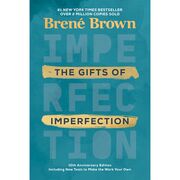
🖋️ Author & writing. Brown is a research professor at the University of Houston, where she holds the Huffington Foundation Endowed Chair.[7] Before this book she published related work on shame and Wholeheartedness, including The Gifts of Imperfection.[8] In Daring Greatly she adapts grounded-theory qualitative research into practical guidance on vulnerability and courage.[9] The title and central metaphor come from Roosevelt’s “man in the arena,” which Brown uses to argue for “showing up” despite uncertainty.[2] Reviewers note a blend of research synthesis and candid personal narrative in a direct, conversational voice.[3] Kirkus describes an evidence base of “more than a decade of research and hundreds of interviews” and defines vulnerability as “exposure, uncertainty, and emotional risk.”[1] The book’s arc moves from myths of vulnerability and “armoring up” to applications at work and school and a closing chapter on parenting.[3] Brown’s TED talks further popularized these themes with broad audiences.[10]
📈 Commercial reception. The publisher lists the book as a #1 New York Times bestseller and reports “more than 2 million copies sold” (catalog page accessed 21 October 2025).[2] Publishers Weekly reviewed the book on 23 July 2012.[3] Kirkus posted its review with a 13 September 2012 release date.[1]
👍 Praise. Kirkus called it “a straightforward approach to revamping one’s life from an expert on vulnerability.”[1] Publishers Weekly described it as a “roadmap for change” that “will draw readers in” while clarifying guilt versus shame.[3] In the peer-reviewed Journal of College and Character, Marc Cutright judged the book useful in college-student contexts.[11]
👎 Criticism. An academic review noted that Brown’s “homespun” anecdotal style may not suit all readers, even as it offers useful insights for practice.[12] A broader critique of “Tedcore” self-help argued that such books (including Brown’s) can package therapy language into feel-good but sometimes reductive claims.[13] A 2024 Literary Hub essay contended that Brown’s framing of vulnerability can presume individual choice and corporate privilege, limiting its relevance for the least powerful.[14]
🌍 Impact & adoption. Brown discussed the book’s ideas with Oprah Winfrey in 2013, bringing the themes to a mainstream television audience.[15] OWN has also promoted short Super Soul Sunday segments on Daring Greatly via its official YouTube channel.[16] The book appears in Penguin Random House’s higher-education catalog for course adoption, with instructor resources.[17] In higher-ed scholarship, a review in the Journal of College and Character suggested its applicability for college students.[11]
Related content & more
YouTube videos
CapSach articles

References
- ↑ 1.0 1.1 1.2 1.3 1.4 "DARING GREATLY". Kirkus Reviews. Kirkus Reviews. 13 July 2012. Retrieved 21 October 2025.
- ↑ 2.0 2.1 2.2 2.3 2.4 "Daring Greatly by Brené Brown". Penguin Random House. Penguin Random House. Retrieved 21 October 2025.
- ↑ 3.0 3.1 3.2 3.3 3.4 "Daring Greatly: How the Courage to Be Vulnerable Transforms the Way We Live, Love, Parent, and Lead". Publishers Weekly. Publishers Weekly. 23 July 2012. Retrieved 21 October 2025.
- ↑ "Daring greatly: how the courage to be vulnerable transforms the way we live, love, parent, and lead (1st ed.)". Colorado Mountain College Library Catalog. Marmot Library Network. Retrieved 21 October 2025.
- ↑ "Daring greatly (1st ed.)". Jackson Public Library Catalog. Jackson Public Library. Retrieved 21 October 2025.
- ↑ "Daring greatly (1st ed., print)". WorldCat. OCLC. Retrieved 21 October 2025.
- ↑ "Brené Brown: Graduate College of Social Work". University of Houston. University of Houston. Retrieved 21 October 2025.
- ↑ "Books & Audio – Brené Brown". brenebrown.com. Brené Brown. Retrieved 21 October 2025.
- ↑ "The Research". brenebrown.com. Brené Brown. Retrieved 21 October 2025.
- ↑ "Brené Brown: The power of vulnerability". TED. TED. Retrieved 21 October 2025.
- ↑ 11.0 11.1 Cutright, Marc (12 November 2014). "Daring Greatly: How the Courage to Be Vulnerable Transforms the Way We Live, Love, Parent, and Lead". Journal of College and Character. 15 (4): 273–276. doi:10.1515/jcc-2014-0032. Retrieved 21 October 2025.
- ↑ "Book review: Daring greatly (2016)". International Journal of Social Pedagogy. UCL Press. 2016. Retrieved 21 October 2025.
- ↑ Phillips-Horst, Steven (18 May 2022). "Tedcore: the self-help books that have changed the way we live, speak and think". The Guardian. Retrieved 21 October 2025.
- ↑ Zakaria, Rafia (21 February 2024). "Why Brené Brown's Gospel of Vulnerability Fails the World's Most Vulnerable". Literary Hub. Retrieved 21 October 2025.
- ↑ "The Wholehearted Life: Oprah Talks to Brené Brown". Oprah.com. Oprah Winfrey Network. 15 May 2013. Retrieved 21 October 2025.
- ↑ "Daring Greatly: Why Vulnerability Is Your Greatest Strength". YouTube. Oprah Winfrey Network (OWN). Retrieved 21 October 2025.
- ↑ "Daring Greatly (Higher Education)". Penguin Random House Higher Education. Penguin Random House. Retrieved 21 October 2025.