
Atomic Habits: Difference between revisions
No edit summary |
No edit summary |
||
| Line 24: | Line 24: | ||
}} |
}} |
||
'''''Atomic Habits''''' (2018) is a nonfiction book by James Clear that lays out a practical system for building good habits and breaking bad ones.<ref name="PRH2018" /> Clear organizes behavior change around the Four Laws—make it obvious, attractive, easy, and satisfying—built on a four-stage habit loop of cue, craving, response, and reward.<ref name="JCsum">{{cite web |title=Atomic Habits Summary |url=https://jamesclear.com/atomic-habits-summary |website=James Clear |publisher=James Clear |access-date=3 November 2025}}</ref> The hardcover arranges twenty concise chapters into six parts that move from fundamentals through the four laws to advanced tactics.<ref name="MarmotTOC" /> Reviewers have described it as a step-by-step manual for changing routines.<ref name="FT2018b">{{cite news |title=FT business books of the month: November edition |url=https://www.ft.com/content/dbf506bc-dd21-11e8-9f04-38d397e6661c |work=Financial Times |date=8 November 2018 |access-date=3 November 2025}}</ref> Coverage has also popularized tactics from the book, including the “two-minute rule” for starting habits with the smallest possible action.<ref name="BI2018">{{cite news |title=Make progress on a goal using the 2-minute rule |url=https://www.businessinsider.com/make-progress-on-goal-2-minute-rule-2018-12 |work=Business Insider |date=26 December 2018 |access-date=3 November 2025}}</ref> By 21 November 2024, the publisher reported more than 20 million copies sold, translations into 65 languages, and 260 weeks on the New York Times bestseller list; the current catalogue now notes over 25 million copies sold.<ref name="PRHGlobal2024">{{cite web |title=Avery celebrates 5 years of ATOMIC HABITS & an astounding 260 weeks on the NYT bestseller list |url=https://global.penguinrandomhouse.com/announcements/avery-celebrates-5-years-of-atomic-habits-an-astounding-260-weeks-on-the-nyt-bestseller-list/ |website=Penguin Random House Global |publisher=Penguin Random House |date=21 November 2024 |access-date=3 November 2025}}</ref><ref name="PRH2018" /> |
|||
''Atomic Habits is a nonfiction book by James Clear. The first U.S. edition was published by Avery on 16 October 2018 (ISBN 978-0-7352-1129-2); the hardcover is cataloged at ix, 306 pages.''<ref name="PRH2018">{{cite web |title=Atomic Habits by James Clear |url=https://www.penguinrandomhouse.com/books/543993/atomic-habits-by-james-clear/ |website=Penguin Random House |publisher=Penguin Random House |date=16 October 2018 |access-date=3 November 2025}}</ref><ref name="MarmotTOC">{{cite web |title=Atomic habits — contents & bibliographic record |url=https://steamboatlibrary.marmot.org/Record/.b58265466 |website=Steamboat Springs Community Library (Marmot Library Network) |access-date=3 November 2025}}</ref> |
|||
== Chapter summary == |
== Chapter summary == |
||
| Line 80: | Line 80: | ||
⚠️ '''20 – The Downside of Creating Good Habits.''' |
⚠️ '''20 – The Downside of Creating Good Habits.''' |
||
== Background & reception == |
|||
🖋️ '''Author & writing'''. James Clear is a writer and speaker who has published on habits, decision making, and continuous improvement since 2012; he also authors the widely read 3-2-1 newsletter.<ref name="JCAbout">{{cite web |title=About James Clear |url=https://jamesclear.com/about |website=James Clear |publisher=James Clear |access-date=3 November 2025}}</ref> In his year-end note, Clear said he spent “three years” writing and refining the book to make it practical and example-driven.<ref name="JCAnnual2018">{{cite web |title=My 2018 Annual Review |url=https://jamesclear.com/2018-annual-review |website=James Clear |publisher=James Clear |date=31 December 2018 |access-date=3 November 2025}}</ref> The argument rests on a four-step habit loop (cue, craving, response, reward) and the Four Laws of Behavior Change that invert for breaking bad habits.<ref name="JCsum" /> The volume uses short chapters and concrete heuristics—such as the well-known “two-minute rule”—to lower friction and encourage consistency.<ref name="BI2018" /> Its structure proceeds from fundamentals through the four laws to advanced tactics across six parts and twenty chapters.<ref name="MarmotTOC" /> Publisher copy notes that the book synthesizes ideas from biology, psychology, and neuroscience for a general audience.<ref name="PRH2018" /> |
|||
📈 '''Commercial reception'''. Penguin Random House reported that by 21 November 2024 the book had sold more than 20 million copies worldwide, been translated into 65 languages, and logged 260 weeks on the New York Times bestseller list; the publisher’s current catalogue page now says “over 25 million copies sold.”<ref name="PRHGlobal2024" /><ref name="PRH2018" /> In the UK, trade outlet The Bookseller noted that ''Atomic Habits'' had appeared on ''The Sunday Times'' bestseller list 134 times since 2020.<ref name="BooksellerST2024">{{cite news |title=The Sunday Times names Stephen Hawking’s A Brief History of Time its top-ranked book of last 50 years |url=https://www.thebookseller.com/news/the-sunday-times-names-stephen-hawkings-a-brief-history-of-time-its-top-ranked-book-of-last-50-years |work=The Bookseller |date=16 August 2024 |access-date=3 November 2025}}</ref> |
|||
👍 '''Praise'''. The ''Financial Times'' included the book in its November 2018 “Business books of the month,” calling it a “step-by-step manual for changing routines.”<ref name="FT2018b" /> ''Fast Company'' named it one of the seven best business books of 2018, highlighting its thesis that tiny changes compound into large transformations over time.<ref name="FC2018">{{cite news |title=These are the 7 best business books of 2018 |url=https://www.fastcompany.com/90279299/these-are-the-7-best-business-books-of-2018/ |work=Fast Company |date=20 December 2018 |access-date=3 November 2025}}</ref> ''Business Insider'' praised Clear’s practical, easy-to-apply tactics, such as the “two-minute rule,” in its coverage of how readers were using the book.<ref name="BI2018" /> |
|||
👎 '''Criticism'''. Writing in ''The Guardian'', Steven Phillips-Horst argued that ''Atomic Habits'' exemplifies a wave of “Tedcore” self-help that can rely on feel-good simplifications and vague research claims.<ref name="GuardianTedcore">{{cite news |title=Tedcore: the self-help books that have changed the way we live, speak and think |url=https://www.theguardian.com/books/2022/may/17/self-help-books-atlas-heart-atomic-habits-body-keeps-score |work=The Guardian |date=18 May 2022 |access-date=3 November 2025 |last=Phillips-Horst |first=Steven}}</ref> ''The Economist'' situated the book within a broader productivity genre that urges endless refinement of routines, a stance some critics say risks over-optimizing daily life.<ref name="Economist2024">{{cite news |title=Productivity gurus through time: a match-up |url=https://www.economist.com/business/2024/04/11/productivity-gurus-through-time-a-match-up |work=The Economist |date=11 April 2024 |access-date=3 November 2025}}</ref> Coverage in ''The Atlantic'' underscored the complexity of habit science and cautioned that real-world behavior change often resists simple formulas, a tension relevant to readers of Clear’s framework.<ref name="Atlantic2025">{{cite news |title=Invisible Habits Are Driving Your Life |url=https://www.theatlantic.com/health/archive/2025/01/habit-goal-psychology-resolution/681196/ |work=The Atlantic |date=2 January 2025 |access-date=3 November 2025}}</ref> |
|||
🌍 '''Impact & adoption'''. The Guardian’s lifestyle coverage has repeatedly referenced the book’s techniques—such as “habit stacking”—as practical tools for everyday change, reflecting mainstream adoption beyond business settings.<ref name="GuardianHalfArse">{{cite news |title=How to be a half-arse human: ‘You probably aren’t going to have clean knickers all the time’ |url=https://www.theguardian.com/lifeandstyle/2025/jan/09/how-to-be-a-half-arse-human-you-probably-arent-going-to-have-clean-knickers-all-the-time |work=The Guardian |date=9 January 2025 |access-date=3 November 2025}}</ref> Trade reporting also shows durable backlist momentum, with the title a frequent presence on UK bestseller charts years after publication.<ref name="BooksellerST2024" /> |
|||
== Related content & more == |
== Related content & more == |
||
| Line 88: | Line 100: | ||
=== CapSach articles === |
=== CapSach articles === |
||
{{ |
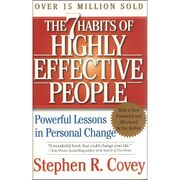
{{The 7 Habits of Highly Effective People/thumbnail}} |
||
{{ |
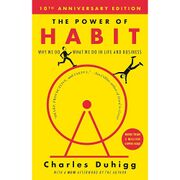
{{The Power of Habit/thumbnail}} |
||
{{ |
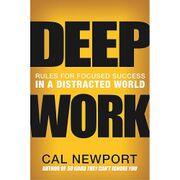
{{Deep Work/thumbnail}} |
||
{{ |
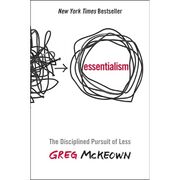
{{Essentialism/thumbnail}} |
||
{{ |
{{Grit/thumbnail}} |
||
{{CS/Self-improvement book summaries/thumbnail}} |
{{CS/Self-improvement book summaries/thumbnail}} |
||
{{Insert before References}} |
{{Insert before References}} |
||
Revision as of 14:44, 3 November 2025
"Goals are good for setting a direction, but systems are best for making progress."
— James Clear, Atomic Habits (2018)
Introduction
| Atomic Habits | |
|---|---|
 | |
| Full title | Atomic Habits: An Easy & Proven Way to Build Good Habits & Break Bad Ones |
| Author | James Clear |
| Language | English |
| Subject | Habit formation; Behavior change; Personal development |
| Genre | Nonfiction; Self-help |
| Publisher | Avery |
Publication date | 16 October 2018 |
| Publication place | United States |
| Media type | Print (hardcover, paperback); e-book; audiobook |
| Pages | 306 |
| ISBN | 978-0-7352-1129-2 |
| Goodreads rating | 4.3/5 (as of 3 November 2025) |
| Website | jamesclear.com |
Atomic Habits (2018) is a nonfiction book by James Clear that lays out a practical system for building good habits and breaking bad ones.[1] Clear organizes behavior change around the Four Laws—make it obvious, attractive, easy, and satisfying—built on a four-stage habit loop of cue, craving, response, and reward.[2] The hardcover arranges twenty concise chapters into six parts that move from fundamentals through the four laws to advanced tactics.[3] Reviewers have described it as a step-by-step manual for changing routines.[4] Coverage has also popularized tactics from the book, including the “two-minute rule” for starting habits with the smallest possible action.[5] By 21 November 2024, the publisher reported more than 20 million copies sold, translations into 65 languages, and 260 weeks on the New York Times bestseller list; the current catalogue now notes over 25 million copies sold.[6][1]
Chapter summary
This outline follows the Avery hardcover edition (2018; ISBN 978-0-7352-1129-2).[3]
I – The Fundamentals: Why Tiny Changes Make a Big Difference
⚛️ 1 – The Surprising Power of Atomic Habits.
🪞 2 – How Your Habits Shape Your Identity (and Vice Versa).
🧩 3 – How to Build Better Habits in 4 Simple Steps.
II – The 1st Law: Make It Obvious
👁️ 4 – The Man Who Didn't Look Right.
🏁 5 – The Best Way to Start a New Habit.
🏠 6 – Motivation Is Overrated: Environment Often Matters More.
🔒 7 – The Secret to Self-Control.
III – The 2nd Law: Make It Attractive
🧲 8 – How to Make a Habit Irresistible.
👥 9 – The Role of Family and Friends in Shaping Your Habits.
🔧 10 – How to Find and Fix the Causes of Your Bad Habits.
IV – The 3rd Law: Make It Easy
🐢 11 – Walk Slowly, but Never Backward.
🪶 12 – The Law of Least Effort.
⏱️ 13 – How to Stop Procrastinating by Using the Two-Minute Rule.
🔄 14 – How to Make Good Habits Inevitable and Bad Habits Impossible.
V – The 4th Law: Make It Satisfying
🧭 15 – The Cardinal Rule of Behavior Change.
📅 16 – How to Stick with Good Habits Every Day.
🤝 17 – How an Accountability Partner Can Change Everything.
VI – Advanced Tactics: How to Go from Being Merely Good to Being Truly Great
🧬 18 – The Truth About Talent (When Genes Matter and When They Don't).
🎯 19 – The Goldilocks Rule: How to Stay Motivated in Life and Work.
⚠️ 20 – The Downside of Creating Good Habits.
Background & reception
🖋️ Author & writing. James Clear is a writer and speaker who has published on habits, decision making, and continuous improvement since 2012; he also authors the widely read 3-2-1 newsletter.[7] In his year-end note, Clear said he spent “three years” writing and refining the book to make it practical and example-driven.[8] The argument rests on a four-step habit loop (cue, craving, response, reward) and the Four Laws of Behavior Change that invert for breaking bad habits.[2] The volume uses short chapters and concrete heuristics—such as the well-known “two-minute rule”—to lower friction and encourage consistency.[5] Its structure proceeds from fundamentals through the four laws to advanced tactics across six parts and twenty chapters.[3] Publisher copy notes that the book synthesizes ideas from biology, psychology, and neuroscience for a general audience.[1]
📈 Commercial reception. Penguin Random House reported that by 21 November 2024 the book had sold more than 20 million copies worldwide, been translated into 65 languages, and logged 260 weeks on the New York Times bestseller list; the publisher’s current catalogue page now says “over 25 million copies sold.”[6][1] In the UK, trade outlet The Bookseller noted that Atomic Habits had appeared on The Sunday Times bestseller list 134 times since 2020.[9]
👍 Praise. The Financial Times included the book in its November 2018 “Business books of the month,” calling it a “step-by-step manual for changing routines.”[4] Fast Company named it one of the seven best business books of 2018, highlighting its thesis that tiny changes compound into large transformations over time.[10] Business Insider praised Clear’s practical, easy-to-apply tactics, such as the “two-minute rule,” in its coverage of how readers were using the book.[5]
👎 Criticism. Writing in The Guardian, Steven Phillips-Horst argued that Atomic Habits exemplifies a wave of “Tedcore” self-help that can rely on feel-good simplifications and vague research claims.[11] The Economist situated the book within a broader productivity genre that urges endless refinement of routines, a stance some critics say risks over-optimizing daily life.[12] Coverage in The Atlantic underscored the complexity of habit science and cautioned that real-world behavior change often resists simple formulas, a tension relevant to readers of Clear’s framework.[13]
🌍 Impact & adoption. The Guardian’s lifestyle coverage has repeatedly referenced the book’s techniques—such as “habit stacking”—as practical tools for everyday change, reflecting mainstream adoption beyond business settings.[14] Trade reporting also shows durable backlist momentum, with the title a frequent presence on UK bestseller charts years after publication.[9]
Related content & more
YouTube videos
Provided ID could not be validated. James Clear — How to Get 1% Better Every Day (58 min) Provided ID could not be validated. Atomic Habits summary (animated) — Productivity Game (19 min)
CapSach articles
References
- ↑ 1.0 1.1 1.2 1.3 Cite error: Invalid
<ref>tag; no text was provided for refs namedPRH2018 - ↑ 2.0 2.1 "Atomic Habits Summary". James Clear. James Clear. Retrieved 3 November 2025.
- ↑ 3.0 3.1 3.2 Cite error: Invalid
<ref>tag; no text was provided for refs namedMarmotTOC - ↑ 4.0 4.1 "FT business books of the month: November edition". Financial Times. 8 November 2018. Retrieved 3 November 2025.
- ↑ 5.0 5.1 5.2 "Make progress on a goal using the 2-minute rule". Business Insider. 26 December 2018. Retrieved 3 November 2025.
- ↑ 6.0 6.1 "Avery celebrates 5 years of ATOMIC HABITS & an astounding 260 weeks on the NYT bestseller list". Penguin Random House Global. Penguin Random House. 21 November 2024. Retrieved 3 November 2025.
- ↑ "About James Clear". James Clear. James Clear. Retrieved 3 November 2025.
- ↑ "My 2018 Annual Review". James Clear. James Clear. 31 December 2018. Retrieved 3 November 2025.
- ↑ 9.0 9.1 "The Sunday Times names Stephen Hawking's A Brief History of Time its top-ranked book of last 50 years". The Bookseller. 16 August 2024. Retrieved 3 November 2025.
- ↑ "These are the 7 best business books of 2018". Fast Company. 20 December 2018. Retrieved 3 November 2025.
- ↑ Phillips-Horst, Steven (18 May 2022). "Tedcore: the self-help books that have changed the way we live, speak and think". The Guardian. Retrieved 3 November 2025.
- ↑ "Productivity gurus through time: a match-up". The Economist. 11 April 2024. Retrieved 3 November 2025.
- ↑ "Invisible Habits Are Driving Your Life". The Atlantic. 2 January 2025. Retrieved 3 November 2025.
- ↑ "How to be a half-arse human: 'You probably aren't going to have clean knickers all the time'". The Guardian. 9 January 2025. Retrieved 3 November 2025.