
On Writing: Difference between revisions
No edit summary |
No edit summary |
||
| Line 52: | Line 52: | ||
🚪 '''9 – And Furthermore, Part I: Door Shut, Door Open.''' I put a raw example on the bench: “The Hotel Story,” a first draft of what became “1408,” with Mike Enslin stepping through the revolving door of the Hotel Dolphin on Sixty‑first Street near Fifth Avenue while “Night and Day” floats down from the mezzanine bar. The copy is undressed—names ungainly (the manager is Ostermeyer), stage directions fussy, back story clotted—and I present it exactly as I would with the door shut. Then I show the second draft with the door open: Ostermeyer becomes Olin via global replace; the pace tightens; a “lucky Hawaiian shirt” is moved upfront to obey the theater rule that props introduced early must pay off later; the needless is cut with Strunk in mind. I key the changes, explaining what went and why, and restate the rule that has guided my revisions since Lisbon High: 2nd Draft = 1st Draft − 10%. Along the way I note where the title “1408” comes from (a thirteenth‑floor story whose numbers add to thirteen) and point to the story’s later audio appearance in Blood and Smoke. The demonstration connects drafting to diagnostics so the invisible work of deletion and emphasis becomes visible and repeatable. The mechanism is purposeful subtraction: open the door, test the prose on a reader’s ear, and trim until story outruns explanation. ''This is about engine maintenance, not joyriding.'' |
🚪 '''9 – And Furthermore, Part I: Door Shut, Door Open.''' I put a raw example on the bench: “The Hotel Story,” a first draft of what became “1408,” with Mike Enslin stepping through the revolving door of the Hotel Dolphin on Sixty‑first Street near Fifth Avenue while “Night and Day” floats down from the mezzanine bar. The copy is undressed—names ungainly (the manager is Ostermeyer), stage directions fussy, back story clotted—and I present it exactly as I would with the door shut. Then I show the second draft with the door open: Ostermeyer becomes Olin via global replace; the pace tightens; a “lucky Hawaiian shirt” is moved upfront to obey the theater rule that props introduced early must pay off later; the needless is cut with Strunk in mind. I key the changes, explaining what went and why, and restate the rule that has guided my revisions since Lisbon High: 2nd Draft = 1st Draft − 10%. Along the way I note where the title “1408” comes from (a thirteenth‑floor story whose numbers add to thirteen) and point to the story’s later audio appearance in Blood and Smoke. The demonstration connects drafting to diagnostics so the invisible work of deletion and emphasis becomes visible and repeatable. The mechanism is purposeful subtraction: open the door, test the prose on a reader’s ear, and trim until story outruns explanation. ''This is about engine maintenance, not joyriding.'' |
||
📚 '''10 – And Furthermore, Part II: A Booklist.''' After talks about writing, the same question always comes in the Q&A—What do you read?—so I answer with a working list built from the three or four years when I was writing The Girl Who Loved Tom Gordon, Hearts in Atlantis, On Writing, and the then‑unpublished From a Buick Eight. I name names and titles, not commandments: Peter Abrahams’s A Perfect Crime and Lights Out, James Agee’s A Death in the Family, Pat Barker’s Regeneration trilogy, Bill Bryson’s A Walk in the Woods, Michael Connelly’s The Poet, Joseph Conrad’s Heart of Darkness, Raymond Carver’s Where I’m Calling From, T. Coraghessan Boyle’s The Tortilla Curtain, and Paul Bowles’s The Sheltering Sky, among many others. The list ranges across crime, literary, historical, and travel writing because a writer’s ear needs variety more than purity. I note that these books affected the pages I was making at the time, sometimes in tone, sometimes in pace, sometimes only in the nudge to try a different sentence shape. There’s no syllabus here, just a map of reading that proved useful, surprising, and fun. I also stress that you could do worse than start with any of them, and that entertainment is a valid outcome all by itself. The practical point is steady intake: broad, hungry reading sandpapers clichés and furnishes options when your own draft goes thin. The mechanism is imitation turned into craft—exposure to many voices lets you refine your own without copying anyone’s. ''As you scan this list, please remember that I’m not Oprah and this isn’t my book club.'' |
|||
📚 '''10 – And Furthermore, Part II: A Booklist.''' |
|||
➕ '''11 – Further to Furthermore, Part III.''' I extend the booklist with more recent finds, an addendum meant for the twentieth‑anniversary edition rather than a museum case. The same ground rules apply: no canon‑building, no homework badges—just books that worked for me and might sharpen your tools. I group nothing, grade nothing; I simply stack authors and titles that kept me honest at the desk and awake past midnight in a chair. The additions range across new novels and older paperbacks I missed the first time, story collections that tune the ear, and nonfiction that refreshes the eye for detail. The throughline is usefulness: pace you can steal, structure you can test, sentences that remind you what clean prose feels like. I keep the notes short so you can find, borrow, and read without preambles getting in the way. The list’s value is partly its messiness; a working writer’s reading is never tidy or finished. The idea is to keep replenishing the well so drafting doesn’t run on fumes. The mechanism is deliberate variety—regular doses of different styles and subjects to widen range and keep the work from hardening into habit. |
|||
➕ '''11 – Further to Furthermore, Part III.''' |
|||
🔭 '''12 – Even Further to Furthermore, Part IV.''' Because reading never ends, I push the recommendations a step farther, adding still more titles that earned a spot on my nightstand and in my carry‑on. This isn’t a sequel so much as a standing invitation: keep a book with you, keep sampling voices, and keep noticing what each writer does with scene, time, and sound. I call out works that energize revision as much as drafting—novels with clean cuts, essays with muscular transitions, stories whose openings crack like a starter’s pistol. Some are brand‑new; some are decades old; all repay attention at the sentence level. I suggest treating the list as a jumping‑off point rather than a ladder, following your curiosity into the stacks and letting one title lead to the next. A reader’s momentum becomes a writer’s momentum; the pages you turn show up, quietly, in the pages you make. The aim is stamina and surprise: to stay teachable and keep your kit from going stale. The mechanism is continuous input—small daily reading that keeps the inner ear tuned so the work on the page can stay alive. |
|||
🔭 '''12 – Even Further to Furthermore, Part IV.''' |
|||
🎧 '''13 – Owen King: Recording Audiobooks for My Dad, Stephen King.''' |
🎧 '''13 – Owen King: Recording Audiobooks for My Dad, Stephen King.''' |
||
Revision as of 14:22, 8 November 2025
"The scariest moment is always just before you start."
— Stephen King, On Writing (2000)
Introduction
| On Writing | |
|---|---|
 | |
| Full title | On Writing: A Memoir of the Craft |
| Author | Stephen King |
| Language | English |
| Subject | Writing; Authorship; Memoir |
| Genre | Nonfiction; Memoir; Writing guide |
| Publisher | Scribner |
Publication date | 3 October 2000 |
| Publication place | United States |
| Media type | Print (hardcover, paperback); e-book; audiobook |
| Pages | 288 |
| ISBN | 978-0-684-85352-9 |
| Website | simonandschuster.com |
📘 On Writing is Stephen King’s hybrid memoir-and-craft guide, pairing scenes from his life with plain-spoken lessons on how writers work and improve.[1] First published by Scribner in 2000, the book has stayed in print through a 10th-anniversary update (2010) and a 20th-anniversary edition that adds new material from Joe Hill and Owen King.[2][3][1] Its architecture moves from “C.V.” and “What Writing Is” to “Toolbox,” “On Writing,” and “On Living: A Postscript,” blending memoir, mechanics, and method.[4] King writes in an unfussy, tough-love register—“read a lot, write a lot,” avoid fussy diction and adverbs, draft “with the door closed” and revise “with the door open”—so the book reads like a lived-in workshop.[5] It won the Bram Stoker Award for Nonfiction and the Locus Award for Best Non-fiction for works published in 2000.[6][7] In 2011, TIME placed it on its “All-TIME 100 Nonfiction” list.[8]
Chapter summary
This outline follows the Scribner 20th-anniversary trade paperback (2020; ISBN 978-1-9821-5937-5).[1][4]
📖 1 – First Foreword. In the early 1990s I joined the Rock Bottom Remainders, a writers’ rock band dreamed up by San Francisco publicist-musician Kathi Kamen Goldmark, with Dave Barry on lead guitar, Ridley Pearson on bass, Barbara Kingsolver on keyboards, Robert Fulghum on mandolin, and Amy Tan among the singers. What was meant to be a one-off at the American Booksellers Convention turned into occasional tours, complete with ringers on sax and drums and Al Kooper as an early musical guru. Before a Miami Beach gig, over Chinese food, I asked Amy what question she never got in the reader Q&As; after thinking, she said that no one ever asked about the language. I had been toying with a small book on writing for a year or more but distrusted my motives and didn’t want to add to the gas-bag shelf. Her answer reframed the project around the day job—how stories get told on paper and how prose choices carry that work. The chapter uses a band’s greenroom candor and the specificity of names, places, and jobs to set a practical, nuts-and-bolts tone for the book that follows. It establishes the main theme: treat writing as craft grounded in language, and build a book that shows where that craft comes from and how it works. This book is dedicated to Amy Tan, who told me in a very simple and direct way that it was okay to write it.
🧭 2 – Second Foreword. I explain that this will be a short book because most writing manuals are padded, and fiction writers—myself included—often don’t fully know why their work succeeds or fails. As a counterexample I point to William Strunk Jr. and E. B. White’s The Elements of Style, a slim eighty-five-page volume notable for its lack of filler. I recommend that every aspiring writer read it, not as scripture but as a model of clear, economical instruction that respects the reader’s time. The tone here is blunt and workmanlike, promising a guide that favors directness over mystique and rules of thumb over academic fog. The core idea is economy: cut what doesn’t serve meaning, and let structure and word choice carry the load. The mechanism is disciplined concision—principles applied sentence by sentence so that guidance remains useful at the desk. Rule 17 in the chapter titled Principles of Composition is “Omit needless words.” I will try to do that here.
🗣️ 3 – Third Foreword. I set one more ground rule: the editor is always right, even though no writer accepts every note, because all of us fall short of editorial perfection. To make that concrete, I credit Chuck Verrill—who has edited many of my novels—with shaping this book as well. The foreword frames editing not as a punishment but as collaboration that turns human draft into readable prose. It reminds working writers that a second intelligence can see audience needs and tonal slips the originator misses. The core idea is humility: solitary drafting needs an external check to reach its best form. The mechanism is iterative revision with a trusted editor, a habit that aligns with the book’s emphasis on practice over pose. Put another way, to write is human, to edit is divine.
📜 4 – C.V.. Mary Karr’s The Liars’ Club showed me what total recall on the page looks like; I don’t have that, so I offer snapshots. I was raised by my mother, Nellie Ruth Pillsbury King, after my father ran out when I was two and my brother David was four, and our moves made childhood herky‑jerky. The earliest fixed scene is in Aunt Ethelyn and Uncle Oren’s garage in Durham, Maine: two and a half or three, I lug a cement cinderblock like the Ringling Brothers Strongboy, take a wasp sting to the ear, and mash all five toes when the block drops. In Wisconsin I remember a teenage babysitter, Eula—maybe Beulah—big as a house and laughing with a thunderclap tucked inside it. At six I endured repeated eardrum lancings, the alcohol smell sharp and the needle long. Caught copying a Combat Casey comic into a school tablet, I was told to write one of my own, and I did—four pencil‑printed pages about four magic animals led by a white bunny named Mr. Rabbit Trick. The aim here is narrow: not a full autobiography, just how a writer was formed by ordinary shocks, voices, and work. Memory is the method; fix the small, named details and let them stand for the long road from kid to working storyteller. There are no lines—only snapshots, most out of focus.
🧠 5 – What Writing Is. Telepathy is the answer, proved in real time: on a snowy morning in December 1997 I sit at my desk under the eave, you sit somewhere down‑timeline, and we still share the same picture. See a table with a red cloth; on it a cage the size of a small fish aquarium; inside, a white rabbit with a pink nose and pink‑rimmed eyes, contentedly working a carrot stub. On the rabbit’s back the number 8 is written in blue ink, and despite distance and time we both receive it. Scientists like J. B. Rhine tried to measure this, but the better proof is the image now in both our heads. Books make the magic portable; the strongest signals arrive in the private far‑seeing place each of us builds for sending and receiving. Precision matters: rough comparisons invite a reader to help, while prissy over‑measurement turns prose into an instruction manual. Because words carry images and intent mind to mind, the page deserves attention and respect, not posturing. The chapter’s core is a single circuit—writer encodes, reader decodes—and it works when we honor the exchange. The mechanism is deliberate word choice that supplies just enough data for the same picture to appear in two skulls. You must not come lightly to the blank page.
🧰 6 – Toolbox. A John Prine lyric about a carpenter leads to my own: my grandfather, Guy Pillsbury, kept up the Winslow Homer place at Prout’s Neck, and when he retired my Uncle Oren inherited his massive handmade toolbox. It was a big ’un—three tiers with cunning little drawers, dark wooden slats bound with brass, big lunchbox‑style latches, a silk lining printed with pinkish‑red cabbage roses, and grabhandles on the sides. As kids we could barely lift it; loaded, it weighed somewhere between eighty and a hundred‑twenty pounds, which is why Oren set it down with a sigh before simple jobs like replacing a torn screen. That day he used a single screwdriver to turn eight loophead screws, then explained why he hauled the beast anyway: you don’t know what else a job will ask until you’re there. From that lesson comes the writer’s kit—a portable box you build and carry so you can seize the right tool and begin at once. On the top shelf go the common implements: vocabulary you already own and grammar you keep clean; lower levels hold habits and choices—favoring active over passive verbs, using said for dialogue attribution, treating the paragraph as the basic unit, and minding adverbs, especially in tags. Another layer carries rhythm, white space, and other preferences you develop through use. The idea is practical: master fundamentals, then add selective tools so you don’t stall when a page asks for more. The mechanism is layered competence you can take into the field, a box strengthened by work until it’s part of how you move through a story. It’s best to have your tools with you.
✍️ 7 – On Writing. I anchor the workday at a desk shoved into a corner to keep my priorities straight, then build a routine out of pages and hours. Ten pages—about 2,000 words—a day keeps a first draft on a three‑month season, and beginners can aim for a thousand words with one day off, door shut and distractions killed. The first pass is the All‑Story Draft written fast; then the manuscript rests about six weeks before I read it with a pencil and a legal pad. When the door opens, I listen to my Ideal Reader—Tabitha in life—and a small circle of first readers, not a test audience. Rewriting follows the pink‑slip arithmetic I taped to my wall long ago: 2nd Draft = 1st Draft − 10%, cutting what slows pace or explains what the scene already shows. Habit makes the rest possible: read a lot, write a lot, keep the telephone unplugged, and meet the quota even when the words come hard. The method is deliberately plain—no talismans, just hours, drafts, and cuts that favor clarity over ornament. The chapter’s spine is disciplined routine that turns intention into pages; its mechanism is selective attention—close the world out to draft, then open the door to cut and calibrate with a real reader. Life isn’t a support-system for art.
❤️🩹 8 – On Living: A Postscript. On 19 June 1999 I was three‑quarters up a short blind hill on Route 5 between Bethel and Fryeburg when a light blue Dodge van drifted onto the shoulder—my shoulder—under the hands of Bryan Smith, forty‑two. A northbound driver had already watched that van weave across the road; Smith’s rottweiler, Bullet, had jumped toward an Igloo cooler of meat and his attention went with the dog. The windshield opened a long gash in my scalp inches from the driver’s‑side post; had I hit the post or the rocks beyond the shoulder, I likely would have died. Paramedics routed me by LifeFlight from Northern Cumberland Hospital to Central Maine Medical Center in Lewiston, where Dr. David Brown rebuilt my right leg in five marathon surgeries and clamped on an external fixator with eight Schanz pins that nurses swabbed three times a day. By the Fourth of July I could sit in a wheelchair on the loading dock to watch fireworks; I went home to Bangor on 9 July and back to the OR on 4 August. The hinge back into work came sooner: on 24 July—five weeks after the impact—I began to write again, still on a walker, still in pain, but moving sentences forward. The postscript tracks injury, rehab, and return to the desk to show what the act of making pages can do when life is broken. Its mechanism is modest persistence: a timetable, a room, and a daily reach for language that narrows pain and widens attention. Writing is not life, but I think that sometimes it can be a way back to life.
🚪 9 – And Furthermore, Part I: Door Shut, Door Open. I put a raw example on the bench: “The Hotel Story,” a first draft of what became “1408,” with Mike Enslin stepping through the revolving door of the Hotel Dolphin on Sixty‑first Street near Fifth Avenue while “Night and Day” floats down from the mezzanine bar. The copy is undressed—names ungainly (the manager is Ostermeyer), stage directions fussy, back story clotted—and I present it exactly as I would with the door shut. Then I show the second draft with the door open: Ostermeyer becomes Olin via global replace; the pace tightens; a “lucky Hawaiian shirt” is moved upfront to obey the theater rule that props introduced early must pay off later; the needless is cut with Strunk in mind. I key the changes, explaining what went and why, and restate the rule that has guided my revisions since Lisbon High: 2nd Draft = 1st Draft − 10%. Along the way I note where the title “1408” comes from (a thirteenth‑floor story whose numbers add to thirteen) and point to the story’s later audio appearance in Blood and Smoke. The demonstration connects drafting to diagnostics so the invisible work of deletion and emphasis becomes visible and repeatable. The mechanism is purposeful subtraction: open the door, test the prose on a reader’s ear, and trim until story outruns explanation. This is about engine maintenance, not joyriding.
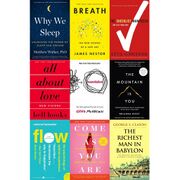
📚 10 – And Furthermore, Part II: A Booklist. After talks about writing, the same question always comes in the Q&A—What do you read?—so I answer with a working list built from the three or four years when I was writing The Girl Who Loved Tom Gordon, Hearts in Atlantis, On Writing, and the then‑unpublished From a Buick Eight. I name names and titles, not commandments: Peter Abrahams’s A Perfect Crime and Lights Out, James Agee’s A Death in the Family, Pat Barker’s Regeneration trilogy, Bill Bryson’s A Walk in the Woods, Michael Connelly’s The Poet, Joseph Conrad’s Heart of Darkness, Raymond Carver’s Where I’m Calling From, T. Coraghessan Boyle’s The Tortilla Curtain, and Paul Bowles’s The Sheltering Sky, among many others. The list ranges across crime, literary, historical, and travel writing because a writer’s ear needs variety more than purity. I note that these books affected the pages I was making at the time, sometimes in tone, sometimes in pace, sometimes only in the nudge to try a different sentence shape. There’s no syllabus here, just a map of reading that proved useful, surprising, and fun. I also stress that you could do worse than start with any of them, and that entertainment is a valid outcome all by itself. The practical point is steady intake: broad, hungry reading sandpapers clichés and furnishes options when your own draft goes thin. The mechanism is imitation turned into craft—exposure to many voices lets you refine your own without copying anyone’s. As you scan this list, please remember that I’m not Oprah and this isn’t my book club.
➕ 11 – Further to Furthermore, Part III. I extend the booklist with more recent finds, an addendum meant for the twentieth‑anniversary edition rather than a museum case. The same ground rules apply: no canon‑building, no homework badges—just books that worked for me and might sharpen your tools. I group nothing, grade nothing; I simply stack authors and titles that kept me honest at the desk and awake past midnight in a chair. The additions range across new novels and older paperbacks I missed the first time, story collections that tune the ear, and nonfiction that refreshes the eye for detail. The throughline is usefulness: pace you can steal, structure you can test, sentences that remind you what clean prose feels like. I keep the notes short so you can find, borrow, and read without preambles getting in the way. The list’s value is partly its messiness; a working writer’s reading is never tidy or finished. The idea is to keep replenishing the well so drafting doesn’t run on fumes. The mechanism is deliberate variety—regular doses of different styles and subjects to widen range and keep the work from hardening into habit.
🔭 12 – Even Further to Furthermore, Part IV. Because reading never ends, I push the recommendations a step farther, adding still more titles that earned a spot on my nightstand and in my carry‑on. This isn’t a sequel so much as a standing invitation: keep a book with you, keep sampling voices, and keep noticing what each writer does with scene, time, and sound. I call out works that energize revision as much as drafting—novels with clean cuts, essays with muscular transitions, stories whose openings crack like a starter’s pistol. Some are brand‑new; some are decades old; all repay attention at the sentence level. I suggest treating the list as a jumping‑off point rather than a ladder, following your curiosity into the stacks and letting one title lead to the next. A reader’s momentum becomes a writer’s momentum; the pages you turn show up, quietly, in the pages you make. The aim is stamina and surprise: to stay teachable and keep your kit from going stale. The mechanism is continuous input—small daily reading that keeps the inner ear tuned so the work on the page can stay alive.
🎧 13 – Owen King: Recording Audiobooks for My Dad, Stephen King.
💬 14 – Joe Hill: A Conversation with My Dad.
Background & reception
🖋️ Author & writing. King positioned the book as both a selective “C.V.” and a practical “textbook” for writers, released in 2000 by Scribner and available in hardcover, paperback, e-book, and audiobook.[2] The project crystallized around a turning point: after he was struck by a van in June 1999, he describes returning to the page—slowly at first—as part of his recovery.[5] The structure readers encounter runs from “C.V.” and “What Writing Is” through “Toolbox” and “On Writing,” then closes with “On Living: A Postscript.”[4] The voice is colloquial and directive—he urges daily practice (often about 2,000 words), warns that “the adverb is not your friend,” and advises drafting behind a closed door before revising for readers.[5] A 10th-anniversary edition (2010) updated the reading list, and a 20th-anniversary edition (2020) added new material and pieces by Joe Hill and Owen King.[3][1] First-edition bibliographic details for the 2000 Scribner hardback—288 pages; ISBN 978-0-684-85352-9—are confirmed by major library records.[9][10] The original audiobook appeared in 2000, unabridged and read by King.[11]
📈 Commercial reception. Upon publication, Publishers Weekly reported a 500,000-copy first printing in October 2000.[12] The publisher now bills the title as a “million-copy bestseller,” and continues to promote the 20th-anniversary edition and a refreshed audio read by King with Joe Hill and Owen King.[1] The work has remained available across formats since 2000.[2]
👍 Praise. The Washington Post called the book an enjoyable blend of autobiography and instruction, noting how King uses personal memories to illuminate craft.[13] Kirkus Reviews singled out the closing account of the 1999 accident as “tightly controlled” and “as good and as true as anything King has written.”[14] Publishers Weekly highlighted the book’s “valuable advice” for novice writers and its candid, authoritative voice.[12]
👎 Criticism. In The Guardian, Jay Parini argued that King has “nothing much to say about writing that isn’t obvious,” finding the craft dicta less compelling than the life story.[5] Publishers Weekly observed that the book’s three main parts “don’t hang together much better than those of the Frankenstein monster.”[12] The Washington Post noted that some readers might bristle at King’s just-folks persona even while finding the mix enjoyable.[13]
🌍 Impact & adoption. TIME placed On Writing on its 2011 “All-TIME 100 Nonfiction” list, cementing its status beyond genre and how-to circles.[8] In higher education, it appears on creative-writing syllabi—for example, Arizona State University’s ENGLISH 394 (Spring 2023) lists On Writing as a required text.[15] U.S. public institutions also recommend it: the Library of Congress’s National Library Service includes On Writing on its curated “Writing Books” list (catalogued as a 2000 bestseller).[16]
Related content & more
YouTube videos
CapSach articles
References
- ↑ 1.0 1.1 1.2 1.3 1.4 "On Writing". Simon & Schuster. Scribner. Retrieved 8 November 2025.
- ↑ 2.0 2.1 2.2 "On Writing: A Memoir of the Craft". StephenKing.com. StephenKing.com. Retrieved 8 November 2025.
- ↑ 3.0 3.1 "On writing : a memoir of the craft (10th anniversary ed.)". CMC Library Catalog. Colorado Mountain College. Retrieved 8 November 2025.
- ↑ 4.0 4.1 4.2 "On writing : a memoir of the craft (record 505 contents)". CMC Library Catalog. Colorado Mountain College. Retrieved 8 November 2025.
- ↑ 5.0 5.1 5.2 5.3 Parini, Jay (7 October 2000). "King's English". The Guardian. Retrieved 8 November 2025.
- ↑ "2000 Bram Stoker Award Winners & Nominees". The Bram Stoker Awards. Horror Writers Association. Retrieved 8 November 2025.
- ↑ "Locus Awards 2001". Science Fiction Awards Database. 12 June 2020. Retrieved 8 November 2025.
- ↑ 8.0 8.1 Cruz, Gilbert (15 August 2011). "'On Writing' by Stephen King". Time. Retrieved 8 November 2025.
- ↑ "On writing : a memoir of the craft / by Stephen King". Catalogue. National Library of Australia. Retrieved 8 November 2025.
- ↑ "On writing : a memoir of the craft (2000)". CMC Library Catalog. Colorado Mountain College. Retrieved 8 November 2025.
- ↑ "On writing : a memoir of the craft (audiobook)". WorldCat. OCLC. Retrieved 8 November 2025.
- ↑ 12.0 12.1 12.2 "On Writing: A Memoir of the Craft". Publishers Weekly. Retrieved 8 November 2025.
- ↑ 13.0 13.1 King, Nina (23 September 2000). "Scare Tactics". The Washington Post. Retrieved 8 November 2025.
- ↑ "On Writing". Kirkus Reviews. 3 October 2000. Retrieved 8 November 2025.
- ↑ "ENGLISH 394: The Art of Popular Literature — Stephen King (sample syllabus)". Arizona State University. Retrieved 8 November 2025.
- ↑ "Writing Books". Library of Congress National Library Service. Retrieved 8 November 2025.
<ref> tag with name "OCLC2000" defined in <references> is not used in prior text.