
Awaken the Giant Within: Difference between revisions
No edit summary |
No edit summary |
||
| Line 79: | Line 79: | ||
💰 '''22 – Day Four—Financial Destiny: Small Steps to a Small (or Large) Fortune.''' After noting that many Americans reach age sixty‑five unable to self‑support, Robbins diagnoses three traps: mixed associations about money, the belief that finance is too complex to learn, and a scarcity mindset. Economist Paul Zane Pilzer’s “Unlimited Wealth” argument illustrates how technology expands resources: computer‑controlled fuel injectors doubled effective gasoline supply; Kodak’s shift away from silver undercut the Hunt brothers’ attempt to corner that market. Robbins applies NAC to money so the brain links pleasure to earning, saving, and investing, not just spending. He then outlines fundamentals: raise your value to earn more; spend less than you earn and protect the difference; multiply capital through intelligent vehicles; maximize and distribute value to others; and keep educating yourself so opportunity recognition compounds. The unifying theme is contribution—those who create and deliver more value enjoy more options, autonomy, and impact. ''All wealth begins in the mind!'' |
💰 '''22 – Day Four—Financial Destiny: Small Steps to a Small (or Large) Fortune.''' After noting that many Americans reach age sixty‑five unable to self‑support, Robbins diagnoses three traps: mixed associations about money, the belief that finance is too complex to learn, and a scarcity mindset. Economist Paul Zane Pilzer’s “Unlimited Wealth” argument illustrates how technology expands resources: computer‑controlled fuel injectors doubled effective gasoline supply; Kodak’s shift away from silver undercut the Hunt brothers’ attempt to corner that market. Robbins applies NAC to money so the brain links pleasure to earning, saving, and investing, not just spending. He then outlines fundamentals: raise your value to earn more; spend less than you earn and protect the difference; multiply capital through intelligent vehicles; maximize and distribute value to others; and keep educating yourself so opportunity recognition compounds. The unifying theme is contribution—those who create and deliver more value enjoy more options, autonomy, and impact. ''All wealth begins in the mind!'' |
||
📜 '''23 – Day Five—Be Impeccable: Your Code of Conduct.''' At twenty‑seven, Benjamin Franklin designed a monthly chart of twelve virtues—temperance, order, industry, and more—adding “humility” when a friend teased him, then tracked each day with black dots to mark slips and make character measurable. Reading this in a drab Milwaukee hotel room between media appearances, I listed the emotional states I would live daily—friendly, loving, powerful, playful, generous—and treated them as non‑negotiable standards. Hours later at a mall book signing that no one knew about, I created a crowd by “discovering” a remarkable book—''Unlimited Power''—and raving about it until passersby gathered, then revealed I was the author and signed copies. That moment proved that a person can choose state and conduct regardless of events. I fold in models to copy: the Optimists’ Club Creed and John Wooden’s seven‑point creed, both practical codes for daily life. The assignment is explicit: write your own code, define observable rules for each state, and carry it where you’ll see it. The practice builds pride because behavior finally matches values in real time. The deeper lesson is to move from vague ideals to a visible, trackable standard so integrity does not depend on circumstances. Mechanistically, a code converts values into rules and cues that shape state and action, so consistency becomes easier than drift. ''Go put your creed into your deed.'' |
|||
📜 '''23 – Day Five—Be Impeccable: Your Code of Conduct.''' |
|||
⏰ '''24 – Day Six—Master Your Time and Your Life.''' A typical day shows the trap: you clear a bursting to‑do list, answer every ringing phone, and still feel hollow because urgent tasks crowded out anything important. I teach three distinctions with drills. First, shift time frames—jump from a stressful present to a vivid future completion or a rich past memory to change state now. Second, distort time on purpose: pair long tasks with another focus (headphones on a run, calls on a StairMaster) so an hour feels like minutes. Third, prioritize by importance over urgency and model others to “save yourself years,” replacing trial‑and‑error with borrowed experience. A short “today’s assignment” cements the habit: practice frame shifts, deliberate time distortion, and an importance‑first list. You end the day satisfied because you did what matters, not just what yelled loudest. The chapter’s message is simple: time is a feeling you can direct, not a tyrant you must obey. Mechanistically, attention and measurement drive the felt speed of time, so reframing and priority rules reshape emotion and choices hour by hour. ''“Killing time” is not murder; it’s suicide.'' |
|||
⏰ '''24 – Day Six—Master Your Time and Your Life.''' |
|||
🛌 '''25 – Day Seven—Rest and Play: Even God Took One Day Off!.''' After six days of building momentum, this day is for balance by design: plan something fun or do it on impulse, be outrageous, and step outside your routine long enough to feel like a kid again. A brief assignment asks you to schedule joy—movie, picnic, dance lesson, surf session—or surprise yourself and go now. I remind you that nerve energy is finite; recovery is fuel, not a perk, and playful rituals renew drive faster than willpower ever can. A single proverb anchors the spirit of the day and gives permission to drop the mask. You leave with one behavior to keep: regular “fun appointments” that are as real as business meetings. The point is to protect the source of performance—aliveness—so the other six days stay sustainable. Mechanistically, deliberate recovery resets state and widens perception, making creative options visible again and compounding progress across weeks and months. ''The great man is he that does not lose his child’s‑heart.'' |
|||
🛌 '''25 – Day Seven—Rest and Play: Even God Took One Day Off!.''' |
|||
=== IV – A Lesson in Destiny === |
=== IV – A Lesson in Destiny === |
||
🦸 '''26 – The Ultimate Challenge: What One Person Can Do.''' With $800 and a camcorder, Sam LaBudde posed as crew in Ensenada, Mexico, boarded the ''Maria Luisa'', and filmed five hours of dolphins dying in purse‑seine nets; his eleven‑minute edit sparked a consumer boycott that, by 1991, pushed StarKist—and hours later Chicken of the Sea and Bumble Bee—to adopt “dolphin‑safe” policies. From there the chapter widens: homelessness, illiteracy, gangs, prisons, and the environment are framed as behavior problems solvable by new rules, incentives, and identities. I argue against learned helplessness and for CANI—constant and never‑ending improvement—as a civic habit. Concrete levers appear: change the pain and pleasure of choices, revise group rules that reward crime, teach consequences early, and give young people contribution projects that recode identity. A closing invitation lists service ideas—from clean‑ups to tutoring—to make contribution a monthly ritual. The through line is that small, public acts create processional effects far beyond their size. The lesson ties back to the book’s theme: decisions, stacked daily, change personal destiny and public life alike. Mechanistically, aligned incentives and identity‑based commitments scale individual action into social change through imitation and feedback loops. ''A mighty flame followeth a tiny spark.'' |
|||
🦸 '''26 – The Ultimate Challenge: What One Person Can Do.''' |
|||
== Background & reception == |
== Background & reception == |
||
Revision as of 23:33, 4 November 2025
"It's not the events of our lives that shape us, but our beliefs as to what those events mean."
— Anthony Robbins, Awaken the Giant Within (1991)
Introduction
| Awaken the Giant Within | |
|---|---|
 | |
| Full title | Awaken the Giant Within: How to Take Immediate Control of Your Mental, Emotional, Physical and Financial Destiny! |
| Author | Anthony Robbins |
| Language | English |
| Subject | Personal development; Decision making; Self-mastery; Success |
| Genre | Nonfiction; Self-help |
| Publisher | Simon & Schuster |
Publication date | 1 November 1992 |
| Publication place | United States |
| Media type | Print (hardcover, paperback); e-book; audiobook |
| Pages | 544 |
| ISBN | 978-0-671-79154-4 |
| Website | simonandschuster.com |
📘 Awaken the Giant Within is a self-help book by Anthony Robbins that lays out a program for mastering emotions, the body, relationships, and finances; it first appeared in 1991, with a Simon & Schuster trade paperback (544 pages; ISBN 978-0-671-79154-4) released on 1 November 1992. [1] Drawing on his “Date with Destiny” seminars, Robbins codifies techniques such as “Neuro-Associative Conditioning” (NAC) for rapid behavior change. [2] It is organized in four parts and 26 chapters and culminates in a “Ten-Day Mental Challenge,” written in an imperative, step-by-step register aimed at immediate application. [2][1] The audio abridgment was later listed in Publishers Weekly’s “Audio’s Best of the Best” in the 450,001–500,000 band. [3] By 2016, Investor’s Business Daily reported sales of about two million copies, and the book continued to appear on general-audience recommendation lists, including The Independent (2017) and Business Insider (2016). [4][5][6]
Chapter summary
This outline follows the Simon & Schuster trade paperback edition (1992), ISBN 978-0-671-79154-4.[1]
I – Unleash Your Power
🌠 1 – Dreams of Destiny. Flying my helicopter from Los Angeles to Orange County, I hover over Glendale and recognize the building where I worked as a janitor twelve years earlier, a jolt of perspective against the life I’m living now. Back then I wondered whether my 1960 Volkswagen would survive the thirty‑minute commute; this time dolphins play with surfers below as I trace the coast toward a seminar in Irvine. The off‑ramp is backed up for more than a mile, and instead of the 2,000 people we expected, 7,000 arrive to squeeze into a 5,000‑seat arena. In the crush a mother tells me she used state‑management tools to get her son off Ritalin; retested in California, he’s now labeled a genius. The scene pulls me back to a 400‑square‑foot apartment in Venice, California, where I sat alone listening to Neil Diamond’s “I Am… I Said” and decided I would change virtually every part of my life. From that decision I learned to concentrate power—to focus like a laser on one area until distinctions compound—rather than dabble. This chapter asks you to reclaim a compelling dream and commit to shaping it with deliberate action drawn from real tools, not vague hopes. The central message is that focus and decisions, not circumstances, shape destiny because attention guides emotion and action, and action compounds into identity. Mechanistically, repeated choices redirect what you notice and reinforce, creating a feedback loop between standards, behavior, and results that you can steer at will. Life is a gift, and it offers us the privilege, opportunity, and responsibility to give something back by becoming more.
🎯 2 – Decisions: The Pathway to Power. I rewind to 1980—Jimmy Carter in the White House, The Empire Strikes Back and Pac‑Man in the culture, Brooke Shields vowing nothing comes between her and her Calvins—while an electrician at the Gdańsk shipyards, Lech Wałęsa, climbs a wall to keep leading a strike. That year also brings John Lennon’s murder, Mount St. Helens leveling 150 square miles, and the U.S. hockey team’s upset over the Soviets. I ask where you were then and where you will be ten years from now, because you will surely arrive somewhere. At nineteen I felt alone, overweight, and broke; within a few years I used one tool to reverse almost everything: a committed decision. By deciding with certainty, I lost thirty‑eight pounds, married the woman I desired, and grew my income to more than $1 million a year. Decisions change what you focus on, what you do now, and what you make non‑negotiable. I distill six quick keys and ask you to stop reading long enough to make one clear‑cut decision and take the first step immediately. Walls—political or personal—give way to persistent decisions that create momentum and raise standards. The point is that outcomes flow from decisions rather than conditions; certainty commits energy and drives consistent action. In practice, decisions reorganize attention, rules, and references so behavior aligns with a chosen direction and small acts accumulate into destiny. Remember that a truly committed decision is the force that changes your life.
🧲 3 – The Force That Shapes Your Life. I set two scenes side by side: a jogger in Central Park attacked by boys who call their rampage “wilding,” and a man in Washington, D.C., who keeps passing a life preserver to crash victims in the icy Potomac until he slips beneath the water. What makes one group brutalize a stranger for fun while another person gives his life for people he does not know? Across family, work, and society, the same mechanism explains both extremes. We are governed by our associations of pain and pleasure, and by changing those links we change behavior. I show how to create leverage by vividly tying massive pain to destructive patterns and rich pleasure to new actions, then locking them in through repetition. Questions help: “What will this cost me if I don’t change?” and “How great will it feel when I do?” If we don’t run this process for ourselves, others—advertisers, peers, institutions—will condition us to act in their interests. The core idea is to design your own associations so procrastination and conflict give way to momentum and congruence. The mechanism is straightforward conditioning: intensify the pain of inaction and the pleasure of progress until the nervous system prefers the new path. Everything you and I do, we do either out of our need to avoid pain or our desire to gain pleasure.
🧠 4 – Belief Systems: The Power to Create and the Power to Destroy. I begin with two brothers born eleven months apart to a violent, addicted father: one becomes a drug‑using criminal serving a life sentence; the other, a married regional manager with three children. Interviewed separately about why their lives turned out as they did, both give the same answer: “What else could I have become, having grown up with a father like that?” The contrast shows that events do not determine outcomes; the meanings we attach to them do. Beliefs operate like unquestioned commands about pain, pleasure, and identity, steering what we feel and attempt. I model belief as a tabletop supported by “legs”—reference experiences that create certainty—and teach how to weaken unhelpful supports while building new ones. Evidence such as “Pygmalion in the Classroom” illustrates how performance moves with belief as expectations change. At scale, shifting beliefs can reshape norms, as when physicians’ groups challenge long‑held nutrition guidelines and public debate forces new choices. Practically, you identify a limiting belief, question its meaning, collect contrary references, and install an empowering alternative aligned with your values. The chapter ties back to the book’s theme: change the belief and you change the questions you ask, the emotions you access, and the actions you take. The mechanism is selective perception and conditioning—belief picks evidence and drives state, which then drives behavior. It's not the events of our lives that shape us, but our beliefs as to what those events mean.
⚡ 5 – Can Change Happen in an Instant?. After a San Francisco business seminar not long after Unlimited Power came out, a man approached me, pulled a pack of Marlboros from his pocket, and accused me—“You failed!”—for not “programming” him to quit smoking; only then did he admit he had stopped for two and a half years and relapsed in a single day. That exchange exposed the flaw in the programming metaphor and redirected me to conditioning—long‑term reinforcement instead of one‑time fixes. A few days later a piano tuner at my home explained why he had to return the next day, then monthly, then quarterly, to keep the strings at the right tension, especially by the ocean; the parallel to human change was unmistakable. In those years I traveled three weeks out of four and charged $3,000 a session precisely to ensure the client’s absolute commitment in one meeting, yet I still saw that maintenance mattered more than the initial breakthrough. Culture also shapes what we allow ourselves to feel—grief customs, for example, can keep people stuck far past the moment when physiology could shift—so I began focusing people on the beliefs that made change “too fast” seem suspect. The real leverage came from making inconsistencies between standards and behavior impossible to ignore and by asking pain‑and‑pleasure questions that raised the emotional stakes now, not “someday.” In practice, change sticks when it is fueled by strong reasons, tested by immediate action, and reinforced until the new pattern becomes familiar. The deeper theme is that outcomes pivot on the beliefs we adopt about speed and possibility; once certainty changes, behavior follows. Mechanistically, durable change is the product of new associations repeatedly rehearsed until identity and action align. change is a shift in beliefs.
🧪 6 – How to Change Anything in Your Life: The Science of Neuro-Associative Conditioning (TM). I recount “The Alpo Diet,” in which two women who kept breaking their weight‑loss promises finally created leverage by vowing—publicly and in writing—to eat a can of Alpo dog food if they failed again, a goofy but unforgettable commitment device that worked. In Chicago, a man at a three‑day Unlimited Power™ seminar confessed pleasure in his identity as a “chocolate addict,” complete with a T‑shirt; I ordered nine days of nothing but chocolate, and the audience kept handing him Baby Ruths, Butterfingers, Snickers, Milky Ways, M&M’s, Almond Joys, and fudge until his throat was raw and the “Hershey Highway” lost its appeal. With pattern interruption achieved, I had him lay down new paths—power breathing, exercise, water‑rich foods, food combining—so the alternative felt better than the habit. NAC organizes this into six master steps: decide precisely what you want; get leverage by linking massive pain to the old pattern and pleasure to the new; interrupt the limiting pattern; create empowering alternatives; condition the new choice with repetition and reward; and test it in real‑world contexts. I use images like scratching a record so deeply it never plays the same way again to illustrate how repeated interrupts plus reinforcement erase the old groove. Secondary gains—attention, comfort, identity—are surfaced and replaced so the nervous system stops “benefiting” from the problem. The wider message is that lasting change is engineered, not hoped for; when reasons are strong, alternatives attractive, and reinforcement consistent, the brain chooses the new path. Under the hood, this is classical and operant conditioning applied deliberately: intensify associations, break cues, and reward replacements until behavior rewires. The first step to creating any change is deciding what you do want so that you have something to move toward.
🎁 7 – How to Get What You Really Want. The chapter opens with the nightly ritual that shadowed Elvis Presley’s final years: an aide delivered “the usual” barbiturates (Amytal, Carbrital, Nembutal or Seconal), Quaaludes, Valium, and Placidyl, followed by three Demerol injections beneath his shoulder blades; kitchen staff stood by to see whether he’d nod off after three cheeseburgers or six or seven banana splits; when drug‑soaked cotton swabs and Dexedrine jolts didn’t suffice, assistants propped his windpipe so he wouldn’t choke in his sleep. On the day he died, Presley reportedly saved up all his “attacks,” a grim example of chasing state from the outside rather than directing it from within. Against that, I place a letter from a woman who had lived with forty‑nine diagnosed personalities and, after clinical integration, used Personal Power and POWERTALK! to learn that happiness came from mastering focus and goals as a single self; post‑hospital, she returned to her children, set targets like reaching a healthy weight by Christmas, and resumed work after years in and out of care. The pivot from numbing to meaning is learning to ask “What do I really want?” and then managing state so behavior aligns with real desires instead of temporary escapes. I frame emotion as biochemistry we can influence—breath, posture, movement, and focus become the dials—and show how switching channels changes the quality of thought available in the moment. Concrete drills—clapping rapidly, snapping hands back with a grin, breathing fully—demonstrate how physiology turns the mind “on.” The practical path is to direct feelings before chasing outcomes, because most goals are proxies for emotions like love, freedom, or contribution. The broader theme is that results come from state‑first execution; when you can summon a resourceful state, you can pursue wants intelligently and sustainably. The mechanism is state‑dependent cognition: physiology and focus determine perception, which in turn shapes decisions and actions. Emotion is created by motion.
❓ 8 – Questions Are the Answer. The narrative begins in occupied Kraków, where Nazis shot a man’s family in front of him and sent him to a death camp; he survived by hiding among corpses in a truck and, after it dumped its load outside the wire, ran twenty‑five miles to freedom—a stark case where different questions meant different choices. I contrast that with the way thinking itself is a stream of questions and answers, from the Socratic method to a culture full of prompts—Jeopardy!, Trivial Pursuit, Scruples, and even bestselling books made entirely of questions. I track how inquiries steer business strategy, politics, and relationships, and show how a steady diet of “Why me?” yields paralysis while “How can I use this?” turns pain into a plan. My friend W. Mitchell, burned over most of his body and later paralyzed from the waist down, rebuilt his life by asking for better questions, right down to “How could I get a date with her?” about the nurse who became his wife. I lay out “Power Questions” that shift focus in seconds—morning prompts for gratitude and purpose, challenge questions for setbacks, and evening reflections that reinforce progress. Because the brain serves whatever query you feed it, terrible questions produce terrible answers, while precise, empowering questions deliver clarity and action. The chapter’s core message is that attention follows inquiry; the life you build is a function of the questions you ask most often. Mechanistically, questions change state and selective perception in real time, altering what evidence you retrieve and which actions feel available. Quality questions create a quality life.
🗣️ 9 – The Vocabulary of Ultimate Success. At a Date With Destiny seminar, a woman returned from dinner glowing after a turbulent hour in which she had run outside in tears; by choosing to call the surge a breakthrough instead of a breakdown, she felt her body and outlook shift within minutes. I use moments like this to show how a single label can raise or lower the intensity of an emotion and, with it, the actions a person will take. I often ask people who say they are furious whether they might actually be hurt, then watch their breathing ease as the softer word changes physiology and choice. The same principle works with everyday phrases: trading “I’m starving” for “I’m a little hungry” breaks the loop that leads to overeating by lowering urgency. Leaders throughout history have harnessed language to mobilize action, but most people forget they can deploy the same power for themselves in real time. The practice is simple: write down the words you habitually use, design replacements that either dial down or dial up the feeling you want, and use them until they become automatic. The core idea is that words do not just describe feelings; they generate them, directing attention, chemistry, and behavior. Mechanistically, self‑labels act as rapid frames for appraisal: change the label and you change state, which changes decisions and results. Notice the words you habitually use, and replace them with ones that empower you, raising or lowering the emotional intensity as appropriate.
🧱 10 – Destroy the Blocks, Break Down the Wall, Let Go of the Rope, and Dance Your Way to Success: The Power of Life Metaphors. Pages of familiar phrases—being at the end of a rope, hitting a wall, drowning, carrying the world on one’s shoulders—reveal how often we live inside metaphors without noticing their weight. I contrast a plain word with a charged symbol to show their different impact, then map how metaphors compress whole strategies into a single image. When people picture themselves “caught between a rock and a hard place,” they brace and stall; when they picture “sailing through” a test, their posture, breathing, and performance change on the spot. I invite you to swap metaphors the way you would swap lenses: a project becomes a “turnaround” instead of a “war,” a career detour becomes a “bridge,” a relationship becomes a “garden” you tend rather than a “prison” you endure. Because metaphors are heightened symbols, they can transform emotion even faster than individual words, shifting stress chemistry and perceived options. The practical drill is to list the metaphors you use for life, work, time, and love, then choose frames that create movement, curiosity, and play. The larger point is that the pictures you run guide the life you build; a better picture makes better decisions feel natural. Mechanistically, frames filter evidence and set action defaults, so revising the frame revises what feels inevitable. Metaphors are symbols and, as such, they can create emotional intensity even more quickly and completely than the traditional words we use.
🔥 11 – The Ten Emotions of Power. I carry a small card that pairs two inventories: ten “Action Signals” to decode—discomfort, fear, hurt, anger, frustration, disappointment, guilt, inadequacy, overload/overwhelm, and loneliness—and ten emotions to plant daily—love and warmth; appreciation and gratitude; curiosity; excitement and passion; determination; flexibility; confidence; cheerfulness; vitality; and contribution. For two days I ask you to treat every negative feeling as a message, identify what must change, decide whether to adjust your perception or your actions, and then build certainty and energy until you move. I show how positive states antidote the signals: gratitude quiets fear, curiosity dissolves hurt, determination channels anger, and contribution replaces loneliness with meaning. Under “vitality,” I emphasize breathing well, moving your body to generate energy, and getting enough—but not excessive—sleep so your nervous system has fuel for emotion. Under “contribution,” I recall pulling off the freeway to write a single line in my journal about giving, and note how stories like Jean Valjean’s in Les Misérables remind us that serving others multiplies strength. The assignment is to review the card throughout the day and rehearse solutions until the new pattern becomes your default. The chapter’s thrust is that mastery comes from managing emotions as signals and cultivating resourceful states on purpose. Mechanistically, this is state management through appraisal and conditioning: reinterpret the cue, change physiology, and reinforce the feeling you want until it sticks. Plant these emotions daily, and watch your whole life grow with a vitality that you've never dreamed of before.
🚀 12 – The Magnificent Obsession—Creating a Compelling Future. I begin with the simple truth that vision fuels action, then point to vivid examples: Colonel Harlan Sanders turning a small Social Security check at age sixty‑five into a new mission, and George Burns—still working in his nineties—booking the London Palladium for the year 2000 when he would be 104. I note research showing how people often hold on through holidays or major festivals when they have something to look forward to, then fade when the reason to live disappears, a reminder that purpose affects physiology. Next comes a workshop: list your top four one‑year goals; spell out why each matters; rehearse the joy of achieving them daily for ten days; and surround yourself with role models and allies who make execution inevitable. I explain how this review sensitizes the reticular activating system so opportunities that match your aims “suddenly” appear. The task is to turn vague desires into a vivid, attractive future you cannot ignore, one strong enough to overcome inertia and setbacks. When your direction is clear, small course corrections accumulate and momentum builds. The broader theme is that desire tied to purpose produces consistent energy, whereas knowledge without vision stalls. Mechanistically, a compelling future organizes attention, emotion, and behavior into a self‑reinforcing loop that pulls you forward. The reason is that they're lacking the drive that only a compelling future can provide.
🏁 13 – The Ten-Day Mental Challenge. I share my own trial run: the first time I attempted the challenge, I made it three days before getting angry for about five minutes and had to start over; on my second run, day six brought major problems, but using the tools kept me on track. The rules are simple and strict: for ten consecutive days, refuse to dwell on any unresourceful thought; if you catch yourself slipping, redirect immediately and, if you linger, restart the next morning. Spend the next ten days asking Morning Power Questions to prime your focus and Evening Power Questions to lock in progress, and commit to spending almost all your mental time on solutions. As a guideline, aim to devote at least nine parts of attention to what you can do and no more than one part to what’s wrong. I define “dwelling” operationally—about a minute of continual focus with emotional attachment—and coach you to catch the state within twenty to forty seconds and change it. The purpose is not denial but conditioning: break the habit of ruminating, create the habit of shifting, and prove to yourself that resourceful states are choices you can make. Over ten days these micro‑decisions snowball into standards for what you allow to linger in your mind. The deeper theme is consistency; the identity you claim emerges from the states you practice most. Mechanistically, the challenge rewires attention through repetition and immediate pattern interrupts, making a solution‑focused mindset your default. The goal of this program is ten consecutive days without holding or dwelling on a negative thought.
II – Taking Control—The Master System
🎛️ 14 – Ultimate Influence: Your Master System. In a workshop I pose four questions—from The Book of Questions’ “Would you end world hunger by killing one innocent person?” to “If you bumped a red Porsche and scratched it, would you leave a note?”—and watch how different people justify opposite choices with equal certainty. Then I raise the ante on a thought experiment: few would eat a bowl of live cockroaches for $10,000, more would consider $100,000, and most hands go up at $1 million or $10 million, revealing how a single changed condition rewires evaluation in an instant. These exercises set up the “Master System,” a five‑part evaluator made of core beliefs and unconscious rules, life values, references, habitual questions, and moment‑to‑moment emotional states. I compare it to a Periodic Table: the elements are few, but their mixtures can catalyze, neutralize, or paralyze behavior. To prevent analysis from becoming avoidance, I teach “chunking” so dozens of micro‑steps (like getting to the gym) compress into one decisive action. With a diagram and drills, I show how each component selects meaning, and how meaning drives feeling and action. The deeper point is that influence is lawful, not mystical; when you master the evaluators, you master your responses. In practice, shifting any one element—state, question, value, rule, or reference—can flip the whole chain from hesitation to momentum and align daily choices with a chosen destiny. Understanding the Master System that directs all human behavior is as much a science as are chemistry and physics, governed by predictable laws and patterns of action and reaction.
🧭 15 – Life Values: Your Personal Compass. In Dallas in early 1979, Ross Perot gathered a handpicked team—guided by retired U.S. Army colonel Arthur “Bull” Simons—to extract two EDS executives jailed in Tehran on $13 million bail; he called his men “Eagles,” and, as told in On Wings of Eagles, their unauthorized mission succeeded against formidable odds. I pair that story with teacher Jaime Escalante of Garfield High (immortalized in Stand and Deliver), who transferred his standards to barrio students until calculus became a badge of pride. These examples show values in motion: courage, loyalty, and commitment in a rescue; discipline, teamwork, and determination in a classroom. I argue that indecision is really values‑confusion and that leadership begins when philosophy and action are one. Exercises help you list, rank, and test your top values so they stop contradicting each other under stress. Clarified values simplify choices: when you know what matters most, the next move becomes obvious. In this framework, values are not slogans but selection criteria that filter options and set the emotional stakes of every decision. Mechanistically, your hierarchy of values allocates attention and energy, making some actions feel compelling and others irrelevant—and that allocation writes your destiny. Values guide our every decision and, therefore, our destiny.
📏 16 – Rules: If You're Not Happy, Here's Why!. From the Hyatt Regency Waikoloa on Hawaii’s Big Island, I watch a total solar eclipse alongside scientists with telescopes, vacationing families, and TV crews; clouds roll in by 6:28 a.m., “totality” lasts about four minutes, and many race to a giant screen to watch what’s above them unfold on television. Reactions split by personal rules: one man curses a $4,000 trip “wasted,” another mother laments missing it while her daughter chirps “It’s happening now,” and a woman nearby says, “Isn’t this incredible?” Minutes later, the trade winds clear the sky—yet most have already left angry. The point lands: rules are the specific beliefs for what must happen to feel good or bad, and most people make feeling good scarce and feeling bad easy. I show how conflicting rules sabotage relationships (we keep score in different games) and why you must elicit and communicate rules with spouses, kids, partners, and teams. Then we redesign criteria: “Anytime I…” rules that you control, with many ways to win and almost none to lose. Happiness becomes a structural outcome, not a lucky mood. Psychologically, rules set thresholds that gate emotion; lower the bar for constructive feelings and raise it for destructive ones, and your nervous system starts defaulting to resourceful states. Set it up so that it's incredibly easy for you to feel good, and incredibly hard to feel bad.
🧵 17 – References: The Fabric of Life. A nineteen‑year‑old Navy pilot named George Bush watches a jet skid across a carrier deck as a wing nearly cuts a sailor in half; a commander barks, “Get a broom and sweep these guts off the deck,” and the crew acts. Soon after, Bush bombs a radio tower on Chichi Jima, takes flak, jettisons late, tears his parachute, splashes down bleeding, and drifts toward the island—until the U.S. submarine Finback surfaces and hauls him aboard before enemy depth charges pound the water. Those episodes, and days of thinking in the submarine’s cramped quarters, hardened convictions he would carry into later leadership. I contrast them with Saddam Hussein’s formative brutality to show how different stores of experience—references—seed opposite beliefs and strategies. References are the raw materials from which beliefs, rules, and values are molded; state determines which files you access in the moment. We expand power by expanding references on purpose—through modeling, practice, and service—and by indexing them so the best ones come up under pressure. In this logic, choice grows with experience and organization; the more useful patterns you’ve lived and cataloged, the more options you can perceive. Mechanistically, references supply evidence; evidence hardens belief; belief guides action; action creates new references in a compounding loop. The larger the number and greater the quality of our references, the greater our potential level of choices.
🗝️ 18 – Identity: The Key to Expansion. A U.S. GI in a North Korean POW camp spends more than twenty hours in a tiny room with Chinese Communist interrogators who neither beat him nor starve him; after polite conversation, he produces a handwritten denunciation of America and praise of Communism that is broadcast to other camps, then goes on to inform and collaborate. The shift did not start with tactics but with self‑definition: he accepted a new image of who he was, and behavior snapped into line. I map levels of belief—from specific to global—and place identity at the top as the ultimate filter that governs consistency. Research like Pygmalion in the Classroom shows how “gifted” labels elevate performance by installing a different self‑story; daily life does the same, for good or ill. Because humans avoid the pain of inconsistency, public declarations and private self‑talk lock us into whatever “I am…” we most rehearse. The practical work is to choose and condition an identity that matches your desired destiny, then align state, questions, values, rules, and references to it until it becomes your default. In this model, identity is the control knob for the whole system; change who you are in your own eyes, and the rest of the machinery reconfigures. What we can or cannot do, what we consider possible or impossible, is rarely a function of our true capability.
III – The Seven Days to Shape Your Life
❤️ 19 – Day One—Emotional Destiny: The Only True Success. The day starts with a direct outcome—take control of your consistent emotions—and a sober metric: although language names more than 3,000 emotions, most people rotate through only about a dozen each week. A simple inventory has you list the emotions you routinely feel and the triggers you use to access them. A second list gathers the tools you will deploy on purpose: physiology, focus, questions, submodalities, Transformational Vocabulary, metaphors, Neuro‑Associative Conditioning, beliefs, values, rules, references, and identity. You’re asked to design a proactive plan to interrupt negative patterns and to expand time spent in empowering states. The assignment is brief by design, shifting attention from explanation to daily practice. The point is mastery through repetition, not a rare peak experience. You learn to choose emotions the way you would choose a workout or a meal. Seeing is believing, but feeling's the truth.
💪 20 – Day Two—Physical Destiny: Prison of Pain or Palace of Pleasure. Ultramarathoner Stu Mittleman’s certified 1,000‑mile run—11 days and 19 hours, about 84 miles per day, without even a blister—anchors a lesson learned while earning graduate degrees and studying exercise physiology at Columbia University. Health and fitness are not the same: fitness is the capacity for athletic performance; health is all systems—nervous, muscular, skeletal, circulatory, digestive, lymphatic, hormonal—functioning optimally. With Dr. Philip Maffetone, Mittleman trained metabolism to favor aerobic work that burns fat, protects immunity, and prevents overuse injuries. Robbins contrasts aerobic endurance with anaerobic bursts that rely on glycogen, spike stress, and, when overused, degrade mood and recovery. Practical guidance favors frequent, properly paced aerobic sessions and balanced intensity so health leads fitness, not the reverse. By aligning exercise with desired feelings—energy, ease, joy—you reinforce consistency instead of willpower battles. It's ideal to have both health and fitness, but by putting health first, you will always enjoy tremendous benefits in your life.
🤝 21 – Day Three—Relationship Destiny: The Place to Share and Care. The day’s outcome is to measurably improve key relationships by applying six fundamentals: know each other’s values and rules; commit to the relationship as a must; focus on what’s right and on solutions; communicate with respect; keep passion alive; and recommit daily. Robbins outlines four stages that erode connection—resistance, resentment, rejection, repression—and shows how “rules upsets” drive them. Tactics include softeners for complaints, a pre‑agreed pattern interrupt during heated moments, weekly date nights with rotating surprises, and a playful “180‑second wet kiss” assignment. He stresses never threatening to leave, and using questions that reopen curiosity and affection. The psychological mechanism is simple: shared meaning and safe rituals expand positive references, which in turn change identity from “me vs. you” to “us.” When love is made more important than being right, momentum returns. Success is worthless if we don't have someone to share it with; indeed, our most desired human emotion is that of connection with other souls.
💰 22 – Day Four—Financial Destiny: Small Steps to a Small (or Large) Fortune. After noting that many Americans reach age sixty‑five unable to self‑support, Robbins diagnoses three traps: mixed associations about money, the belief that finance is too complex to learn, and a scarcity mindset. Economist Paul Zane Pilzer’s “Unlimited Wealth” argument illustrates how technology expands resources: computer‑controlled fuel injectors doubled effective gasoline supply; Kodak’s shift away from silver undercut the Hunt brothers’ attempt to corner that market. Robbins applies NAC to money so the brain links pleasure to earning, saving, and investing, not just spending. He then outlines fundamentals: raise your value to earn more; spend less than you earn and protect the difference; multiply capital through intelligent vehicles; maximize and distribute value to others; and keep educating yourself so opportunity recognition compounds. The unifying theme is contribution—those who create and deliver more value enjoy more options, autonomy, and impact. All wealth begins in the mind!
📜 23 – Day Five—Be Impeccable: Your Code of Conduct. At twenty‑seven, Benjamin Franklin designed a monthly chart of twelve virtues—temperance, order, industry, and more—adding “humility” when a friend teased him, then tracked each day with black dots to mark slips and make character measurable. Reading this in a drab Milwaukee hotel room between media appearances, I listed the emotional states I would live daily—friendly, loving, powerful, playful, generous—and treated them as non‑negotiable standards. Hours later at a mall book signing that no one knew about, I created a crowd by “discovering” a remarkable book—Unlimited Power—and raving about it until passersby gathered, then revealed I was the author and signed copies. That moment proved that a person can choose state and conduct regardless of events. I fold in models to copy: the Optimists’ Club Creed and John Wooden’s seven‑point creed, both practical codes for daily life. The assignment is explicit: write your own code, define observable rules for each state, and carry it where you’ll see it. The practice builds pride because behavior finally matches values in real time. The deeper lesson is to move from vague ideals to a visible, trackable standard so integrity does not depend on circumstances. Mechanistically, a code converts values into rules and cues that shape state and action, so consistency becomes easier than drift. Go put your creed into your deed.
⏰ 24 – Day Six—Master Your Time and Your Life. A typical day shows the trap: you clear a bursting to‑do list, answer every ringing phone, and still feel hollow because urgent tasks crowded out anything important. I teach three distinctions with drills. First, shift time frames—jump from a stressful present to a vivid future completion or a rich past memory to change state now. Second, distort time on purpose: pair long tasks with another focus (headphones on a run, calls on a StairMaster) so an hour feels like minutes. Third, prioritize by importance over urgency and model others to “save yourself years,” replacing trial‑and‑error with borrowed experience. A short “today’s assignment” cements the habit: practice frame shifts, deliberate time distortion, and an importance‑first list. You end the day satisfied because you did what matters, not just what yelled loudest. The chapter’s message is simple: time is a feeling you can direct, not a tyrant you must obey. Mechanistically, attention and measurement drive the felt speed of time, so reframing and priority rules reshape emotion and choices hour by hour. “Killing time” is not murder; it’s suicide.
🛌 25 – Day Seven—Rest and Play: Even God Took One Day Off!. After six days of building momentum, this day is for balance by design: plan something fun or do it on impulse, be outrageous, and step outside your routine long enough to feel like a kid again. A brief assignment asks you to schedule joy—movie, picnic, dance lesson, surf session—or surprise yourself and go now. I remind you that nerve energy is finite; recovery is fuel, not a perk, and playful rituals renew drive faster than willpower ever can. A single proverb anchors the spirit of the day and gives permission to drop the mask. You leave with one behavior to keep: regular “fun appointments” that are as real as business meetings. The point is to protect the source of performance—aliveness—so the other six days stay sustainable. Mechanistically, deliberate recovery resets state and widens perception, making creative options visible again and compounding progress across weeks and months. The great man is he that does not lose his child’s‑heart.
IV – A Lesson in Destiny
🦸 26 – The Ultimate Challenge: What One Person Can Do. With $800 and a camcorder, Sam LaBudde posed as crew in Ensenada, Mexico, boarded the Maria Luisa, and filmed five hours of dolphins dying in purse‑seine nets; his eleven‑minute edit sparked a consumer boycott that, by 1991, pushed StarKist—and hours later Chicken of the Sea and Bumble Bee—to adopt “dolphin‑safe” policies. From there the chapter widens: homelessness, illiteracy, gangs, prisons, and the environment are framed as behavior problems solvable by new rules, incentives, and identities. I argue against learned helplessness and for CANI—constant and never‑ending improvement—as a civic habit. Concrete levers appear: change the pain and pleasure of choices, revise group rules that reward crime, teach consequences early, and give young people contribution projects that recode identity. A closing invitation lists service ideas—from clean‑ups to tutoring—to make contribution a monthly ritual. The through line is that small, public acts create processional effects far beyond their size. The lesson ties back to the book’s theme: decisions, stacked daily, change personal destiny and public life alike. Mechanistically, aligned incentives and identity‑based commitments scale individual action into social change through imitation and feedback loops. A mighty flame followeth a tiny spark.
Background & reception
🖋️ Author & writing. Robbins had already made his name with Unlimited Power (1986), a Simon & Schuster/Free Press title on peak performance. [7] Awaken the Giant Within grew directly from his seminar curriculum—especially “Date with Destiny”—which he reshaped into a step-by-step program. [1] The book foregrounds belief systems, values, rules, and identity, and introduces NAC as its central change framework. [2] Structurally it spans four parts—“Unleash Your Power,” “Taking Control—The Master System,” “The Seven Days to Shape Your Life,” and “A Lesson in Destiny”—and ends with a ten-day action challenge. [2] Bibliographically, the first hardcover appeared with Summit Books in 1991, followed by the Simon & Schuster paperback on 1 November 1992 (544 pp.; ISBN 978-0-671-79154-4). [1]
📈 Commercial reception. The audio edition ranked in Publishers Weekly’s 2005 “Audio’s Best of the Best” at 450,001–500,000 units. [3] Investor’s Business Daily reported in 2016 that the book had sold about two million copies. [4] UK press in the early 1990s described the title as “bestselling” during Robbins’s tours and noted its momentum after Unlimited Power. [8][9]
👍 Praise. The Independent’s 2017 guide to books for achieving success recommended the title for practical techniques to “take control of your life” and pursue peak performance. [5] Business Insider’s 2016 list of leadership and success reads likewise highlighted the book as a practical, motivational manual. [6] Trade recognition of the audio edition by Publishers Weekly reinforced its broad audience reach. [3]
👎 Criticism. Systematic reviews of neurolinguistic programming—the family of methods Robbins draws on in NAC—find little robust evidence for clinical effectiveness and advise caution about strong claims. [10][11] Skeptical Inquirer has critiqued the personal-coaching industry and figures like Robbins for weak evidentiary grounding. [12] The Guardian offered a wry take in 2011, suggesting readers do the opposite of his injunction to take “Massive Action.” [13]
🌍 Impact & adoption. Publisher-quoted endorsements include film executive Peter Guber calling the book a “powerful tool” and NBA coach Pat Riley describing Robbins as the “ultimate coach,” illustrating its reach into entertainment and sport. [1] The title continues to circulate in mainstream recommendation lists and across print, e-book, and audio formats via the publisher. [6][5][1]
Related content & more
YouTube videos
CapSach articles
References
- ↑ 1.0 1.1 1.2 1.3 1.4 1.5 1.6 "Awaken the Giant Within". Simon & Schuster. Simon & Schuster. Retrieved 4 November 2025.
- ↑ 2.0 2.1 2.2 2.3 "Table of contents for Awaken the giant within : how to take immediate control of your ..." Library of Congress. Library of Congress. Retrieved 4 November 2025.
- ↑ 3.0 3.1 3.2 "Audio's Best of the Best". Publishers Weekly. PWxyz, LLC. 6 June 2005. Retrieved 4 November 2025.
- ↑ 4.0 4.1 "Tony Robbins Sells Success — And Wins It Himself". Investor's Business Daily. 4 February 2016. Retrieved 4 November 2025.
- ↑ 5.0 5.1 5.2 "10 books that'll help you achieve more success in life". The Independent. 6 August 2017. Retrieved 4 November 2025.
- ↑ 6.0 6.1 6.2 "Amazon's Top 25 Leadership and Success Books to Read Now". Business Insider. 25 February 2016. Retrieved 4 November 2025.
- ↑ "Unlimited Power". Simon & Schuster. Simon & Schuster. Retrieved 4 November 2025.
- ↑ "Motivation: Improvement is a rich gospel". The Independent. 24 October 1993. Retrieved 4 November 2025.
- ↑ "Man with a mission to motivate Sheffield: Top US personal development guru Anthony Robbins is appearing for free. Sean Thomas asks him why". The Independent. 23 October 1994. Retrieved 4 November 2025.
- ↑ Sturt, Jackie (2012). "Neurolinguistic programming: a systematic review of the effects on health outcomes". British Journal of General Practice. 62 (604): e757 – e764. doi:10.3399/bjgp12X658287. Retrieved 4 November 2025.
- ↑ "Little evidence for NLP in Healthcare". King's College London. King's College London. 2012. Retrieved 4 November 2025.
- ↑ "Tony Robbins Next Door: Personal Coaches Are The New High Priests of Self-Help". Skeptical Inquirer. 6 May 2020. Retrieved 4 November 2025.
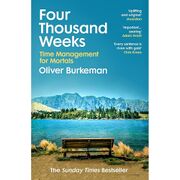
- ↑ Burkeman, Oliver (2 January 2011). "The 10 best self-help gurus". The Guardian. Retrieved 4 November 2025.