
Daring Greatly: Difference between revisions
No edit summary |
No edit summary |
||
| Line 7: | Line 7: | ||
{{Infobox book |
{{Infobox book |
||
| name = Daring Greatly |
| name = Daring Greatly |
||
| image = daring-greatly- |
| image = daring-greatly-brené-brown.jpg |
||
| full_title = ''Daring Greatly: How the Courage to Be Vulnerable Transforms the Way We Live, Love, Parent, and Lead'' |
| full_title = ''Daring Greatly: How the Courage to Be Vulnerable Transforms the Way We Live, Love, Parent, and Lead'' |
||
| author = Brené Brown |
| author = Brené Brown |
||
| Line 29: | Line 29: | ||
''This outline follows the Gotham Books first edition hardcover (2012), ISBN 978-1-59240-733-0.''<ref name="Marmot36151658">{{cite web |title=Daring greatly: how the courage to be vulnerable transforms the way we live, love, parent, and lead (1st ed.) |url=https://cmc.marmot.org/Record/.b36151658 |website=Colorado Mountain College Library Catalog |publisher=Marmot Library Network |access-date=21 October 2025}}</ref><ref name="Jackson109090">{{cite web |title=Daring greatly (1st ed.) |url=https://jacksonlibrary.org/Record/109090 |website=Jackson Public Library Catalog |publisher=Jackson Public Library |access-date=21 October 2025}}</ref><ref name="PRH600469">{{cite web |title=Daring Greatly by Brené Brown |url=https://www.penguinrandomhouse.com/books/600469/daring-greatly-by-brene-brown/ |website=Penguin Random House |publisher=Penguin Random House |access-date=21 October 2025}}</ref><ref name="OCLC779263434">{{cite web |title=Daring greatly (1st ed., print) |url=https://search.worldcat.org/nl/title/Daring-greatly-%3A-how-the-courage-to-be-vulnerable-transforms-the-way-we-live-love-parent-and-lead/oclc/779263434 |website=WorldCat |publisher=OCLC |access-date=21 October 2025}}</ref> |
''This outline follows the Gotham Books first edition hardcover (2012), ISBN 978-1-59240-733-0.''<ref name="Marmot36151658">{{cite web |title=Daring greatly: how the courage to be vulnerable transforms the way we live, love, parent, and lead (1st ed.) |url=https://cmc.marmot.org/Record/.b36151658 |website=Colorado Mountain College Library Catalog |publisher=Marmot Library Network |access-date=21 October 2025}}</ref><ref name="Jackson109090">{{cite web |title=Daring greatly (1st ed.) |url=https://jacksonlibrary.org/Record/109090 |website=Jackson Public Library Catalog |publisher=Jackson Public Library |access-date=21 October 2025}}</ref><ref name="PRH600469">{{cite web |title=Daring Greatly by Brené Brown |url=https://www.penguinrandomhouse.com/books/600469/daring-greatly-by-brene-brown/ |website=Penguin Random House |publisher=Penguin Random House |access-date=21 October 2025}}</ref><ref name="OCLC779263434">{{cite web |title=Daring greatly (1st ed., print) |url=https://search.worldcat.org/nl/title/Daring-greatly-%3A-how-the-courage-to-be-vulnerable-transforms-the-way-we-live-love-parent-and-lead/oclc/779263434 |website=WorldCat |publisher=OCLC |access-date=21 October 2025}}</ref> |
||
📉 '''1 – Scarcity: looking inside our culture of "never enough".''' |
📉 '''1 – Scarcity: looking inside our culture of "never enough".''' An opening morning-to-night vignette names the “never enough” loop—waking up thinking there wasn’t enough sleep and going to bed feeling not enough was done. Brown links this pattern to Lynne Twist’s work on scarcity and to more than a decade of qualitative interviews at the University of Houston. The chapter shows how chronic deficit scanning appears across families, schools, and workplaces: time feels short, certainty feels out of reach, and perfection becomes a false safety goal. Scarcity is framed not as a personal failing but as a cultural atmosphere that rewards comparison and constant evaluation. Brown maps three channels through which it spreads—shame (“not good enough”), comparison (“better than/less than”), and disengagement (checking out to avoid hurt)—and explains how each narrows curiosity and courage. Everyday systems amplify it: performance scorecards, social-media metrics, and productivity scripts that quietly tie worth to output. She also reads narcissism as a shield against the fear of being ordinary, fueled by the need for admiration to prove value. Attention gets hijacked by threat appraisal, pushing people to self-protect rather than stay open. The result is a cycle in which armored behavior feels safer moment to moment but corrodes connection over time. Vulnerability breaks that cycle by replacing evaluation with engagement—choosing presence, boundaries, and “enough” so courage can show up. |
||
🧩 '''2 – Debunking the vulnerability myths.''' |
🧩 '''2 – Debunking the vulnerability myths.''' A third-grade classroom marble jar anchors the chapter: marbles are added for small acts of reliability and care, and removed for breaches, making trust visible in increments. She then tests four persistent myths. First, “vulnerability is weakness” collapses in real contexts—creative work, hard conversations, and leadership—where uncertainty and emotional exposure are prerequisites for progress. Second, “I don’t do vulnerability” is wishful thinking, because uncertainty and risk are features of daily life; the real choice is whether to engage them with intention. Third, “vulnerability is letting it all hang out” yields to boundaries and discernment: disclosure is not connection, and people must earn the right to hear a story. Fourth, “we can go it alone” ignores that support and mutuality scaffold courage; asking for help is a high-skill behavior, not a failure. The marble-jar metaphor ties these points together by turning trust into a process of small, specific deposits over time rather than grand gestures. These myths endure because they promise control and protection; in practice they produce isolation, defensiveness, and stalled work. Vulnerability, by contrast, enables learning and belonging by inviting reciprocal risk, building trust one act at a time, and keeping people in the arena long enough to grow. |
||
🎯 '''3 – Understanding and combating shame.''' |
🎯 '''3 – Understanding and combating shame.''' A grounded-theory study published in 2006 in Families in Society drew on 215 in-depth interviews with women. Approved by the University of Houston’s human-subjects committee, the project mapped how shame operates and how people build resilience. Interviews ran from 45 minutes to three hours and were coded with constant-comparison methods, yielding a working definition of shame as the “intensely painful” belief of being fundamentally unworthy, contrasted with guilt about a behavior. The research identified culture-bound “shame webs” and common triggers—appearance, parenting, money/work, family, and identity—that pull people toward isolation and self-criticism. The chapter distills a four-part practice: notice the physical surge and name the trigger; practice critical awareness by reality-checking the expectations driving the panic; reach out to trusted people who respond with care; and speak shame plainly rather than in euphemism. Empathy functions as the active opposite of shame and requires skills: perspective-taking, withholding judgment, understanding feelings, and communicating that understanding. Practical scenes show a shift from “I am a bad parent” to “I made a hard mistake,” and from rumination to connection via a call or face-to-face check-in. Secrecy and judgment amplify threat, while naming the experience and receiving empathy down-regulate it. Within the book’s arc, this turns vulnerability into a repeatable skill—notice, name, connect—so courage and belonging have room to take root. |
||
🛡️ '''4 – The vulnerability armory.''' |
🛡️ '''4 – The vulnerability armory.''' Picture a common moment: a parent in a doorway late at night, joy flooding in, then a sudden flash of worst-case images. That reflex—“foreboding joy”—is the first and most common piece of armor described here. The chapter catalogs shields people learn early and polish over time: foreboding joy (preparing for disaster instead of feeling delight), perfectionism (chasing flawlessness to outrun shame), and numbing (deadening feelings with work, screens, or substances). It also names subtler shields like cynicism, criticism, and performative “cool,” along with scattershot tactics such as floodlighting—oversharing without trust—and serpentine avoidance. Each shield offers short-term relief by shrinking uncertainty, but at the cost of connection, creativity, and learning; armor is heavy, and carrying it crowds out presence. Counter-moves are concrete and behavioral: practice gratitude to stay with joy rather than “dress-rehearsing” tragedy; trade perfectionism for self-compassion and healthy striving; and replace numbing with boundaries and true comfort that restores. Small, observable habits support unarmoring—naming a joy and a thanks at dinner, writing a compassionate note to oneself after an error, or pausing before a reflexive scroll to ask what feeling needs attention. Armor blunts exposure and reduces immediate vulnerability, but it also blocks the feedback and intimacy that foster bravery. In the book’s terms, taking off the armor makes vulnerability actionable: feel the risk, choose presence, and let others earn their way into the story. |
||
⚙️ '''5 – Mind the gap: cultivating change and closing the disengagement divide.''' In the first edition, this chapter anchors itself in a concrete tool: ten diagnostic questions printed on page 174 that Brown uses during school visits and organizational interviews to see how a culture actually works. The questions probe everyday realities—how mistakes are handled, how feedback is given, who gets to speak up—so leaders can compare lived practice with the values they advertise. |
⚙️ '''5 – Mind the gap: cultivating change and closing the disengagement divide.''' In the first edition, this chapter anchors itself in a concrete tool: ten diagnostic questions printed on page 174 that Brown uses during school visits and organizational interviews to see how a culture actually works. The questions probe everyday realities—how mistakes are handled, how feedback is given, who gets to speak up—so leaders can compare lived practice with the values they advertise. The chapter defines the “disengagement divide” as the space between aspirational values and practiced behaviors, a gap employees, students, and families can feel immediately. Brown illustrates the gap with familiar scenes: a lobby poster that proclaims respect while meetings reward interruption; a classroom rubric that celebrates curiosity while grading only right answers; a family rule about honesty undercut by sarcasm and eye-rolling. Calendars and budgets serve as evidence—where time and money go is what a group truly values—and secrecy, blame, and cover-ups widen the divide. The practical work is to operationalize values into observable behaviors, set clear boundaries, and make feedback safe and routine rather than scarce and punitive. Small changes matter, such as naming what “respect” looks like in a specific room or agreeing on how to repair harm after a miss. The result is a repeatable process leaders and parents can use to close the gap in real settings. People lean back when promises outpace practice, and they lean in when difficult conversations, accountability, and learning are modeled in public. |
||
🏫 '''6 – Disruptive engagement: daring to re-humanize education and work.''' In 2010, at a weekend retreat with about fifty Silicon Valley CEOs, Brown asked Kevin Surace—then the CEO of Serious Materials and |
🏫 '''6 – Disruptive engagement: daring to re-humanize education and work.''' In 2010, at a weekend retreat with about fifty Silicon Valley CEOs, Brown asked Kevin Surace—then the CEO of Serious Materials and Inc.’s 2009 Entrepreneur of the Year—what most blocks creativity and innovation; he named the fear of being ridiculed or belittled. That answer becomes the hinge: where ridicule and shaming are present, people stop sharing early ideas and learning stalls. Brown describes shame “red flags” across campuses and companies—public ranking, perfectionism-as-policy, quiet retaliation for dissent, and leaders who use fear as a management style. To counter them, she introduces an engaged-feedback process, including a ten-item checklist that sets conditions before hard conversations (sit side by side, put the problem in front of us, own your part, and listen until you understand). The goal is to replace performative evaluation with developmental feedback and to normalize productive discomfort in classrooms and teams. Trust is built in small deposits—clear expectations, strengths-based coaching, and swift, fair repair when things go wrong—rather than one-off gestures. Practical vignettes show how anonymous sniping, favoritism, and secrecy corrode belonging, while transparent goals, candid reviews, and shared language for emotions improve performance. The shift is “disruptive” because it shines light on areas cultures often keep in shadow, especially around power and status. In this logic, vulnerability is not a soft extra but the operating system for learning; it turns uncertainty from a threat into the ground where creativity, innovation, and resilient change can grow. |
||
👨👩👧 '''7 – Wholehearted parenting: daring to be the adults we want our children to be.''' The |
👨👩👧 '''7 – Wholehearted parenting: daring to be the adults we want our children to be.''' The centerpiece is a printed “Wholehearted Parenting Manifesto,” included in the first edition and distributed through Brown’s site, which parents use to translate values like compassion, boundaries, and play into daily practice. Brown adds hope research—drawing on C. R. Snyder’s work at the University of Kansas—to frame hope as teachable: children build it when they set goals, see multiple pathways, and experience their own agency. She distinguishes belonging from fitting in and shows how families teach worthiness when love is modeled consistently in tone, attention, and repair after conflict. Scenes from home life carry the ideas: greeting a child with warmth before correction, narrating self-compassion out loud after a mistake, and inviting help-seeking rather than rewarding stoicism. The chapter warns how perfectionism, comparison, and overprotection unintentionally train kids to hide struggle or outsource courage to parents. In contrast, age-appropriate struggle—tolerated by adults who can sit with discomfort—becomes the gym where resilience, gratitude, and empathy develop. Brown also names clear family boundaries as protective (sleep, screens, privacy, respect) and treats rituals of rest and play as non-negotiable practices, not luxuries. Modeling ties it together: children learn from what they repeatedly witness, especially how adults handle uncertainty, apology, and repair. In the book’s frame, vulnerability at home turns values into traits—when caregivers show up openly and consistently, kids internalize worthiness, courage, and connection. |
||
== Background & reception == |
== Background & reception == |
||
Revision as of 23:03, 21 October 2025
"When I look at narcissism through the vulnerability lens, I see the shame-based fear of being ordinary. I see the fear of never feeling extraordinary enough to be noticed, to be lovable, to belong, or to cultivate a sense of purpose."
— Brené Brown, Daring greatly (2012)
Introduction
| Daring Greatly | |
|---|---|
 | |
| Full title | Daring Greatly: How the Courage to Be Vulnerable Transforms the Way We Live, Love, Parent, and Lead |
| Author | Brené Brown |
| Language | English |
| Subject | Vulnerability; Shame; Leadership; Parenting; Personal development |
| Genre | Nonfiction; Self-help |
| Publisher | Gotham Books |
Publication date | 11 September 2012 |
| Publication place | United States |
| Media type | Print (hardcover, paperback); e-book; audiobook |
| Pages | 287 |
| ISBN | 978-1-59240-733-0 |
| Website | penguinrandomhouse.com |
Daring Greatly argues that vulnerability—“exposure, uncertainty, and emotional risk”—is not weakness but a route to courage, connection, and meaningful work.[1] The title comes from Theodore Roosevelt’s speech “Citizenship in a Republic,” whose “man in the arena” passage frames Brown’s case for showing up despite uncertainty.[2] Drawing on more than a decade of qualitative research and hundreds of interviews, Brown explains shame, scarcity, and “shame resilience” in a plain, conversational register.[1] The chapters treat myths of vulnerability, the “vulnerability armory,” applications in schools and workplaces, and wholehearted parenting.[3] According to the publisher’s catalog (accessed 21 October 2025), the book is a #1 New York Times bestseller with more than two million copies sold.[2]
Chapter summary
This outline follows the Gotham Books first edition hardcover (2012), ISBN 978-1-59240-733-0.[4][5][2][6]
📉 1 – Scarcity: looking inside our culture of "never enough". An opening morning-to-night vignette names the “never enough” loop—waking up thinking there wasn’t enough sleep and going to bed feeling not enough was done. Brown links this pattern to Lynne Twist’s work on scarcity and to more than a decade of qualitative interviews at the University of Houston. The chapter shows how chronic deficit scanning appears across families, schools, and workplaces: time feels short, certainty feels out of reach, and perfection becomes a false safety goal. Scarcity is framed not as a personal failing but as a cultural atmosphere that rewards comparison and constant evaluation. Brown maps three channels through which it spreads—shame (“not good enough”), comparison (“better than/less than”), and disengagement (checking out to avoid hurt)—and explains how each narrows curiosity and courage. Everyday systems amplify it: performance scorecards, social-media metrics, and productivity scripts that quietly tie worth to output. She also reads narcissism as a shield against the fear of being ordinary, fueled by the need for admiration to prove value. Attention gets hijacked by threat appraisal, pushing people to self-protect rather than stay open. The result is a cycle in which armored behavior feels safer moment to moment but corrodes connection over time. Vulnerability breaks that cycle by replacing evaluation with engagement—choosing presence, boundaries, and “enough” so courage can show up.
🧩 2 – Debunking the vulnerability myths. A third-grade classroom marble jar anchors the chapter: marbles are added for small acts of reliability and care, and removed for breaches, making trust visible in increments. She then tests four persistent myths. First, “vulnerability is weakness” collapses in real contexts—creative work, hard conversations, and leadership—where uncertainty and emotional exposure are prerequisites for progress. Second, “I don’t do vulnerability” is wishful thinking, because uncertainty and risk are features of daily life; the real choice is whether to engage them with intention. Third, “vulnerability is letting it all hang out” yields to boundaries and discernment: disclosure is not connection, and people must earn the right to hear a story. Fourth, “we can go it alone” ignores that support and mutuality scaffold courage; asking for help is a high-skill behavior, not a failure. The marble-jar metaphor ties these points together by turning trust into a process of small, specific deposits over time rather than grand gestures. These myths endure because they promise control and protection; in practice they produce isolation, defensiveness, and stalled work. Vulnerability, by contrast, enables learning and belonging by inviting reciprocal risk, building trust one act at a time, and keeping people in the arena long enough to grow.
🎯 3 – Understanding and combating shame. A grounded-theory study published in 2006 in Families in Society drew on 215 in-depth interviews with women. Approved by the University of Houston’s human-subjects committee, the project mapped how shame operates and how people build resilience. Interviews ran from 45 minutes to three hours and were coded with constant-comparison methods, yielding a working definition of shame as the “intensely painful” belief of being fundamentally unworthy, contrasted with guilt about a behavior. The research identified culture-bound “shame webs” and common triggers—appearance, parenting, money/work, family, and identity—that pull people toward isolation and self-criticism. The chapter distills a four-part practice: notice the physical surge and name the trigger; practice critical awareness by reality-checking the expectations driving the panic; reach out to trusted people who respond with care; and speak shame plainly rather than in euphemism. Empathy functions as the active opposite of shame and requires skills: perspective-taking, withholding judgment, understanding feelings, and communicating that understanding. Practical scenes show a shift from “I am a bad parent” to “I made a hard mistake,” and from rumination to connection via a call or face-to-face check-in. Secrecy and judgment amplify threat, while naming the experience and receiving empathy down-regulate it. Within the book’s arc, this turns vulnerability into a repeatable skill—notice, name, connect—so courage and belonging have room to take root.
🛡️ 4 – The vulnerability armory. Picture a common moment: a parent in a doorway late at night, joy flooding in, then a sudden flash of worst-case images. That reflex—“foreboding joy”—is the first and most common piece of armor described here. The chapter catalogs shields people learn early and polish over time: foreboding joy (preparing for disaster instead of feeling delight), perfectionism (chasing flawlessness to outrun shame), and numbing (deadening feelings with work, screens, or substances). It also names subtler shields like cynicism, criticism, and performative “cool,” along with scattershot tactics such as floodlighting—oversharing without trust—and serpentine avoidance. Each shield offers short-term relief by shrinking uncertainty, but at the cost of connection, creativity, and learning; armor is heavy, and carrying it crowds out presence. Counter-moves are concrete and behavioral: practice gratitude to stay with joy rather than “dress-rehearsing” tragedy; trade perfectionism for self-compassion and healthy striving; and replace numbing with boundaries and true comfort that restores. Small, observable habits support unarmoring—naming a joy and a thanks at dinner, writing a compassionate note to oneself after an error, or pausing before a reflexive scroll to ask what feeling needs attention. Armor blunts exposure and reduces immediate vulnerability, but it also blocks the feedback and intimacy that foster bravery. In the book’s terms, taking off the armor makes vulnerability actionable: feel the risk, choose presence, and let others earn their way into the story.
⚙️ 5 – Mind the gap: cultivating change and closing the disengagement divide. In the first edition, this chapter anchors itself in a concrete tool: ten diagnostic questions printed on page 174 that Brown uses during school visits and organizational interviews to see how a culture actually works. The questions probe everyday realities—how mistakes are handled, how feedback is given, who gets to speak up—so leaders can compare lived practice with the values they advertise. The chapter defines the “disengagement divide” as the space between aspirational values and practiced behaviors, a gap employees, students, and families can feel immediately. Brown illustrates the gap with familiar scenes: a lobby poster that proclaims respect while meetings reward interruption; a classroom rubric that celebrates curiosity while grading only right answers; a family rule about honesty undercut by sarcasm and eye-rolling. Calendars and budgets serve as evidence—where time and money go is what a group truly values—and secrecy, blame, and cover-ups widen the divide. The practical work is to operationalize values into observable behaviors, set clear boundaries, and make feedback safe and routine rather than scarce and punitive. Small changes matter, such as naming what “respect” looks like in a specific room or agreeing on how to repair harm after a miss. The result is a repeatable process leaders and parents can use to close the gap in real settings. People lean back when promises outpace practice, and they lean in when difficult conversations, accountability, and learning are modeled in public.
🏫 6 – Disruptive engagement: daring to re-humanize education and work. In 2010, at a weekend retreat with about fifty Silicon Valley CEOs, Brown asked Kevin Surace—then the CEO of Serious Materials and Inc.’s 2009 Entrepreneur of the Year—what most blocks creativity and innovation; he named the fear of being ridiculed or belittled. That answer becomes the hinge: where ridicule and shaming are present, people stop sharing early ideas and learning stalls. Brown describes shame “red flags” across campuses and companies—public ranking, perfectionism-as-policy, quiet retaliation for dissent, and leaders who use fear as a management style. To counter them, she introduces an engaged-feedback process, including a ten-item checklist that sets conditions before hard conversations (sit side by side, put the problem in front of us, own your part, and listen until you understand). The goal is to replace performative evaluation with developmental feedback and to normalize productive discomfort in classrooms and teams. Trust is built in small deposits—clear expectations, strengths-based coaching, and swift, fair repair when things go wrong—rather than one-off gestures. Practical vignettes show how anonymous sniping, favoritism, and secrecy corrode belonging, while transparent goals, candid reviews, and shared language for emotions improve performance. The shift is “disruptive” because it shines light on areas cultures often keep in shadow, especially around power and status. In this logic, vulnerability is not a soft extra but the operating system for learning; it turns uncertainty from a threat into the ground where creativity, innovation, and resilient change can grow.
👨👩👧 7 – Wholehearted parenting: daring to be the adults we want our children to be. The centerpiece is a printed “Wholehearted Parenting Manifesto,” included in the first edition and distributed through Brown’s site, which parents use to translate values like compassion, boundaries, and play into daily practice. Brown adds hope research—drawing on C. R. Snyder’s work at the University of Kansas—to frame hope as teachable: children build it when they set goals, see multiple pathways, and experience their own agency. She distinguishes belonging from fitting in and shows how families teach worthiness when love is modeled consistently in tone, attention, and repair after conflict. Scenes from home life carry the ideas: greeting a child with warmth before correction, narrating self-compassion out loud after a mistake, and inviting help-seeking rather than rewarding stoicism. The chapter warns how perfectionism, comparison, and overprotection unintentionally train kids to hide struggle or outsource courage to parents. In contrast, age-appropriate struggle—tolerated by adults who can sit with discomfort—becomes the gym where resilience, gratitude, and empathy develop. Brown also names clear family boundaries as protective (sleep, screens, privacy, respect) and treats rituals of rest and play as non-negotiable practices, not luxuries. Modeling ties it together: children learn from what they repeatedly witness, especially how adults handle uncertainty, apology, and repair. In the book’s frame, vulnerability at home turns values into traits—when caregivers show up openly and consistently, kids internalize worthiness, courage, and connection.
Background & reception
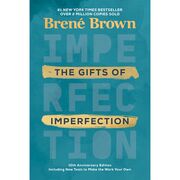
🖋️ Author & writing. Brown is a research professor at the University of Houston, where she holds the Huffington Foundation Endowed Chair.[7] Before this book she published related work on shame and Wholeheartedness, including The Gifts of Imperfection.[8] In Daring Greatly she adapts grounded-theory qualitative research into practical guidance on vulnerability and courage.[9] The title and central metaphor come from Roosevelt’s “man in the arena,” which Brown uses to argue for “showing up” despite uncertainty.[2] Reviewers note a blend of research synthesis and candid personal narrative in a direct, conversational voice.[3] Kirkus describes an evidence base of “more than a decade of research and hundreds of interviews” and defines vulnerability as “exposure, uncertainty, and emotional risk.”[1] The book’s arc moves from myths of vulnerability and “armoring up” to applications at work and school and a closing chapter on parenting.[3] Brown’s TED talks further popularized these themes with broad audiences.[10]
📈 Commercial reception. The publisher lists the book as a #1 New York Times bestseller and reports “more than 2 million copies sold” (catalog page accessed 21 October 2025).[2] Publishers Weekly reviewed the book on 23 July 2012.[3] Kirkus posted its review with a 13 September 2012 release date.[1]
👍 Praise. Kirkus called it “a straightforward approach to revamping one’s life from an expert on vulnerability.”[1] Publishers Weekly described it as a “roadmap for change” that “will draw readers in” while clarifying guilt versus shame.[3] In the peer-reviewed Journal of College and Character, Marc Cutright judged the book useful in college-student contexts.[11]
👎 Criticism. An academic review noted that Brown’s “homespun” anecdotal style may not suit all readers, even as it offers useful insights for practice.[12] A broader critique of “Tedcore” self-help argued that such books (including Brown’s) can package therapy language into feel-good but sometimes reductive claims.[13] A 2024 Literary Hub essay contended that Brown’s framing of vulnerability can presume individual choice and corporate privilege, limiting its relevance for the least powerful.[14]
🌍 Impact & adoption. Brown discussed the book’s ideas with Oprah Winfrey in 2013, bringing the themes to a mainstream television audience.[15] OWN has also promoted short Super Soul Sunday segments on Daring Greatly via its official YouTube channel.[16] The book appears in Penguin Random House’s higher-education catalog for course adoption, with instructor resources.[17] In higher-ed scholarship, a review in the Journal of College and Character suggested its applicability for college students.[11]
Related content & more
YouTube videos
CapSach articles


References
- ↑ 1.0 1.1 1.2 1.3 1.4 "DARING GREATLY". Kirkus Reviews. Kirkus Reviews. 13 July 2012. Retrieved 21 October 2025.
- ↑ 2.0 2.1 2.2 2.3 2.4 "Daring Greatly by Brené Brown". Penguin Random House. Penguin Random House. Retrieved 21 October 2025.
- ↑ 3.0 3.1 3.2 3.3 3.4 "Daring Greatly: How the Courage to Be Vulnerable Transforms the Way We Live, Love, Parent, and Lead". Publishers Weekly. Publishers Weekly. 23 July 2012. Retrieved 21 October 2025.
- ↑ "Daring greatly: how the courage to be vulnerable transforms the way we live, love, parent, and lead (1st ed.)". Colorado Mountain College Library Catalog. Marmot Library Network. Retrieved 21 October 2025.
- ↑ "Daring greatly (1st ed.)". Jackson Public Library Catalog. Jackson Public Library. Retrieved 21 October 2025.
- ↑ "Daring greatly (1st ed., print)". WorldCat. OCLC. Retrieved 21 October 2025.
- ↑ "Brené Brown: Graduate College of Social Work". University of Houston. University of Houston. Retrieved 21 October 2025.
- ↑ "Books & Audio – Brené Brown". brenebrown.com. Brené Brown. Retrieved 21 October 2025.
- ↑ "The Research". brenebrown.com. Brené Brown. Retrieved 21 October 2025.
- ↑ "Brené Brown: The power of vulnerability". TED. TED. Retrieved 21 October 2025.
- ↑ 11.0 11.1 Cutright, Marc (12 November 2014). "Daring Greatly: How the Courage to Be Vulnerable Transforms the Way We Live, Love, Parent, and Lead". Journal of College and Character. 15 (4): 273–276. doi:10.1515/jcc-2014-0032. Retrieved 21 October 2025.
- ↑ "Book review: Daring greatly (2016)". International Journal of Social Pedagogy. UCL Press. 2016. Retrieved 21 October 2025.
- ↑ Phillips-Horst, Steven (18 May 2022). "Tedcore: the self-help books that have changed the way we live, speak and think". The Guardian. Retrieved 21 October 2025.
- ↑ Zakaria, Rafia (21 February 2024). "Why Brené Brown's Gospel of Vulnerability Fails the World's Most Vulnerable". Literary Hub. Retrieved 21 October 2025.
- ↑ "The Wholehearted Life: Oprah Talks to Brené Brown". Oprah.com. Oprah Winfrey Network. 15 May 2013. Retrieved 21 October 2025.
- ↑ "Daring Greatly: Why Vulnerability Is Your Greatest Strength". YouTube. Oprah Winfrey Network (OWN). Retrieved 21 October 2025.
- ↑ "Daring Greatly (Higher Education)". Penguin Random House Higher Education. Penguin Random House. Retrieved 21 October 2025.