
Think and Grow Rich: Difference between revisions
No edit summary |
No edit summary |
||
| (9 intermediate revisions by the same user not shown) | |||
| Line 2: | Line 2: | ||
| {{Think and Grow Rich/random quote}} |
| {{Think and Grow Rich/random quote}} |
||
}} |
}} |
||
{{Section separator}} |
|||
== Introduction == |
== Introduction == |
||
| Line 15: | Line 17: | ||
| genre = Nonfiction; Self-help |
| genre = Nonfiction; Self-help |
||
| publisher = The Ralston Society |
| publisher = The Ralston Society |
||
| pub_date = |
| pub_date = 1937 |
||
| media_type = Print (hardcover, paperback); e-book; audiobook |
| media_type = Print (hardcover, paperback); e-book; audiobook |
||
| pages = |
| pages = |
||
| isbn = |
| isbn = |
||
| goodreads_rating = 4.17 |
| goodreads_rating = 4.17 |
||
| goodreads_rating_date = |
| goodreads_rating_date = 10 November 2025 |
||
| website = [https://www.penguin.co.uk/books/343476/think-and-grow-rich-by-napoleon-hill/9781785042416 penguin.co.uk] |
| website = [https://www.penguin.co.uk/books/343476/think-and-grow-rich-by-napoleon-hill/9781785042416 penguin.co.uk] |
||
}} |
}} |
||
📘 '''''Think and Grow Rich''''' is a 1937 self-help book by American writer Napoleon Hill, published amid the Great Depression. <ref name="LoCReads" /> The first edition was issued by |
📘 '''''{{Tooltip|Think and Grow Rich}}''''' is a 1937 self-help book by American writer {{Tooltip|Napoleon Hill}}, published amid the {{Tooltip|Great Depression}}. <ref name="LoCReads" /> The first edition was issued by {{Tooltip|The Ralston Society}} in {{Tooltip|Meriden, Connecticut}}. <ref name="OCLC874022719" /> It distills Hill’s earlier “{{Tooltip|Law of Success}}” into thirteen “steps to riches,” covering Desire, Faith, {{Tooltip|Autosuggestion}}, Specialized Knowledge, Imagination, Organized Planning, Decision, Persistence, the {{Tooltip|Master Mind}}, {{Tooltip|Sex Transmutation}}, the {{Tooltip|Subconscious Mind}}, the Brain, and the {{Tooltip|Sixth Sense}}. <ref name="CMCDesc">{{cite web |title=Think and Grow Rich |url=https://cmc.marmot.org/Record/.b19608342 |website=Colorado Mountain College Library Catalog |publisher=Colorado Mountain College |access-date=9 November 2025}}</ref> The tone is motivational and prescriptive, with concise step chapters that use devices such as visualization and autosuggestion for practice. <ref name="PenguinUK2019">{{cite web |title=Think And Grow Rich |url=https://www.penguin.co.uk/books/343476/think-and-grow-rich-by-napoleon-hill/9781785042416 |website=Penguin Books UK |publisher=Penguin Books |date=8 August 2019 |access-date=9 November 2025}}</ref> According to the {{Tooltip|Library of Congress}}, the title had sold more than 20 million copies by Hill’s death in 1970 and at least another 50 million since. <ref name="LoCReads" /> It remained commercially durable decades later, ranking No. 10 on {{Tooltip|BusinessWeek}}’s paperback business list on 4 June 2007 in its 24th month on the chart. <ref name="BWList2007">{{cite web |title=The BusinessWeek Best-Seller List |url=https://billgeorge.org/article/the-businessweek-best-seller-list/ |website=Bill George |publisher=Bill George |date=4 June 2007 |access-date=9 November 2025}}</ref> |
||
{{Section separator}} |
|||
== Chapter summary == |
== Chapter summary == |
||
| ⚫ | '' |
||
=== Chapter 1 – General Introduction === |
|||
| ⚫ | 🧭 |
||
| ⚫ | 🧭 {{Tooltip|Edwin C. Barnes}} rides “blind baggage” to {{Tooltip|East Orange, New Jersey}}, determined to become {{Tooltip|Thomas A. Edison}}’s business associate, and walks into the laboratory to state his aim. Edison gives him a nominal job, and for months Barnes does minor work while keeping a single definite purpose in view. When Edison’s new office device—the {{Tooltip|Edison Dictating Machine}} (now the {{Tooltip|Ediphone}})—fails to excite his salesmen, Barnes asks to sell it. He succeeds, secures a contract to market and distribute the machine nationally, and the partnership prospers for decades. A slogan summarized the arrangement—Edison made it, Barnes installed it—signaling a durable alliance built on initiative and persistence. By contrast, {{Tooltip|R. U. Darby}}’s uncle abandons a western gold vein; a junk dealer’s engineer finds the ore just three feet beyond their last drill. {{Tooltip|Henry Ford}} likewise refuses to accept “impossible,” insisting his engineers cast a one-piece {{Tooltip|V-8}} block until they figure it out. These vignettes show thought fused with definiteness of purpose and persistence turning into tangible achievement. {{Tooltip|Success consciousness}}—acting from a clear aim—keeps attention on opportunity and sustains effort through temporary defeat. ''Success comes to those who become SUCCESS CONSCIOUS.'' |
||
| ⚫ | 🔥 |
||
| ⚫ | |||
| ⚫ | 🙏 |
||
| ⚫ | 🔥 {{Tooltip|Edwin C. Barnes}} climbs down from a freight train in {{Tooltip|Orange, N. J.}}, looking like a tramp yet resolved to work with Edison, not for him. He accepts the most menial role and carries himself as a partner in mind from the first day. Five years pass without encouragement; he burns his bridges and stakes his future on the aim. Other examples sharpen the point: merchants who fled hardship versus {{Tooltip|Marshall Field}}, who built anyway. Then come the steps: fix an exact amount, decide what you will give, set a date, create and begin a plan at once, write a clear statement, and read it aloud morning and night while seeing and feeling yourself already in possession of the result. Received from {{Tooltip|Andrew Carnegie}} and scrutinized by {{Tooltip|Thomas A. Edison}}, these steps demand imagination more than formal education and apply to any definite goal. Desire ignites effort—a specific aim saturates attention and organizes action around what matters most. Repetition with emotion trains the subconscious to surface plans and persistence until circumstances match the inner picture. ''He had to win or perish!'' |
||
| ⚫ | 🗣️ |
||
=== Chapter 3 – Faith (The Second Step to Riches) === |
|||
| ⚫ | 🎓 |
||
| ⚫ | 🙏 In a midwestern city, bank official {{Tooltip|Joseph Grant}} “borrows” a large sum, loses it gambling, and, when a Bank Examiner begins checking accounts, retreats to a local hotel; three days later he is found despairing and soon dies, a case doctors call mental suicide. The episode illustrates how the subconscious, which never distinguishes between constructive and destructive suggestions, translates repeated, emotionalized thoughts into their physical equivalents. Faith is the head chemist of the mind, blending thought vibrations and transmitting them to {{Tooltip|Infinite Intelligence}}. Because faith can be induced, {{Tooltip|Autosuggestion}} supplies repeated instructions, saturated with feeling, until belief takes hold and the mind behaves as though attainment were inevitable. A five-part {{Tooltip|Self-Confidence Formula}} operationalizes this practice—spend thirty minutes daily thinking of the person you intend to become, devote ten minutes to demanding self-confidence, write a {{Tooltip|Definite Chief Aim}}, and sign and recite the pledge aloud once a day—while warning that the same law will destroy if fed fear and doubt. Faith energizes desire, giving plans vitality and momentum and supplying the conviction to act before evidence appears. Practically, conduct yourself as already in possession of the goal and flood the subconscious with that expectation until it yields plans and courage. ''FAITH is the starting point of all accumulation of riches!'' |
||
| ⚫ | 💡 |
||
=== Chapter 4 – Auto-Suggestion (The Third Step to Riches) === |
|||
| ⚫ | 🗣️ In a quiet room—preferably in bed at night—close your eyes and repeat aloud, so you can hear your own voice, the written statement naming the exact sum you intend to acquire, the deadline for acquiring it, and the service you will render in exchange; as you speak, see and feel yourself already in possession of the money. An explicit example follows—$50,000 by the first of January five years hence, earned as a salesman—complete with the pledge to render the fullest quantity and quality of service and to await the plan that will arrive. Read the statement morning and night, and post it where it is visible until memorized, because repetition with feeling imprints instructions on the subconscious. Plain words do nothing; without emotion and belief, suggestions lack force, as {{Tooltip|Émile Coué}}’s formula illustrates. The conscious mind is an outer guard that chooses which impressions pass to the subconscious; neglect lets weeds grow in that garden. The price of influence is persistence: concentrate daily on the definite amount, hold the picture until it becomes a burning obsession, and follow the procedures from Desire and the {{Tooltip|Master Mind}}. This practice is practical, not mystical—emotionalized suggestion builds a “money consciousness” that shapes attention, energy, and choice toward congruent action. {{Tooltip|Auto-suggestion}} turns stated aims into expectation and expectation into sustained effort. ''Your subconscious mind recognizes and acts upon ONLY thoughts which have been well-mixed with emotion or feeling.'' |
||
| ⚫ | |||
=== Chapter 5 – Specialized Knowledge (The Fourth Step to Riches) === |
|||
| ⚫ | 🎓 During the World War era, a Chicago newspaper labeled {{Tooltip|Henry Ford}} “an ignorant pacifist,” prompting his libel suit; on the stand he parried trivia—“How many British soldiers came in 1776?”—by saying he could press an electric push-button on his desk to summon any expert he required. The courtroom grasped the point: organized access to know-how, not encyclopedic recall, drives achievement, and Ford’s {{Tooltip|Master Mind}} supplied the technical knowledge he chose not to carry in his own head. General knowledge on campus rarely correlates with large personal fortunes; knowledge gains power only when organized into definite plans aimed at a specific end. Examples include {{Tooltip|Andrew Carnegie}} relying on associates for metallurgy and markets, {{Tooltip|Thomas A. Edison}}’s scant formal schooling, and {{Tooltip|Columbia University}} placement chief {{Tooltip|Robert P. Moore}}’s emphasis on specialists and campus leaders over “straight-A” records. Night schools and correspondence courses appear as practical sources, valued for content and for the discipline of prompt payment, deadlines, and finishing what one begins. A mother’s case shows the method: nearly fifty typed pages—a plan book narrating her son’s abilities, schooling, and the exact plan he would use on the job—sell his services into a better position. Identify the knowledge your {{Tooltip|Definite Chief Aim}} requires, then acquire or contract it and weld it into plans. Specialized knowledge is an instrument; organization and alliance—directed learning plus a {{Tooltip|Master Mind}}—convert intent into marketable results. ''Knowledge is only potential power.'' |
||
| ⚫ | |||
=== Chapter 6 – Imagination (The Fifth Step to Riches) === |
|||
| ⚫ | 💡 In “{{Tooltip|The Enchanted Kettle}},” an old country doctor slips through a drug store’s back door, sets down a large kettle and a wooden paddle, and for $500 hands a young clerk a slip bearing a secret formula that will, over time, pour wealth across the South. From this back-room bargain, imagination is defined as the workshop of the mind where desire takes shape, and the age of rapid change furnishes constant stimuli—within roughly fifty years people harness air travel, radio, and high-speed locomotion. Two faculties matter: synthetic imagination, which recombines existing ideas, and {{Tooltip|Creative Imagination}}, which receives hunches and inspirations when desire excites the mind. Write plans and put imagination to work immediately; reducing an aim to paper is the first concrete step that begins converting thought into its physical counterpart. Ideas, not hard labor alone, produce large fortunes: a publisher sells over a million extra copies by changing only a book’s title, and radio will reward those who design programs that turn listeners into buyers. Persistence keeps an idea alive long enough for it to grow strong enough to drive its author, as in the twenty-five-year project launched by {{Tooltip|Andrew Carnegie}}’s suggestion. Imagination shapes impulse into executable plans and opportunities that markets can recognize. It recombines knowledge and experience until a plan with leverage emerges, enabling desire to crystallize into money. ''Ideas are the beginning points of all fortunes.'' |
||
| ⚫ | |||
=== Chapter 7 – Organized Planning (The Sixth Step to Riches) === |
|||
📋 In a small conference room, a {{Tooltip|Master Mind}} alliance meets at least twice a week; members agree in advance on compensation and keep perfect harmony while they build a definite, practical plan to turn a money desire into action. The group checks and approves every step, and when a plan fails it is replaced—again and again—until one works, with each setback treated as temporary defeat rather than final failure. {{Tooltip|Thomas A. Edison}} met ten thousand “temporary defeats” before perfecting the incandescent lamp; {{Tooltip|Henry Ford}} and {{Tooltip|James J. Hill}} rebuilt plans after reverses; {{Tooltip|Samuel Insull}} lost more than one hundred million dollars when new plans proved unsound. Planning extends to selling personal services: prepare a bound brief—“BRIEF OF THE QUALIFICATIONS OF Robert K. Smith”—specify the exact position, offer to work on probation, and present education, experience, and employer research with courtroom-level neatness. Sound plans are joint creations; no one mind has enough experience and imagination to ensure a great fortune without others’ counsel. Across leadership traits, causes of failure, and self-analysis questions, the instruction is consistent: originate a plan, have your alliance check it, and keep rebuilding until the plan earns results. Organized planning links imagination to outcomes, channeling desire into coordinated, testable steps supported by other minds. Shared standards, explicit roles, and rapid plan replacement turn scattered effort into a strategy that survives defeat. ''A QUITTER NEVER WINS--AND--A WINNER NEVER QUITS.'' |
|||
| ⚫ | |||
=== Chapter 8 – Decision (The Seventh Step to Riches) === |
|||
| ⚫ | |||
✅ A large study of more than 25,000 failure cases and several hundred millionaires shows a stark pattern: lack of decision ranks near the top of thirty major causes of failure, while the wealthy reach decisions quickly and change them slowly, if at all. {{Tooltip|Henry Ford}} exemplifies definiteness, continuing the Model “T” against advice until it produced a fortune, and changing only when necessary. Keep your own counsel; confide plans only to a sympathetic {{Tooltip|Master Mind}}, gather facts quietly, listen more than you talk, and let deeds precede words. Because opinions are the cheapest commodity, broadcasting intentions invites interference and envy; a closed mouth with open eyes and ears protects momentum. Definiteness requires courage; the fifty-six signers of the {{Tooltip|Declaration of Independence}} are cited as men who staked their lives on a single choice. Decision turns a wish into commitment, clearing uncertainty so action can proceed without constant second-guessing. Train a bias for prompt, definite choices and resist the pull of other people’s opinions so behavior stays aligned with a chosen aim long enough to compound results. ''PROCRASTINATION, the opposite of DECISION, is a common enemy which practically every man must conquer.'' |
|||
=== Chapter 9 – Persistence (The Eighth Step to Riches) === |
|||
⏳ The first test of persistence arrives when the reader tries to follow the six steps from Desire: hold a definite goal, a definite plan, and the daily routine without slipping back into habit—something only “two out of every hundred” do without prodding. Lack of persistence is a common weakness that yields to a stronger desire; repeated application of the rules must become habit, because spasmodic effort produces nothing. Poverty consciousness grows by neglect; {{Tooltip|money consciousness}} must be created to order through sustained effort. Depression-era recoveries make the point: {{Tooltip|W. C. Fields}}, past sixty and broke, offers to work without pay in films and claws back; {{Tooltip|Marie Dressler}} stages a late-life return; {{Tooltip|Eddie Cantor}} rebuilds from the 1929 crash to an income of $10,000 a week. Practical aids include surrounding yourself with a {{Tooltip|Master Mind}}, using {{Tooltip|Auto-suggestion}}, and feeding the subconscious a clear picture of the aim until it drives action day and night. Persistence binds the thirteen steps into a single force, keeping attention on the aim long enough for plans to mature and opportunities to be recognized. Will fused to desire applies steady pressure so setbacks become signals to adjust the plan rather than abandon the goal. ''There may be no heroic connotation to the word "persistence," but the quality is to the character of man what carbon is to steel.'' |
|||
| ⚫ | |||
🤝 {{Tooltip|Andrew Carnegie}} surrounds himself with approximately fifty men for the definite purpose of manufacturing and marketing steel and credits the fortune that follows to the power created by that alliance. Power is organized, intelligently directed knowledge drawn from three practical sources—{{Tooltip|Infinite Intelligence}} accessed by creative imagination, accumulated experience preserved in libraries and schools, and ongoing experiment and research—and then expressed through action. A {{Tooltip|Master Mind}} is the coordination of knowledge and effort in harmony toward a definite aim, with economic advantages and a “psychic” effect that increases the thought-energy available to each participant. Like grouped batteries delivering more current than a single cell, a cluster of minds in harmony yields surplus power that no individual can generate alone. {{Tooltip|Henry Ford}}’s rise accelerates after befriending {{Tooltip|Thomas A. Edison}} and allying with {{Tooltip|Harvey Firestone}}, {{Tooltip|John Burroughs}}, and {{Tooltip|Luther Burbank}}; within a decade and, over twenty-five years, the association helps produce one of America’s great fortunes. At national scale, {{Tooltip|Mahatma Gandhi}} induces more than two hundred million people to coordinate in harmony around a definite purpose, an example of passive power created by alignment rather than force. Plans require this surplus power to move; careful selection, perfect harmony, and steady cooperation turn ideas into leverage. Here, the {{Tooltip|Master Mind}} converts desire into force as synergistic attention and knowledge-sharing compound into authority and momentum. ''No two minds ever come together without, thereby, creating a third, invisible, intangible force which may be likened to a third mind.'' |
|||
=== Chapter 11 – The Mystery of Sex Transmutation (The Tenth Step to Riches) === |
|||
💞 Under a section on why men seldom succeed before forty, an analysis of more than 25,000 people over twelve years finds that outstanding success typically comes after forty or fifty because earlier energy is dissipated in physical expression rather than directed to creative work. Transmutation means switching the mind from physical expression to other channels, and sex is named the most powerful human desire because, when harnessed, it preserves courage, will-power, persistence, and creative ability for constructive ends. Ten mind stimuli can “key up” thought—sex desire first, then love, money ambition, music, friendship, a {{Tooltip|Master Mind}} alliance, mutual suffering, {{Tooltip|Autosuggestion}}, fear, and narcotics or alcohol—and disciplined use favors the constructive set. The practical instruction is to redirect the charge into concrete projects—writing, enterprise, leadership—so the same energy that tempts dissipation instead fuels useful plans. A businessman credits the sustained presence of an inspiring secretary over more than twelve years with lifting his imagination to a higher rate of vibration, offered as a controlled instance of the principle. The emotion is neutral; deliberate redirection and repetition build a new association until it becomes habit. {{Tooltip|Sex Transmutation}} supplies high-octane fuel to the whole method, with emotional alchemy—reframing and rehearsing desire—powering creation instead of consumption. ''Sex energy is the creative energy of all genii.'' |
|||
| ⚫ | |||
🧠 Every thought reaching the objective mind through the senses is classified and recorded in the subconscious, which then acts first on dominating desires mixed with emotion such as faith. This connecting link works continuously and draws on {{Tooltip|Infinite Intelligence}} to translate desires into their physical equivalents by the most practical routes available. Because it responds more readily to feeling than to “cold reason,” approach this “inner audience” with emotionalized instructions delivered through autosuggestion. Seven major positive emotions—desire, faith, love, sex, enthusiasm, romance, hope—and seven negative emotions—fear, jealousy, hatred, revenge, greed, superstition, anger—compete for place; positives must be injected deliberately while negatives enter uninvited. Prayers made in fear and doubt fail because the subconscious transmits the feeling, not the request. The earlier tools—written chief aim, morning-and-night repetition, and harmony with a {{Tooltip|Master Mind}}—saturate attention and keep behavior aligned with a definite purpose. Within the book’s system, the {{Tooltip|Subconscious Mind}} is the conduit that receives plans and enlists larger forces; repeated, emotional suggestion displaces negatives and turns desire into sustained action. ''You may VOLUNTARILY plant in your subconscious mind any plan, thought, or purpose which you desire to translate into its physical or monetary equivalent.'' |
|||
=== Chapter 13 – The Brain (The Twelfth Step to Riches) === |
|||
📡 Working with {{Tooltip|Alexander Graham Bell}} and {{Tooltip|Elmer R. Gates}} more than twenty years earlier, observation gives rise to a claim: every human brain functions as both a broadcasting and a receiving station for thought vibrations moving through the ether. Emotion “steps up” these vibrations; the {{Tooltip|Subconscious Mind}} serves as the sending station and the {{Tooltip|Creative Imagination}} as the receiving set, so feelings fuse with thoughts before the subconscious will act on them. {{Tooltip|University of Chicago}} neuroanatomist {{Tooltip|C. Judson Herrick}} estimates 10–14 billion cortical nerve cells arranged in definite patterns and describes {{Tooltip|micro-electrodes}} that register potentials to a millionth of a volt, underscoring the brain’s vast circuitry. A {{Tooltip|New York Times}} editorial summarizing {{Tooltip|J. B. Rhine}}’s {{Tooltip|Duke University}} experiments reports more than a hundred thousand tests of {{Tooltip|telepathy}} and {{Tooltip|clairvoyance}}, with results said to be beyond “one chance in many a million million,” unaffected by distance of several hundred miles and boosted by stimulants while depressed by narcotics. A three-person round-table blends minds in harmony to stimulate ideas “from unknown sources,” a simple use of the {{Tooltip|Master Mind}} to solve client problems. In practice, three principles—subconscious mind, creative imagination, and auto-suggestion—form a mental radio that can be tuned to send and receive plans. The brain converts desire into power when emotion raises thought to a level that can be broadcast to, and receive from, other minds, and harmonious discussion amplifies attention until practical solutions present themselves. ''The Creative Imagination is the 'receiving set,' through which the vibrations of thought are picked up from the ether.'' |
|||
| ⚫ | |||
🕯️ Night after night, for years, an imaginary “{{Tooltip|Invisible Counselors}}” cabinet convenes around a mental {{Tooltip|Council Table}}: Emerson, Paine, {{Tooltip|Thomas A. Edison}}, Darwin, Lincoln, Burbank, {{Tooltip|Napoleon}}, Ford, and Carnegie are addressed aloud, each asked to impress specific qualities on the subconscious. The practice grows from hero-worship into deliberate character-building through self-suggestion, with the admission that the meetings are fictional yet productive of “inspiration” during emergencies and complex decisions. The sixth sense is the apex of the philosophy, the door to the “{{Tooltip|Temple of Wisdom}},” and a probable medium of contact between the finite mind and {{Tooltip|Infinite Intelligence}}. It is not acquired casually; mastery of the other twelve principles and years of meditation and self-examination are said to precede reliable use. The function is practical—warnings of danger and timely notice of opportunity—and leaders from Edison to Ford exemplify its application in invention and enterprise. A mental antenna works best when the mind is emotionally keyed up and harmonized by prior discipline. A cultivated intuition completes the system by turning disciplined desire into timely guidance, primed by sustained {{Tooltip|Auto-suggestion}}, emotional readiness, and a clear chief aim so that hunches arrive as workable plans. ''Through the aid of the sixth sense, you will be warned of impending dangers in time to avoid them, and notified of opportunities in time to embrace them.'' |
|||
| ⚫ | |||
👻 A closing self-audit begins with three enemies that must be cleared out—Indecision, Doubt, and Fear—because the sixth sense will not function while they remain. Six basic fears are named and examined in order of prevalence: poverty, criticism, ill health, loss of love, old age, and death; the Depression fostered a long season of fear of poverty, and war intensified the fear of death. Fear is a state of mind; thought impulses quickly clothe themselves in physical equivalents, and mass fixation on poverty after the 1929 crash crystallized into a national depression. Practical work follows: detailed symptoms expose the fear of poverty, and a long self-analysis questionnaire—“at least one day is necessary” to answer—forces a personal inventory of habits, associates, and uses of time. The remedy is mental hygiene: close the mind against “tramp” thought impulses, use {{Tooltip|Auto-suggestion}} to keep it positive, and choose associates who reinforce courage rather than worry. Choose unmistakably between the roads to poverty and to riches and protect the “spiritual estate” of the mind with will-power. Mastery of fear is prerequisite to converting desire into results because unguarded thought multiplies the very conditions it dreads; deliberate thought selection, repeated suggestion, and environment control displace fearful imagery and align behavior with a definite chief aim. ''You have ABSOLUTE CONTROL over but one thing, and that is your thoughts.'' |
|||
| ⚫ | ''—Note: The above summary follows the Ralston Society first edition (1937).''<ref name="OCLC874022719">{{cite web |title=Think and grow rich : original 1937 classic edition |url=https://worldcat.org/oclc/874022719 |website=WorldCat |publisher=OCLC |access-date=8 November 2025}}</ref><ref name="LoCReads">{{cite web |title=Napoleon Hill, ''Think and Grow Rich'' (1937) |url=https://loc.gov/exhibits/america-reads/1900-to-1949.html |website=Library of Congress |publisher=Library of Congress |access-date=8 November 2025}}</ref> |
||
{{Section separator}} |
|||
== Background & reception == |
== Background & reception == |
||
🖋️ '''Author & writing'''. Hill was a U.S. self-help author whose earlier works included ''The Law of Success'' |
🖋️ '''Author & writing'''. Hill was a U.S. self-help author whose earlier works included ''The {{Tooltip|Law of Success}}''. He spent decades writing and lecturing about “principles of success.” <ref name="MacmillanAuthor">{{cite web |title=Napoleon Hill |url=https://us.macmillan.com/author/napoleonhill |website=Macmillan |publisher=Macmillan Publishers |access-date=9 November 2025}}</ref> Publisher materials describe ''{{Tooltip|Think and Grow Rich}}'' as the outcome of more than 25 years of research and interviews with over 500 prosperous individuals. <ref name="PenguinUK2019" /> Hill’s origin story credits {{Tooltip|Andrew Carnegie}} with urging him to codify a success philosophy after an early meeting. <ref name="NewYorker2006">{{cite news |title=Fresh Prince |url=https://www.newyorker.com/magazine/2006/11/06/fresh-prince-3 |work=The New Yorker |date=30 October 2006 |access-date=9 November 2025}}</ref> That anecdote is disputed: an {{Tooltip|EBSCO}} reference article, citing Carnegie’s biographer, reports that no evidence exists that Hill ever met Carnegie. <ref name="EBSCO2023">{{cite web |title=Napoleon Hill |url=https://www.ebsco.com/research-starters/biography/napoleon-hill |website=EBSCO Research Starters |publisher=EBSCO Information Services |date=2023 |access-date=9 November 2025}}</ref> The book’s structure remains thirteen named “steps to riches,” from Desire and Faith through the “{{Tooltip|Master Mind}}” to a final “{{Tooltip|Sixth Sense}}” chapter. <ref name="CMCDesc" /> Later classroom-oriented printings retained the chapter architecture while adding contemporary vignettes, including a 2005 Tarcher/Penguin revision edited by Arthur R. Pell. <ref name="Tarcher2005">{{cite web |title=Think and Grow Rich: The Landmark Bestseller—Now Revised and Updated for the 21st Century |url=https://archive.org/details/thinkgrowrichthe00hill |website=Internet Archive |publisher=Jeremy P. Tarcher/Penguin |date=2005 |access-date=9 November 2025}}</ref> |
||
📈 '''Commercial reception'''. The Library of Congress notes that ''Think and Grow Rich'' had sold more than 20 million copies by 1970 and at least another 50 million since. <ref name="LoCReads" /> Its long-tail sales persisted into the 21st century; on 4 June 2007 it ranked No. 10 on |
📈 '''Commercial reception'''. The {{Tooltip|Library of Congress}} notes that ''{{Tooltip|Think and Grow Rich}}'' had sold more than 20 million copies by 1970 and at least another 50 million since. <ref name="LoCReads" /> Its long-tail sales persisted into the 21st century; on 4 June 2007 it ranked No. 10 on {{Tooltip|BusinessWeek}}’s paperback business list in its 24th month on the chart. <ref name="BWList2007" /> |
||
👍 '''Praise'''. The |
👍 '''Praise'''. The {{Tooltip|Financial Times}} wrote that the book “made [Hill] famous,” distilled his thinking, and—published in 1937—“sold in the tens of millions,” offering Depression-era optimism that still finds readers. <ref name="FT2018">{{cite news |title=Book review: Truthful Living: The First Writings of Napoleon Hill |url=https://www.ft.com/content/d08a813e-cc92-11e8-8d0a-a6539b949662 |work=Financial Times |date=29 November 2018 |access-date=9 November 2025}}</ref> ''{{Tooltip|Business Insider}}'' highlighted the title’s actionable maxims about wealth, power, and overcoming mental barriers. <ref name="BI2013">{{cite news |last=Woodruff |first=Mandi |title=15 Insights From The Man Who Taught The World To 'Think And Grow Rich' |url=https://www.businessinsider.com/insights-from-napoleon-hills-think-and-grow-rich-2013-9 |work=Business Insider |date=14 September 2013 |access-date=9 November 2025}}</ref> ''{{Tooltip|Encyclopaedia Britannica}}'' situates the book among 20th-century self-help titles that popularized positive-thinking prosperity ideas and “sold millions.” <ref name="BritannicaPG">{{cite web |title=Prosperity gospel |url=https://www.britannica.com/topic/prosperity-gospel |website=Encyclopaedia Britannica |publisher=Encyclopaedia Britannica, Inc. |date=28 October 2025 |access-date=9 November 2025}}</ref> |
||
👎 '''Criticism'''. Writing in ''The Guardian'', Oliver Burkeman argued that Hill offered no evidence that his celebrated interviewees were happy and that the book’s “single Secret of Success” thesis is unconvincing compared with multifactor explanations of achievement. <ref name="Guardian2009">{{cite news |last=Burkeman |first=Oliver |title=How to feel up in a downturn |url=https://www.theguardian.com/lifeandstyle/2009/aug/15/oliver-burkeman-happy |work=The Guardian |date=15 August 2009 |access-date=9 November 2025}}</ref> |
👎 '''Criticism'''. Writing in ''{{Tooltip|The Guardian}}'', Oliver Burkeman argued that Hill offered no evidence that his celebrated interviewees were happy and that the book’s “single Secret of Success” thesis is unconvincing compared with multifactor explanations of achievement. <ref name="Guardian2009">{{cite news |last=Burkeman |first=Oliver |title=How to feel up in a downturn |url=https://www.theguardian.com/lifeandstyle/2009/aug/15/oliver-burkeman-happy |work=The Guardian |date=15 August 2009 |access-date=9 November 2025}}</ref> {{Tooltip|EBSCO}}’s overview further records historians’ view that Hill’s claimed meeting with Carnegie lacks documentary support. <ref name="EBSCO2023" /> A longform investigation at ''{{Tooltip|Gizmodo}}'' criticized Hill’s record, alleging fabrications and fraudulent ventures that complicate readings of his success narrative. <ref name="Gizmodo2016">{{cite news |last=Novak |first=Matt |title=The Untold Story of Napoleon Hill, the Greatest Self-Help Scammer of All Time |url=https://gizmodo.com/the-untold-story-of-napoleon-hill-the-greatest-self-he-1789385645 |work=Gizmodo |date=6 December 2016 |access-date=9 November 2025}}</ref> |
||
🌍 '''Impact & adoption'''. In sport, a ''Guardian'' profile of world snooker champion Peter Ebdon details how he used ''Think and Grow Rich'' techniques—visualising outcomes under pressure—during pivotal matches. <ref name="Guardian2003Ebdon">{{cite news |last=Rendall |first=Jonathan |title=A breed apart |url=https://www.theguardian.com/sport/2003/apr/06/snooker.features |work=The Observer |date=6 April 2003 |access-date=9 November 2025}}</ref> In higher education and workforce contexts, UVA Wise reported in 2024 on a partnership with the Napoleon Hill Foundation and a long-running |
🌍 '''Impact & adoption'''. In sport, a ''Guardian'' profile of world snooker champion {{Tooltip|Peter Ebdon}} details how he used ''{{Tooltip|Think and Grow Rich}}'' techniques—visualising outcomes under pressure—during pivotal matches. <ref name="Guardian2003Ebdon">{{cite news |last=Rendall |first=Jonathan |title=A breed apart |url=https://www.theguardian.com/sport/2003/apr/06/snooker.features |work=The Observer |date=6 April 2003 |access-date=9 November 2025}}</ref> In higher education and workforce contexts, {{Tooltip|UVA Wise}} reported in 2024 on a partnership with the {{Tooltip|Napoleon Hill Foundation}} and a long-running “{{Tooltip|Keys to Success}}” class drawing on Hill’s principles. <ref name="UVAWise2024">{{cite web |title=Japanese Business Development Training CEO Visits UVA Wise, Signs Agreement with Napoleon Hill Foundation |url=https://www.uvawise.edu/news/2024/08/japanese-business-development-training-ceo-visits-uva-wise-signs-agreement-napoleon |website=UVA Wise News |publisher=University of Virginia’s College at Wise |date=9 August 2024 |access-date=9 November 2025}}</ref> The Foundation’s ongoing work with UVA Wise includes Keys to Success classes and scholarships. <ref name="UVAWise2022">{{cite web |title=Honoring Decades of Giving: The Napoleon Hill Foundation |url=https://www.uvawise.edu/news/2022/11/honoring-decades-giving-napoleon-hill-foundation |website=UVA Wise News |publisher=University of Virginia’s College at Wise |date=2 November 2022 |access-date=10 November 2025}}</ref> |
||
{{Section separator}} |
|||
== Related content & more == |
|||
== Related content == |
|||
| ⚫ | |||
| ⚫ | |||
| ⚫ | |||
=== CapSach articles === |
|||
| ⚫ | |||
| ⚫ | |||
{{Four Thousand Weeks/thumbnail}} |
|||
{{The One Thing/thumbnail}} |
|||
{{ |
{{Rich Dad, Poor Dad/thumbnail}} |
||
{{The |
{{The Psychology of Money/thumbnail}} |
||
{{The |
{{The Almanack of Naval Ravikant/thumbnail}} |
||
{{ |
{{The Intelligent Investor/thumbnail}} |
||
{{Secrets of the Millionaire Mind/thumbnail}} |
|||
| ⚫ | |||
{{Insert before References}} |
{{Insert before References}} |
||
{{Section separator}} |
|||
== References == |
== References == |
||
{{reflist}} |
{{reflist}} |
||
[[Category:Self-improvement books]] |
|||
[[Category:CS articles]] |
|||
{{Insert bottom}} |
|||
Latest revision as of 22:12, 2 February 2026
"There are no limitations to the mind except those we acknowledge both poverty and riches are the offspring of thought"
— Napoleon Hill, Think and Grow Rich (1937)
Introduction
| Think and Grow Rich | |
|---|---|
 | |
| Full title | Think and Grow Rich |
| Author | Napoleon Hill |
| Language | English |
| Subject | Success in business; Personal development; Wealth |
| Genre | Nonfiction; Self-help |
| Publisher | The Ralston Society |
Publication date | 1937 |
| Publication place | United States |
| Media type | Print (hardcover, paperback); e-book; audiobook |
| Goodreads rating | 4.2/5 (as of 10 November 2025) |
| Website | penguin.co.uk |
📘 Think and Grow Rich is a 1937 self-help book by American writer Napoleon Hill, published amid the Great Depression. [1] The first edition was issued by The Ralston Society in Meriden, Connecticut. [2] It distills Hill’s earlier “Law of Success” into thirteen “steps to riches,” covering Desire, Faith, Autosuggestion, Specialized Knowledge, Imagination, Organized Planning, Decision, Persistence, the Master Mind, Sex Transmutation, the Subconscious Mind, the Brain, and the Sixth Sense. [3] The tone is motivational and prescriptive, with concise step chapters that use devices such as visualization and autosuggestion for practice. [4] According to the Library of Congress, the title had sold more than 20 million copies by Hill’s death in 1970 and at least another 50 million since. [1] It remained commercially durable decades later, ranking No. 10 on BusinessWeek’s paperback business list on 4 June 2007 in its 24th month on the chart. [5]
Chapter summary
Chapter 1 – General Introduction
🧭 Edwin C. Barnes rides “blind baggage” to East Orange, New Jersey, determined to become Thomas A. Edison’s business associate, and walks into the laboratory to state his aim. Edison gives him a nominal job, and for months Barnes does minor work while keeping a single definite purpose in view. When Edison’s new office device—the Edison Dictating Machine (now the Ediphone)—fails to excite his salesmen, Barnes asks to sell it. He succeeds, secures a contract to market and distribute the machine nationally, and the partnership prospers for decades. A slogan summarized the arrangement—Edison made it, Barnes installed it—signaling a durable alliance built on initiative and persistence. By contrast, R. U. Darby’s uncle abandons a western gold vein; a junk dealer’s engineer finds the ore just three feet beyond their last drill. Henry Ford likewise refuses to accept “impossible,” insisting his engineers cast a one-piece V-8 block until they figure it out. These vignettes show thought fused with definiteness of purpose and persistence turning into tangible achievement. Success consciousness—acting from a clear aim—keeps attention on opportunity and sustains effort through temporary defeat. Success comes to those who become SUCCESS CONSCIOUS.
Chapter 2 – Desire (The First Step to Riches)
🔥 Edwin C. Barnes climbs down from a freight train in Orange, N. J., looking like a tramp yet resolved to work with Edison, not for him. He accepts the most menial role and carries himself as a partner in mind from the first day. Five years pass without encouragement; he burns his bridges and stakes his future on the aim. Other examples sharpen the point: merchants who fled hardship versus Marshall Field, who built anyway. Then come the steps: fix an exact amount, decide what you will give, set a date, create and begin a plan at once, write a clear statement, and read it aloud morning and night while seeing and feeling yourself already in possession of the result. Received from Andrew Carnegie and scrutinized by Thomas A. Edison, these steps demand imagination more than formal education and apply to any definite goal. Desire ignites effort—a specific aim saturates attention and organizes action around what matters most. Repetition with emotion trains the subconscious to surface plans and persistence until circumstances match the inner picture. He had to win or perish!
Chapter 3 – Faith (The Second Step to Riches)
🙏 In a midwestern city, bank official Joseph Grant “borrows” a large sum, loses it gambling, and, when a Bank Examiner begins checking accounts, retreats to a local hotel; three days later he is found despairing and soon dies, a case doctors call mental suicide. The episode illustrates how the subconscious, which never distinguishes between constructive and destructive suggestions, translates repeated, emotionalized thoughts into their physical equivalents. Faith is the head chemist of the mind, blending thought vibrations and transmitting them to Infinite Intelligence. Because faith can be induced, Autosuggestion supplies repeated instructions, saturated with feeling, until belief takes hold and the mind behaves as though attainment were inevitable. A five-part Self-Confidence Formula operationalizes this practice—spend thirty minutes daily thinking of the person you intend to become, devote ten minutes to demanding self-confidence, write a Definite Chief Aim, and sign and recite the pledge aloud once a day—while warning that the same law will destroy if fed fear and doubt. Faith energizes desire, giving plans vitality and momentum and supplying the conviction to act before evidence appears. Practically, conduct yourself as already in possession of the goal and flood the subconscious with that expectation until it yields plans and courage. FAITH is the starting point of all accumulation of riches!
Chapter 4 – Auto-Suggestion (The Third Step to Riches)
🗣️ In a quiet room—preferably in bed at night—close your eyes and repeat aloud, so you can hear your own voice, the written statement naming the exact sum you intend to acquire, the deadline for acquiring it, and the service you will render in exchange; as you speak, see and feel yourself already in possession of the money. An explicit example follows—$50,000 by the first of January five years hence, earned as a salesman—complete with the pledge to render the fullest quantity and quality of service and to await the plan that will arrive. Read the statement morning and night, and post it where it is visible until memorized, because repetition with feeling imprints instructions on the subconscious. Plain words do nothing; without emotion and belief, suggestions lack force, as Émile Coué’s formula illustrates. The conscious mind is an outer guard that chooses which impressions pass to the subconscious; neglect lets weeds grow in that garden. The price of influence is persistence: concentrate daily on the definite amount, hold the picture until it becomes a burning obsession, and follow the procedures from Desire and the Master Mind. This practice is practical, not mystical—emotionalized suggestion builds a “money consciousness” that shapes attention, energy, and choice toward congruent action. Auto-suggestion turns stated aims into expectation and expectation into sustained effort. Your subconscious mind recognizes and acts upon ONLY thoughts which have been well-mixed with emotion or feeling.
Chapter 5 – Specialized Knowledge (The Fourth Step to Riches)
🎓 During the World War era, a Chicago newspaper labeled Henry Ford “an ignorant pacifist,” prompting his libel suit; on the stand he parried trivia—“How many British soldiers came in 1776?”—by saying he could press an electric push-button on his desk to summon any expert he required. The courtroom grasped the point: organized access to know-how, not encyclopedic recall, drives achievement, and Ford’s Master Mind supplied the technical knowledge he chose not to carry in his own head. General knowledge on campus rarely correlates with large personal fortunes; knowledge gains power only when organized into definite plans aimed at a specific end. Examples include Andrew Carnegie relying on associates for metallurgy and markets, Thomas A. Edison’s scant formal schooling, and Columbia University placement chief Robert P. Moore’s emphasis on specialists and campus leaders over “straight-A” records. Night schools and correspondence courses appear as practical sources, valued for content and for the discipline of prompt payment, deadlines, and finishing what one begins. A mother’s case shows the method: nearly fifty typed pages—a plan book narrating her son’s abilities, schooling, and the exact plan he would use on the job—sell his services into a better position. Identify the knowledge your Definite Chief Aim requires, then acquire or contract it and weld it into plans. Specialized knowledge is an instrument; organization and alliance—directed learning plus a Master Mind—convert intent into marketable results. Knowledge is only potential power.
Chapter 6 – Imagination (The Fifth Step to Riches)
💡 In “The Enchanted Kettle,” an old country doctor slips through a drug store’s back door, sets down a large kettle and a wooden paddle, and for $500 hands a young clerk a slip bearing a secret formula that will, over time, pour wealth across the South. From this back-room bargain, imagination is defined as the workshop of the mind where desire takes shape, and the age of rapid change furnishes constant stimuli—within roughly fifty years people harness air travel, radio, and high-speed locomotion. Two faculties matter: synthetic imagination, which recombines existing ideas, and Creative Imagination, which receives hunches and inspirations when desire excites the mind. Write plans and put imagination to work immediately; reducing an aim to paper is the first concrete step that begins converting thought into its physical counterpart. Ideas, not hard labor alone, produce large fortunes: a publisher sells over a million extra copies by changing only a book’s title, and radio will reward those who design programs that turn listeners into buyers. Persistence keeps an idea alive long enough for it to grow strong enough to drive its author, as in the twenty-five-year project launched by Andrew Carnegie’s suggestion. Imagination shapes impulse into executable plans and opportunities that markets can recognize. It recombines knowledge and experience until a plan with leverage emerges, enabling desire to crystallize into money. Ideas are the beginning points of all fortunes.
Chapter 7 – Organized Planning (The Sixth Step to Riches)
📋 In a small conference room, a Master Mind alliance meets at least twice a week; members agree in advance on compensation and keep perfect harmony while they build a definite, practical plan to turn a money desire into action. The group checks and approves every step, and when a plan fails it is replaced—again and again—until one works, with each setback treated as temporary defeat rather than final failure. Thomas A. Edison met ten thousand “temporary defeats” before perfecting the incandescent lamp; Henry Ford and James J. Hill rebuilt plans after reverses; Samuel Insull lost more than one hundred million dollars when new plans proved unsound. Planning extends to selling personal services: prepare a bound brief—“BRIEF OF THE QUALIFICATIONS OF Robert K. Smith”—specify the exact position, offer to work on probation, and present education, experience, and employer research with courtroom-level neatness. Sound plans are joint creations; no one mind has enough experience and imagination to ensure a great fortune without others’ counsel. Across leadership traits, causes of failure, and self-analysis questions, the instruction is consistent: originate a plan, have your alliance check it, and keep rebuilding until the plan earns results. Organized planning links imagination to outcomes, channeling desire into coordinated, testable steps supported by other minds. Shared standards, explicit roles, and rapid plan replacement turn scattered effort into a strategy that survives defeat. A QUITTER NEVER WINS--AND--A WINNER NEVER QUITS.
Chapter 8 – Decision (The Seventh Step to Riches)
✅ A large study of more than 25,000 failure cases and several hundred millionaires shows a stark pattern: lack of decision ranks near the top of thirty major causes of failure, while the wealthy reach decisions quickly and change them slowly, if at all. Henry Ford exemplifies definiteness, continuing the Model “T” against advice until it produced a fortune, and changing only when necessary. Keep your own counsel; confide plans only to a sympathetic Master Mind, gather facts quietly, listen more than you talk, and let deeds precede words. Because opinions are the cheapest commodity, broadcasting intentions invites interference and envy; a closed mouth with open eyes and ears protects momentum. Definiteness requires courage; the fifty-six signers of the Declaration of Independence are cited as men who staked their lives on a single choice. Decision turns a wish into commitment, clearing uncertainty so action can proceed without constant second-guessing. Train a bias for prompt, definite choices and resist the pull of other people’s opinions so behavior stays aligned with a chosen aim long enough to compound results. PROCRASTINATION, the opposite of DECISION, is a common enemy which practically every man must conquer.
Chapter 9 – Persistence (The Eighth Step to Riches)
⏳ The first test of persistence arrives when the reader tries to follow the six steps from Desire: hold a definite goal, a definite plan, and the daily routine without slipping back into habit—something only “two out of every hundred” do without prodding. Lack of persistence is a common weakness that yields to a stronger desire; repeated application of the rules must become habit, because spasmodic effort produces nothing. Poverty consciousness grows by neglect; money consciousness must be created to order through sustained effort. Depression-era recoveries make the point: W. C. Fields, past sixty and broke, offers to work without pay in films and claws back; Marie Dressler stages a late-life return; Eddie Cantor rebuilds from the 1929 crash to an income of $10,000 a week. Practical aids include surrounding yourself with a Master Mind, using Auto-suggestion, and feeding the subconscious a clear picture of the aim until it drives action day and night. Persistence binds the thirteen steps into a single force, keeping attention on the aim long enough for plans to mature and opportunities to be recognized. Will fused to desire applies steady pressure so setbacks become signals to adjust the plan rather than abandon the goal. There may be no heroic connotation to the word "persistence," but the quality is to the character of man what carbon is to steel.
Chapter 10 – Power of the Master Mind (The Ninth Step to Riches)
🤝 Andrew Carnegie surrounds himself with approximately fifty men for the definite purpose of manufacturing and marketing steel and credits the fortune that follows to the power created by that alliance. Power is organized, intelligently directed knowledge drawn from three practical sources—Infinite Intelligence accessed by creative imagination, accumulated experience preserved in libraries and schools, and ongoing experiment and research—and then expressed through action. A Master Mind is the coordination of knowledge and effort in harmony toward a definite aim, with economic advantages and a “psychic” effect that increases the thought-energy available to each participant. Like grouped batteries delivering more current than a single cell, a cluster of minds in harmony yields surplus power that no individual can generate alone. Henry Ford’s rise accelerates after befriending Thomas A. Edison and allying with Harvey Firestone, John Burroughs, and Luther Burbank; within a decade and, over twenty-five years, the association helps produce one of America’s great fortunes. At national scale, Mahatma Gandhi induces more than two hundred million people to coordinate in harmony around a definite purpose, an example of passive power created by alignment rather than force. Plans require this surplus power to move; careful selection, perfect harmony, and steady cooperation turn ideas into leverage. Here, the Master Mind converts desire into force as synergistic attention and knowledge-sharing compound into authority and momentum. No two minds ever come together without, thereby, creating a third, invisible, intangible force which may be likened to a third mind.
Chapter 11 – The Mystery of Sex Transmutation (The Tenth Step to Riches)
💞 Under a section on why men seldom succeed before forty, an analysis of more than 25,000 people over twelve years finds that outstanding success typically comes after forty or fifty because earlier energy is dissipated in physical expression rather than directed to creative work. Transmutation means switching the mind from physical expression to other channels, and sex is named the most powerful human desire because, when harnessed, it preserves courage, will-power, persistence, and creative ability for constructive ends. Ten mind stimuli can “key up” thought—sex desire first, then love, money ambition, music, friendship, a Master Mind alliance, mutual suffering, Autosuggestion, fear, and narcotics or alcohol—and disciplined use favors the constructive set. The practical instruction is to redirect the charge into concrete projects—writing, enterprise, leadership—so the same energy that tempts dissipation instead fuels useful plans. A businessman credits the sustained presence of an inspiring secretary over more than twelve years with lifting his imagination to a higher rate of vibration, offered as a controlled instance of the principle. The emotion is neutral; deliberate redirection and repetition build a new association until it becomes habit. Sex Transmutation supplies high-octane fuel to the whole method, with emotional alchemy—reframing and rehearsing desire—powering creation instead of consumption. Sex energy is the creative energy of all genii.
Chapter 12 – The Sub-Conscious Mind (The Eleventh Step to Riches)
🧠 Every thought reaching the objective mind through the senses is classified and recorded in the subconscious, which then acts first on dominating desires mixed with emotion such as faith. This connecting link works continuously and draws on Infinite Intelligence to translate desires into their physical equivalents by the most practical routes available. Because it responds more readily to feeling than to “cold reason,” approach this “inner audience” with emotionalized instructions delivered through autosuggestion. Seven major positive emotions—desire, faith, love, sex, enthusiasm, romance, hope—and seven negative emotions—fear, jealousy, hatred, revenge, greed, superstition, anger—compete for place; positives must be injected deliberately while negatives enter uninvited. Prayers made in fear and doubt fail because the subconscious transmits the feeling, not the request. The earlier tools—written chief aim, morning-and-night repetition, and harmony with a Master Mind—saturate attention and keep behavior aligned with a definite purpose. Within the book’s system, the Subconscious Mind is the conduit that receives plans and enlists larger forces; repeated, emotional suggestion displaces negatives and turns desire into sustained action. You may VOLUNTARILY plant in your subconscious mind any plan, thought, or purpose which you desire to translate into its physical or monetary equivalent.
Chapter 13 – The Brain (The Twelfth Step to Riches)
📡 Working with Alexander Graham Bell and Elmer R. Gates more than twenty years earlier, observation gives rise to a claim: every human brain functions as both a broadcasting and a receiving station for thought vibrations moving through the ether. Emotion “steps up” these vibrations; the Subconscious Mind serves as the sending station and the Creative Imagination as the receiving set, so feelings fuse with thoughts before the subconscious will act on them. University of Chicago neuroanatomist C. Judson Herrick estimates 10–14 billion cortical nerve cells arranged in definite patterns and describes micro-electrodes that register potentials to a millionth of a volt, underscoring the brain’s vast circuitry. A New York Times editorial summarizing J. B. Rhine’s Duke University experiments reports more than a hundred thousand tests of telepathy and clairvoyance, with results said to be beyond “one chance in many a million million,” unaffected by distance of several hundred miles and boosted by stimulants while depressed by narcotics. A three-person round-table blends minds in harmony to stimulate ideas “from unknown sources,” a simple use of the Master Mind to solve client problems. In practice, three principles—subconscious mind, creative imagination, and auto-suggestion—form a mental radio that can be tuned to send and receive plans. The brain converts desire into power when emotion raises thought to a level that can be broadcast to, and receive from, other minds, and harmonious discussion amplifies attention until practical solutions present themselves. The Creative Imagination is the 'receiving set,' through which the vibrations of thought are picked up from the ether.
Chapter 14 – The Sixth Sense (The Thirteenth Step to Riches)
🕯️ Night after night, for years, an imaginary “Invisible Counselors” cabinet convenes around a mental Council Table: Emerson, Paine, Thomas A. Edison, Darwin, Lincoln, Burbank, Napoleon, Ford, and Carnegie are addressed aloud, each asked to impress specific qualities on the subconscious. The practice grows from hero-worship into deliberate character-building through self-suggestion, with the admission that the meetings are fictional yet productive of “inspiration” during emergencies and complex decisions. The sixth sense is the apex of the philosophy, the door to the “Temple of Wisdom,” and a probable medium of contact between the finite mind and Infinite Intelligence. It is not acquired casually; mastery of the other twelve principles and years of meditation and self-examination are said to precede reliable use. The function is practical—warnings of danger and timely notice of opportunity—and leaders from Edison to Ford exemplify its application in invention and enterprise. A mental antenna works best when the mind is emotionally keyed up and harmonized by prior discipline. A cultivated intuition completes the system by turning disciplined desire into timely guidance, primed by sustained Auto-suggestion, emotional readiness, and a clear chief aim so that hunches arrive as workable plans. Through the aid of the sixth sense, you will be warned of impending dangers in time to avoid them, and notified of opportunities in time to embrace them.
Chapter 15 – How to Outwit the Six Ghosts of Fear (Clearing the Brain for Riches)
👻 A closing self-audit begins with three enemies that must be cleared out—Indecision, Doubt, and Fear—because the sixth sense will not function while they remain. Six basic fears are named and examined in order of prevalence: poverty, criticism, ill health, loss of love, old age, and death; the Depression fostered a long season of fear of poverty, and war intensified the fear of death. Fear is a state of mind; thought impulses quickly clothe themselves in physical equivalents, and mass fixation on poverty after the 1929 crash crystallized into a national depression. Practical work follows: detailed symptoms expose the fear of poverty, and a long self-analysis questionnaire—“at least one day is necessary” to answer—forces a personal inventory of habits, associates, and uses of time. The remedy is mental hygiene: close the mind against “tramp” thought impulses, use Auto-suggestion to keep it positive, and choose associates who reinforce courage rather than worry. Choose unmistakably between the roads to poverty and to riches and protect the “spiritual estate” of the mind with will-power. Mastery of fear is prerequisite to converting desire into results because unguarded thought multiplies the very conditions it dreads; deliberate thought selection, repeated suggestion, and environment control displace fearful imagery and align behavior with a definite chief aim. You have ABSOLUTE CONTROL over but one thing, and that is your thoughts.
—Note: The above summary follows the Ralston Society first edition (1937).[2][1]
Background & reception
🖋️ Author & writing. Hill was a U.S. self-help author whose earlier works included The Law of Success. He spent decades writing and lecturing about “principles of success.” [6] Publisher materials describe Think and Grow Rich as the outcome of more than 25 years of research and interviews with over 500 prosperous individuals. [4] Hill’s origin story credits Andrew Carnegie with urging him to codify a success philosophy after an early meeting. [7] That anecdote is disputed: an EBSCO reference article, citing Carnegie’s biographer, reports that no evidence exists that Hill ever met Carnegie. [8] The book’s structure remains thirteen named “steps to riches,” from Desire and Faith through the “Master Mind” to a final “Sixth Sense” chapter. [3] Later classroom-oriented printings retained the chapter architecture while adding contemporary vignettes, including a 2005 Tarcher/Penguin revision edited by Arthur R. Pell. [9]
📈 Commercial reception. The Library of Congress notes that Think and Grow Rich had sold more than 20 million copies by 1970 and at least another 50 million since. [1] Its long-tail sales persisted into the 21st century; on 4 June 2007 it ranked No. 10 on BusinessWeek’s paperback business list in its 24th month on the chart. [5]
👍 Praise. The Financial Times wrote that the book “made [Hill] famous,” distilled his thinking, and—published in 1937—“sold in the tens of millions,” offering Depression-era optimism that still finds readers. [10] Business Insider highlighted the title’s actionable maxims about wealth, power, and overcoming mental barriers. [11] Encyclopaedia Britannica situates the book among 20th-century self-help titles that popularized positive-thinking prosperity ideas and “sold millions.” [12]
👎 Criticism. Writing in The Guardian, Oliver Burkeman argued that Hill offered no evidence that his celebrated interviewees were happy and that the book’s “single Secret of Success” thesis is unconvincing compared with multifactor explanations of achievement. [13] EBSCO’s overview further records historians’ view that Hill’s claimed meeting with Carnegie lacks documentary support. [8] A longform investigation at Gizmodo criticized Hill’s record, alleging fabrications and fraudulent ventures that complicate readings of his success narrative. [14]
🌍 Impact & adoption. In sport, a Guardian profile of world snooker champion Peter Ebdon details how he used Think and Grow Rich techniques—visualising outcomes under pressure—during pivotal matches. [15] In higher education and workforce contexts, UVA Wise reported in 2024 on a partnership with the Napoleon Hill Foundation and a long-running “Keys to Success” class drawing on Hill’s principles. [16] The Foundation’s ongoing work with UVA Wise includes Keys to Success classes and scholarships. [17]
Related content
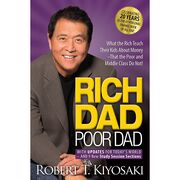
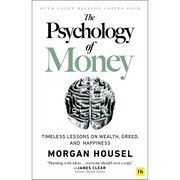

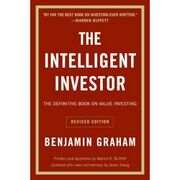
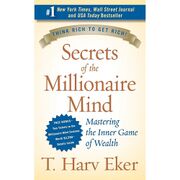

References
- ↑ 1.0 1.1 1.2 1.3 "Napoleon Hill, Think and Grow Rich (1937)". Library of Congress. Library of Congress. Retrieved 8 November 2025.
- ↑ 2.0 2.1 "Think and grow rich : original 1937 classic edition". WorldCat. OCLC. Retrieved 8 November 2025.
- ↑ 3.0 3.1 "Think and Grow Rich". Colorado Mountain College Library Catalog. Colorado Mountain College. Retrieved 9 November 2025.
- ↑ 4.0 4.1 "Think And Grow Rich". Penguin Books UK. Penguin Books. 8 August 2019. Retrieved 9 November 2025.
- ↑ 5.0 5.1 "The BusinessWeek Best-Seller List". Bill George. Bill George. 4 June 2007. Retrieved 9 November 2025.
- ↑ "Napoleon Hill". Macmillan. Macmillan Publishers. Retrieved 9 November 2025.
- ↑ "Fresh Prince". The New Yorker. 30 October 2006. Retrieved 9 November 2025.
- ↑ 8.0 8.1 "Napoleon Hill". EBSCO Research Starters. EBSCO Information Services. 2023. Retrieved 9 November 2025.
- ↑ "Think and Grow Rich: The Landmark Bestseller—Now Revised and Updated for the 21st Century". Internet Archive. Jeremy P. Tarcher/Penguin. 2005. Retrieved 9 November 2025.
- ↑ "Book review: Truthful Living: The First Writings of Napoleon Hill". Financial Times. 29 November 2018. Retrieved 9 November 2025.
- ↑ Woodruff, Mandi (14 September 2013). "15 Insights From The Man Who Taught The World To 'Think And Grow Rich'". Business Insider. Retrieved 9 November 2025.
- ↑ "Prosperity gospel". Encyclopaedia Britannica. Encyclopaedia Britannica, Inc. 28 October 2025. Retrieved 9 November 2025.
- ↑ Burkeman, Oliver (15 August 2009). "How to feel up in a downturn". The Guardian. Retrieved 9 November 2025.
- ↑ Novak, Matt (6 December 2016). "The Untold Story of Napoleon Hill, the Greatest Self-Help Scammer of All Time". Gizmodo. Retrieved 9 November 2025.
- ↑ Rendall, Jonathan (6 April 2003). "A breed apart". The Observer. Retrieved 9 November 2025.
- ↑ "Japanese Business Development Training CEO Visits UVA Wise, Signs Agreement with Napoleon Hill Foundation". UVA Wise News. University of Virginia’s College at Wise. 9 August 2024. Retrieved 9 November 2025.
- ↑ "Honoring Decades of Giving: The Napoleon Hill Foundation". UVA Wise News. University of Virginia’s College at Wise. 2 November 2022. Retrieved 10 November 2025.