
Think Again: Difference between revisions
No edit summary |
No edit summary |
||
| (5 intermediate revisions by the same user not shown) | |||
| Line 3: | Line 3: | ||
}} |
}} |
||
{{Section separator}} |
|||
== Introduction == |
== Introduction == |
||
| Line 24: | Line 25: | ||
}} |
}} |
||
📘 '''''Think Again''''' (Viking, 2 February 2021) is Adam |
📘 '''''{{Tooltip|Think Again}}''''' ({{Tooltip|Viking}}, 2 February 2021) is {{Tooltip|Adam Grant}}’s guide to the practice of rethinking—replacing “preacher, prosecutor, politician” mindsets with a scientist’s habit of testing beliefs and updating them.<ref name="PRH2021" /> |
||
It blends social-science research with case-led storytelling and teaches tools such as persuasive listening and building “challenge networks,” illustrated by an international debate champion, a musician who deradicalizes, and a “vaccine whisperer.”<ref name="PRH2021" /> |
|||
Library Journal |
{{Tooltip|Library Journal}} called it a “fast-paced account” from a leading authority on the psychology of thinking, accessible to general readers.<ref name="LibraryJournal2020">{{cite web |title=Think Again: The Power of Knowing What You Don't Know |url=https://www.libraryjournal.com/review/think-again-the-power-of-knowing-what-you-dont-know |website=Library Journal |publisher=Library Journal |date=1 December 2020 |access-date=8 November 2025}}</ref> |
||
The book is organized in three sections—individual, interpersonal, and collective rethinking—followed by a concluding chapter.<ref name="PRHHE2021">{{cite web |title=Think Again |url=https://penguinrandomhousehighereducation.com/book/?isbn=9780593395783 |website=Penguin Random House Higher Education |publisher=Penguin Random House |access-date=8 November 2025}}</ref> |
|||
The first edition (320 pages; ISBN 978-1-9848-7810-6) |
The first edition (320 pages; ISBN 978-1-9848-7810-6) appeared in hardcover on 2 February 2021 from {{Tooltip|Viking}}.<ref name="PRH2021" /><ref name="OCLC1191456279">{{cite web |title=Think again : the power of knowing what you don't know |url=https://search.worldcat.org/title/Think-again-%3A-the-power-of-knowing-what-you-don%27t-know/oclc/1191456279 |website=WorldCat |publisher=OCLC |access-date=8 November 2025}}</ref> |
||
The publisher lists the |
The publisher lists the book as a #1 New York Times bestseller, and it appeared on year-end lists from ''{{Tooltip|The Washington Post}}'' and ''{{Tooltip|Newsweek}}'' in 2021.<ref name="PRH2021" /><ref name="WaPoBest2021">{{cite news |title=Best nonfiction of 2021 |url=https://www.washingtonpost.com/arts-entertainment/2021/11/18/best-nonfiction-2021/ |work=The Washington Post |date=18 November 2021 |access-date=8 November 2025}}</ref><ref name="NewsweekFav2021">{{cite news |title=Our 21 Favorite Books of 2021 |url=https://www.newsweek.com/our-21-favorite-books-2021-1661466 |work=Newsweek |date=22 December 2021 |access-date=8 November 2025}}</ref> |
||
{{Section separator}} |
|||
== Chapter summary == |
|||
| ⚫ | |||
| ⚫ | '' |
||
=== Chapter 1 – A Preacher, a Prosecutor, a Politician, and a Scientist Walk into Your Mind === |
|||
| ⚫ | |||
| ⚫ | 🧠 In {{Tooltip|Milan}}, more than a hundred Italian startup founders entered a four-month entrepreneurship program and were randomly assigned either to standard training or to add “scientist’s goggles,” treating strategies as hypotheses, interviews as hypothesis generation, and prototypes as experiments. Over the following year the control group averaged under $300 in revenue, while the scientific-thinking group averaged over $12,000, pivoted more than twice as often, and won customers sooner. {{Tooltip|Phil Tetlock}}’s three mindsets—preacher, prosecutor, politician—show how identity can eclipse evidence when we defend sacred beliefs, hunt for others’ errors, or chase approval. {{Tooltip|Stephen Greenspan}}’s cautionary tale illustrates the cost: he invested nearly a third of his retirement savings in a fund tied to {{Tooltip|Bernie Madoff}}, watched it rise 25 percent, and then lost it overnight when the Ponzi scheme collapsed. {{Tooltip|Mike Lazaridis}}’s {{Tooltip|BlackBerry}} offers a corporate parallel: after marveling at the first iPhone in 2007 and overseeing a company valued above $70 billion in 2008, he still resisted adding a robust browser. He later balked at features like encrypted messaging—an opening {{Tooltip|WhatsApp}} eventually seized in a $19 billion acquisition—because he failed to test alternatives to his favored device model. The traps include confirmation bias, desirability bias, and the “I’m not biased” bias, and intelligence can harden certainty rather than sharpen accuracy. Thinking like a scientist ties identity to the quest for truth, not to any one idea; run small tests, seek disconfirming data, and revise models so humility, curiosity, and discovery prevent success from calcifying into dogma. |
||
=== Chapter 2 – The Armchair Quarterback and the Impostor: Finding the Sweet Spot of Confidence === |
|||
| ⚫ | 🧠 |
||
| ⚫ | 🪑 {{Tooltip|Ursula Mercz}}, a seamstress admitted to a clinic with headaches and dizziness, insisted she could still see despite neurological blindness—a classic sign of {{Tooltip|Anton’s syndrome}} and a metaphor for how people can be blind to their own blind spots. Two Icelandic figures then bracket the range: business leader Halla Tómasdóttir, publicly petitioned in 2015 to run for president, hesitated out of self-doubt yet finished second with more than a quarter of the vote, while former prime minister Davíð Oddsson projected unwavering confidence despite earlier failures. These cases map onto {{Tooltip|Dunning–Kruger}}: the unskilled can be overconfident “armchair quarterbacks,” and capable people often underrate themselves as “impostors.” Practical antidotes include objective yardsticks, learning goals, and “confident humility,” illustrated by {{Tooltip|Sara Blakely}} teaching herself hosiery manufacturing and patent basics before launching {{Tooltip|Spanx}}. Research cited from {{Tooltip|Basima Tewfik}} shows that professionals with impostor thoughts can be rated more interpersonally effective, and {{Tooltip|Danielle Tussing}}’s rotating charge-nurse study finds that those who felt some hesitation sought second opinions and led teams more effectively. Calibrate confidence to competence by anchoring self-belief in evidence and treating doubt as a cue to prepare and listen; keep testing assumptions so humility powers learning while confidence sustains action. |
||
=== Chapter 3 – The Joy of Being Wrong: The Thrill of Not Believing Everything You Think === |
|||
| ⚫ | 🪑 |
||
| ⚫ | 🤯 Nobel Prize–winning psychologist {{Tooltip|Daniel Kahneman}} models delight in error: when evidence overturns his view, he reacts with curiosity and genuine enthusiasm rather than defensiveness. That posture—holding ideas lightly—treats mistakes as data, not threats to identity. Evidence from the {{Tooltip|Good Judgment Project}}, a multi-year forecasting tournament run for {{Tooltip|IARPA}} from 2011 to 2015, shows that the most accurate forecasters treated beliefs as working hypotheses and updated their probabilities frequently, improving {{Tooltip|Brier scores}} over time. These “superforecasters” succeeded by revising early and often, even when revisions meant admitting yesterday’s confidence was misplaced. Identity-protective thinking—equating “I’m right” with “I am”—blocks this learning loop and makes disconfirming facts feel like personal attacks. Simple tests loosen attachment: ask what evidence would change your mind or write down conditions that would trigger a pivot. The social side matters too: surround yourself with people who notice when you’re off and make it safe to acknowledge it. Take pride in revising beliefs faster, not in defending them longer; progress comes from decoupling identity from opinions and replacing confirmation with hypothesis testing through frequent updates, explicit falsification, and an open door for disconfirming feedback. |
||
=== Chapter 4 – The Good Fight Club: The Psychology of Constructive Conflict === |
|||
| ⚫ | 🤯 |
||
| ⚫ | 🥊 In 2000 at {{Tooltip|Pixar}}, leaders hired {{Tooltip|Brad Bird}} to “shake things up”; technical heads initially said his vision would take a decade and $500 million, so he built a team of self-described misfits, invited rigorous debate, and four years later delivered Pixar’s most complex film to date while reducing cost per minute of animation. Dissent aimed at ideas, not people, becomes an engine for quality. Research by {{Tooltip|Karen “Etty” Jehn}} distinguishes task conflict (clashes over content and process) from relationship conflict (personal friction) and shows that teams with low relational friction can tolerate—and benefit from—high task conflict. An experiment by {{Tooltip|Jennifer Chatman}} and {{Tooltip|Sigal Barsade}} finds that agreeableness adapts to norms: in cooperative climates agreeable people stay accommodating, but in competitive climates they push back as hard as their disagreeable peers, underscoring how context shapes whether conflict helps or harms. Creative work echoes the pattern: Bird’s “good fights” sharpened scenes, and the {{Tooltip|Wright brothers}}’ spirited arguments over propeller design improved solutions. Safeguards include naming the shared goal, framing disputes as debates, and separating critiques of work from judgments of worth. A “challenge network” of disagreeable givers—peers who care enough to criticize—keeps blind spots visible and prevents yes-man traps. Productive tension moves ideas forward when norms welcome task conflict while protecting relationships, and critics pressure-test assumptions so the best ideas, not the loudest egos, win. |
||
{{Section separator}} |
|||
| ⚫ | 🥊 |
||
| ⚫ | |||
=== Chapter 5 – Dances with Foes: How to Win Debates and Influence People === |
|||
| ⚫ | |||
| ⚫ | 🗣️ At {{Tooltip|IBM’s Think conference}} in San Francisco on 11 February 2019, debate champion {{Tooltip|Harish Natarajan}} faced IBM’s {{Tooltip|Project Debater}} before a large live audience on the motion “We should subsidize preschools.” {{Tooltip|Intelligence Squared U.S.}} hosted the event, with moderator John Donvan giving each side 15 minutes to prepare, a four-minute opening, a four-minute rebuttal, and a two-minute close. A pre-debate poll showed most attendees favored subsidies, and the winner would be whoever shifted more minds by the end. Natarajan listened first, surfaced common ground, and then advanced a few strong counterpoints rather than a scattershot list, echoing research on expert negotiators who ask more questions and make fewer, sharper arguments. He steel-manned the AI’s case by restating its best claims and then probing assumptions and trade-offs. Post-debate voting swung enough to award him the victory even as many spectators reported learning from the machine’s torrent of evidence. Repeatable moves follow: lead with curiosity, frame debates as joint problem-solving, and invite the other side to help set the terms for what would change your mind. Persuasion works when it feels like a dance, not a duel—lower psychological reactance, present a small number of well-supported reasons, and let people reason their way to a revised view. |
||
=== Chapter 6 – Bad Blood on the Diamond: Diminishing Prejudice by Destabilizing Stereotypes === |
|||
| ⚫ | 🗣️ |
||
| ⚫ | ⚾ Historian Doris Kearns Goodwin’s childhood confession of hating the Yankees shows how the {{Tooltip|Boston Red Sox–New York Yankees rivalry}} models tribal thinking that hardens into prejudice. Loyalties born from accidents of birth—what city we grow up in, which colors our family cheers—can morph into sweeping stereotypes about rivals. Field experiments around baseball fandom and the idea that “bad blood” is often arbitrary demonstrate that highlighting the contingency of allegiances softens hostility. Counterfactual prompts—asking fans what they’d believe if they’d been born into the other city—and individuating stories complicate one-dimensional caricatures. {{Tooltip|Daryl Davis}}, a Black blues musician in {{Tooltip|Washington, D.C.}}, offers a stark example: patient conversations with {{Tooltip|Ku Klux Klan}} members led some to renounce the organization and hand over their robes, showing how respectful contact destabilizes stereotypes. Empathy exercises that focus on a specific out-group individual can flip in-group helping biases, especially when people see overlapping identities and goals. Together these tools chip away at identity-protective thinking and make room for nuance without demanding anyone abandon community ties. Progress starts by exposing how flimsy many group labels are and replacing monolithic categories with concrete, conflicting details; counterfactual thinking, shared identities, and humanizing contact disrupt snap generalizations so people update the stories they tell about who “they” are. |
||
=== Chapter 7 – Vaccine Whisperers and Mild-Mannered Interrogators: How the Right Kind of Listening Motivates People to Change === |
|||
| ⚫ | ⚾ |
||
| ⚫ | 💉 In {{Tooltip|Sherbrooke, Québec}}, Marie-Hélène Étienne-Rousseau delivered a premature son, Tobie, in 2018 and planned to refuse the newborn’s vaccines; neonatologist {{Tooltip|Arnaud Gagneur}} met her at the University of {{Tooltip|Sherbrooke}}’s {{Tooltip|Fleurimont Hospital}} for an unhurried conversation rooted in motivational interviewing. He asked open questions, reflected her worries, and asked permission before sharing information, ending by affirming the decision was hers. Weeks later, after reading about local measles risk, she chose to vaccinate her older children at home and approved Tobie’s shots before discharge. Québec’s “{{Tooltip|PromoVac}}” program placed vaccination counselors in maternity wards and, in trials, improved early-infant vaccine coverage versus usual care. Law enforcement offers a parallel: rapport-based interviewing and language-style matching elicit more accurate information than confrontational, confession-driven tactics. Across settings the pattern holds: preaching and pressure trigger resistance, while reflective listening and autonomy support invite “change talk.” Use the cadence—ask, reflect, affirm, summarize, and ask again—to scale from hospital rooms to tense negotiations without sacrificing truth or agency. Listening that respects people’s goals often persuades better than arguing from authority; self-persuasion sticks when people voice their own reasons for change and a curious interviewer keeps the rethinking cycle alive. |
||
{{Section separator}} |
|||
| ⚫ | 💉 |
||
== Part III – Collective Rethinking: Creating Communities of Lifelong Learners == |
|||
=== |
=== Chapter 8 – Charged Conversations: Depolarizing Our Divided Discussions === |
||
| ⚫ | ⚡ At {{Tooltip|Columbia University’s Difficult Conversations Lab}}, psychologist {{Tooltip|Peter T. Coleman}} pairs strangers who disagree on polarizing issues and studies what helps them talk productively. In one setup, participants first read about gun control: if the article argued one side, they had roughly a 46% chance of drafting a joint statement; if it framed the topic as complex with shades of gray, every pair found common ground. This “complexifying” move counters binary bias—the tendency to compress a spectrum into two boxes—and shows why merely presenting “both sides” can entrench polarization. Emotion matters too: conversations go better when people feel a mix—curiosity alongside anxiety—rather than being locked in anger. Techniques from persuasion research reinforce the point: ask genuine questions, map the full range of positions, and, when useful, morally reframe arguments to align with the other side’s values without distorting facts. The aim is not to win a verdict but to make thinking more granular so agreement has more places to land. Complexity—not combat—creates conditions for rethinking; replace either/or with a spectrum and broaden the affective palette to reduce reactance and invite cooperative problem-solving. |
||
=== Chapter 9 – Rewriting the Textbook: Teaching Students to Question Knowledge === |
|||
| ⚫ | ⚡ |
||
| ⚫ | 📚 Wisconsin social-studies teacher Erin McCarthy hands her eighth graders a 1940 history textbook and asks them to read it like investigators, noting errors, omissions, and slanted language; the exercise jolts students into seeing knowledge as provisional, not permanent. She then has them rewrite sections and, in another lesson, study a chapter drafted entirely from girls’ and women’s perspectives, which helps some boys feel how a single-lens narrative distorts the record. Classroom vignettes connect to research showing that active learning—questioning sources, comparing accounts, and teaching others—beats passive lecture for durable understanding. {{Tooltip|Ron Berger}}’s “{{Tooltip|Austin’s Butterfly}}” protocol supplies a concrete craft: a first grader at {{Tooltip|Anser Charter School}} in Boise takes a scientific illustration through multiple drafts, guided by kind, specific peer critique, until the work becomes precise. Students learn to check whether the “sender is the source,” to resist popularity and rankings as proxies for truth, and to ask questions that don’t have just one right answer. Rather than cramming facts, they practice argument literacy: how claims are built, tested, and revised. Position school as a workshop for rethinking—treat confusion as a cue for inquiry and expect drafts on the way to clarity—and bake uncertainty, multiple perspectives, and iterative feedback into tasks so curiosity and intellectual humility become habits, not slogans. |
||
=== Chapter 10 – That’s Not the Way We’ve Always Done It: Building Cultures of Learning at Work === |
|||
| ⚫ | 📚 |
||
| ⚫ | 🏢 NASA’s tragedies loom as cautionary tales: before {{Tooltip|Challenger}} and {{Tooltip|Columbia}}, engineers raised concerns that were muted or missed in a culture primed to perform, not to pause. Research by {{Tooltip|Amy Edmondson}} shows why that climate backfires—teams with higher psychological safety surface more errors on paper yet make fewer in practice because people feel free to speak up early. Former {{Tooltip|Johnson Space Center}} director {{Tooltip|Ellen Ochoa}} models how to reset norms: leaders broadcast uncertainties, demand dissent on consequential calls, and keep asking, “How do we know?” so status won’t substitute for scrutiny. Distinguish performance cultures, which canonize “best practices,” from learning cultures, which expect continual updates and separate process accountability (How carefully did we decide?) from outcome accountability (Did it work?). Process accountability shows up in {{Tooltip|premortems}}, red-team reviews, and {{Tooltip|decision logs}} that force alternatives to be considered before momentum hardens. When organizations reward candor and curiosity as much as results, they catch small problems early and adapt faster after setbacks. Rethinking thrives where safety and scrutiny intersect—people feel secure enough to challenge and are obligated to examine how choices are made—so pair psychological safety with process accountability and keep the learning zone as the default. |
||
{{Section separator}} |
|||
| ⚫ | 🏢 |
||
| ⚫ | |||
=== Chapter 11 – Escaping Tunnel Vision: Reconsidering Our Best-Laid Career and Life Plans === |
|||
| ⚫ | |||
| ⚫ | 🔭 Cousin Ryan, expected by his family to become a physician, felt doubts before applying to college about committing to pre-med and wondered about economics instead; he pushed ahead, completed medical training, and later, as a neurosurgeon, admitted he would have chosen differently. His path shows how sunk costs tempt people to keep investing even when the fit is wrong, a familiar escalation of commitment. A second trap, identity foreclosure, appears when a person adopts a career label early and then closes off exploration, treating a job title as the self. Ask children “what do you like to do?” rather than “what do you want to be?” so possibilities stay open as interests change. Think like a scientist: treat a career direction as a hypothesis, run small tests, and look for disconfirming evidence before doubling down. Drawing on Herminia Ibarra’s ''Working Identity'', act and experiment into clarity instead of waiting for perfect self-knowledge. Low-risk trials—shadowing, project sprints, or job crafting—generate data about enjoyment, strengths, and fit without burning bridges. Keep plans flexible with a twice-yearly career checkup that asks whether learning has plateaued and whether work still matches evolving values and skills. Identities anchored in principles (curiosity, service, integrity) travel better across roles than identities anchored in a single occupation, which makes pivots less threatening. Prevent grit from calcifying into stubbornness by continually testing whether the path still deserves persistence; loosen attachment to a chosen identity and interrupt sunk-cost reasoning so evidence and curiosity—not inertia—steer the next move. |
||
| ⚫ | ''—Note: The above summary follows the {{Tooltip|Viking}} hardcover edition (2 February 2021, ISBN 978-1-9848-7810-6).''<ref name="PRH2021">{{cite web |title=Think Again by Adam Grant |url=https://www.penguinrandomhouse.com/books/607660/think-again-by-adam-grant/ |website=Penguin Random House |publisher=Penguin Random House |date=2 February 2021 |access-date=8 November 2025}}</ref><ref name="OCLC1191456279" /> |
||
| ⚫ | 🔭 |
||
{{Section separator}} |
|||
== Background & reception == |
== Background & reception == |
||
🖋️ '''Author & writing'''. Grant, an organizational psychologist and Wharton professor, is widely recognized for |
🖋️ '''Author & writing'''. Grant, an organizational psychologist and Wharton professor, is widely recognized for teaching and research on motivation and meaning.<ref name="WhartonProfile">{{cite web |title=Adam Grant - Wharton Management |url=https://mgmt.wharton.upenn.edu/profile/grantad/ |website=Wharton School, University of Pennsylvania |publisher=University of Pennsylvania |access-date=8 November 2025}}</ref> Before ''{{Tooltip|Think Again}}'', he authored ''Give and Take'' and ''Originals'' and co-authored ''Option B''; this book focuses on rethinking and unlearning.<ref name="PRH2021" /> He contrasts the “preacher, prosecutor, politician” modes with thinking like a scientist and popularizes tactics such as cultivating a “challenge network.”<ref name="PRH2021" /><ref name="EntrepreneurChNetwork">{{cite news |title=Are You Thinking Like a Challenger? |url=https://www.entrepreneur.com/leadership/are-you-thinking-like-a-challenger/373175 |work=Entrepreneur |date=27 June 2021 |access-date=8 November 2025}}</ref> The narrative voice mixes research synthesis with storytelling—{{Tooltip|Library Journal}} called it a “fast-paced account”—and the book is structured in three sections: individual, interpersonal, and collective rethinking.<ref name="LibraryJournal2020" /><ref name="PRHHE2021" /> Grant promoted the work in public forums, including a {{Tooltip|WHYY}} conversation about the “joy in admitting we’re wrong,” and {{Tooltip|TED}} highlighted the book alongside his talk “What frogs in hot water can teach us about thinking again.”<ref name="WHYY2021">{{cite web |title=Adam Grant on “Think Again: The Power of Knowing What You Don’t Know” |url=https://whyy.org/episodes/adam-grant-on-think-again-the-power-of-knowing-what-you-dont-know/ |website=WHYY |publisher=WHYY |date=26 March 2021 |access-date=8 November 2025}}</ref><ref name="TEDBooks2021">{{cite web |title=New books from TED speakers: Summer reading |url=https://ideas.ted.com/new-books-from-ted-speakers-summer-reading/ |website=TED Ideas |publisher=TED Conferences |date=23 June 2021 |access-date=8 November 2025}}</ref> The Library of Congress also showcased Grant and the book’s themes at the 2021 National Book Festival.<ref name="LoCBookFest2021">{{cite web |title=Adam Grant |url=https://www.loc.gov/events/2021-national-book-festival/authors/item/n2012065680/adam-grant/ |website=Library of Congress |publisher=Library of Congress |date=2021 |access-date=8 November 2025}}</ref> |
||
📈 '''Commercial reception'''. Penguin Random House lists ''Think Again'' as a #1 New York Times bestseller.<ref name="PRH2021" /> ''Publishers Weekly'' reported the book at #8 on its national print bestsellers for the week of 22 February 2021.<ref name="PWFeb2021">{{cite news |title=This Week's Bestsellers: February 22, 2021 |url=https://www.publishersweekly.com/pw/by-topic/industry-news/bookselling/article/85646-this-week-s-bestsellers-february-22-2021.html |work=Publishers Weekly |date=19 February 2021 |access-date=8 November 2025}}</ref> It also appeared on ''The Washington Post'' lists, including #9 on the hardcover bestsellers dated 30 March 2021 and later on the paperback list in March 2024.<ref name="WaPoHB2021">{{cite news |title=Washington Post hardcover bestsellers |url=https://www.washingtonpost.com/entertainment/books/washington-post-hardcover-bestsellers/2021/03/30/4e6ec406-9181-11eb-9668-89be11273c09_story.html |work=The Washington Post |date=30 March 2021 |access-date=8 November 2025}}</ref><ref name="WaPoPB2024">{{cite news |title=Washington Post paperback bestsellers |url=https://www.washingtonpost.com/books/2024/03/20/washington-post-paperback-bestsellers/ |work=The Washington Post |date=20 March 2024 |access-date=8 November 2025}}</ref> |
📈 '''Commercial reception'''. {{Tooltip|Penguin Random House}} lists ''{{Tooltip|Think Again}}'' as a #1 New York Times bestseller.<ref name="PRH2021" /> ''Publishers Weekly'' reported the book at #8 on its national print bestsellers for the week of 22 February 2021.<ref name="PWFeb2021">{{cite news |title=This Week's Bestsellers: February 22, 2021 |url=https://www.publishersweekly.com/pw/by-topic/industry-news/bookselling/article/85646-this-week-s-bestsellers-february-22-2021.html |work=Publishers Weekly |date=19 February 2021 |access-date=8 November 2025}}</ref> It also appeared on ''{{Tooltip|The Washington Post}}'' lists, including #9 on the hardcover bestsellers dated 30 March 2021 and later on the paperback list in March 2024.<ref name="WaPoHB2021">{{cite news |title=Washington Post hardcover bestsellers |url=https://www.washingtonpost.com/entertainment/books/washington-post-hardcover-bestsellers/2021/03/30/4e6ec406-9181-11eb-9668-89be11273c09_story.html |work=The Washington Post |date=30 March 2021 |access-date=8 November 2025}}</ref><ref name="WaPoPB2024">{{cite news |title=Washington Post paperback bestsellers |url=https://www.washingtonpost.com/books/2024/03/20/washington-post-paperback-bestsellers/ |work=The Washington Post |date=20 March 2024 |access-date=8 November 2025}}</ref> |
||
👍 '''Praise'''. ''The Washington Post'' named ''Think Again'' one of its best nonfiction books of 2021, noting that it “delivers smart advice on unlearning assumptions and opening ourselves up to curiosity and humility.”<ref name="WaPoBest2021" /> ''Newsweek'' included it among “Our 21 Favorite Books of 2021,” praising its emphasis on questioning deeply held beliefs.<ref name="NewsweekFav2021" /> Library Journal recommended it to general readers as a brisk, authoritative account of rethinking and decision-making.<ref name="LibraryJournal2020" /> |
👍 '''Praise'''. ''{{Tooltip|The Washington Post}}'' named ''{{Tooltip|Think Again}}'' one of its best nonfiction books of 2021, noting that it “delivers smart advice on unlearning assumptions and opening ourselves up to curiosity and humility.”<ref name="WaPoBest2021" /> ''{{Tooltip|Newsweek}}'' included it among “Our 21 Favorite Books of 2021,” praising its emphasis on questioning deeply held beliefs.<ref name="NewsweekFav2021" /> {{Tooltip|Library Journal}} recommended it to general readers as a brisk, authoritative account of rethinking and decision-making.<ref name="LibraryJournal2020" /> |
||
👎 '''Criticism'''. ''Kirkus Reviews'' judged that the book “breaks little to no ground,” even while offering useful reminders to test one’s beliefs.<ref name="Kirkus2020">{{cite web |title=THINK AGAIN |url=https://www.kirkusreviews.com/book-reviews/adam-grant/think-again-grant/ |website=Kirkus Reviews |publisher=Kirkus Reviews |date=24 November 2020 |access-date=8 November 2025}}</ref> A review in ''Quillette'' argued that Grant “provides few clues about where rethinking a given issue ought to end,” calling for clearer boundaries between healthy doubt and paralyzing uncertainty.<ref name="Quillette2021">{{cite news |title=Six Great Ideas from Adam Grant's 'Think Again' |url=https://quillette.com/2021/05/28/six-great-ideas-from-adam-grants-think-again/ |work=Quillette |date=28 May 2021 |access-date=8 November 2025}}</ref> An academic notice in the ''Journal of Character and Leadership Development'' found the leadership framing compelling but observed the |
👎 '''Criticism'''. ''Kirkus Reviews'' judged that the book “breaks little to no ground,” even while offering useful reminders to test one’s beliefs.<ref name="Kirkus2020">{{cite web |title=THINK AGAIN |url=https://www.kirkusreviews.com/book-reviews/adam-grant/think-again-grant/ |website=Kirkus Reviews |publisher=Kirkus Reviews |date=24 November 2020 |access-date=8 November 2025}}</ref> A review in ''Quillette'' argued that Grant “provides few clues about where rethinking a given issue ought to end,” calling for clearer boundaries between healthy doubt and paralyzing uncertainty.<ref name="Quillette2021">{{cite news |title=Six Great Ideas from Adam Grant's 'Think Again' |url=https://quillette.com/2021/05/28/six-great-ideas-from-adam-grants-think-again/ |work=Quillette |date=28 May 2021 |access-date=8 November 2025}}</ref> An academic notice in the ''Journal of Character and Leadership Development'' found the leadership framing compelling but observed the reliance on familiar corporate cautionary tales (e.g., Blockbuster, Kodak, {{Tooltip|BlackBerry}}).<ref name="JCLD2021">{{cite journal |author=Dickman, K. |date=2021 |title=A Review of “Think Again: The Power of Knowing What You Don’t Know” |journal=Journal of Character and Leadership Development |volume=8 |issue=3 |pages= |url=https://jcldusafa.org/index.php/jcld/article/view/222 |access-date=8 November 2025}}</ref> |
||
🌍 '''Impact & adoption'''. Universities |
🌍 '''Impact & adoption'''. Universities assigned the book in courses and reading groups, including a University of Florida Honors (Un)Common Read seminar (Fall 2022), a University of Denver graduate course on Persuasion and Influence (2023), and a University of Pennsylvania critical-writing course (2025).<ref name="UFHonors2022">{{cite web |title=IDH 2930 (un)common read – Think Again (syllabus) |url=https://www.honors.ufl.edu/media/honorsufledu/syllabi/fall-22/2042_27881-ThinkAgain-Hershfield.pdf |website=University of Florida Honors Program |publisher=University of Florida |date=2022 |access-date=8 November 2025}}</ref><ref name="UDenver2023">{{cite web |title=COMM 4016 Persuasion and Influence (syllabus excerpt) |url=https://www.furman.edu/faculty-development-center/event/think-again-the-power-ofknowingwhat-you-dot-know/ |website=Furman University / University of Denver course materials |publisher=Furman University |date=18 January 2022 |access-date=8 November 2025}}</ref><ref name="UPennCritWriting2025">{{cite web |title=Critical Writing Course Collection – Rethinking (course description) |url=https://apps.sas.upenn.edu/writing/ccs/catalog.php?action=query_results&conj=and&first_row=1&mode=all&prog=CRIT&term=2025A |website=School of Arts and Sciences, University of Pennsylvania |publisher=University of Pennsylvania |date=2025 |access-date=8 November 2025}}</ref> Public-facing platforms amplified the ideas—{{Tooltip|WHYY}} hosted a live conversation and {{Tooltip|TED}} featured the book alongside Grant’s related talk—and former U.S. President {{Tooltip|Bill Clinton}} publicly cited ''{{Tooltip|Think Again}}'' as prompting him to reconsider unexamined preconceptions.<ref name="WHYY2021" /><ref name="TEDBooks2021" /><ref name="GuardianClinton">{{cite news |title=Bill Clinton: ‘I always wanted to be a writer, but doubted my ability to do it’ |url=https://www.theguardian.com/books/2021/jun/11/bill-clinton-i-always-wanted-to-be-a-writer-but-doubted-my-ability-to-do-it |work=The Guardian |date=11 June 2021 |access-date=8 November 2025}}</ref> |
||
{{Section separator}} |
|||
== Related content & more == |
|||
== See also == |
|||
{{Youtube thumbnail | CIlgTBmiov0 | TED Talk — Adam Grant: What frogs in hot water can teach us about thinking again}} |
|||
=== YouTube videos === |
|||
{{Youtube thumbnail | |
{{Youtube thumbnail | ZCYVqivcg_g | ''Think Again'' — animated book summary by Productivity Game}} |
||
{{Youtube thumbnail | ZCYVqivcg_g | Think Again — animated book summary by Productivity Game (9 min)}} |
|||
=== CapSach articles === |
|||
{{ |
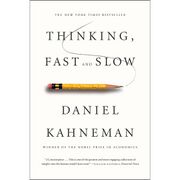
{{Thinking, Fast and Slow/thumbnail}} |
||
{{ |
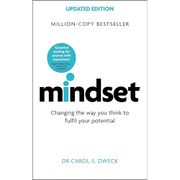
{{Mindset/thumbnail}} |
||
{{ |
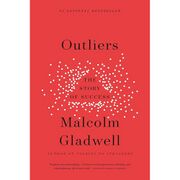
{{Outliers/thumbnail}} |
||
{{ |
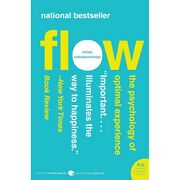
{{Flow/thumbnail}} |
||
{{ |
{{Predictably Irrational/thumbnail}} |
||
{{ |
{{book summaries/thumbnail}} |
||
{{CS/Self-improvement book summaries/thumbnail}} |
|||
{{Insert before References}} |
{{Insert before References}} |
||
{{Section separator}} |
|||
== References == |
== References == |
||
{{reflist}} |
{{reflist}} |
||
[[Category:Self-improvement books]] |
|||
[[Category:CS articles]] |
|||
{{Insert bottom}} |
{{Insert bottom}} |
||
Latest revision as of 22:10, 2 February 2026
"What evidence would change your mind? If the answer is nothing, then there’s no point in continuing the debate. You can lead a horse to water, but you can’t make it think."
— Adam Grant, Think Again (2021)
Introduction
| Think Again | |
|---|---|
 | |
| Full title | Think Again: The Power of Knowing What You Don't Know |
| Author | Adam Grant |
| Language | English |
| Subject | Critical thinking; Decision-making; Personal development |
| Genre | Nonfiction; Psychology; Self-help |
| Publisher | Viking |
Publication date | 2 February 2021 |
| Publication place | United States |
| Media type | Print (hardcover); e-book; audiobook |
| Pages | 320 |
| ISBN | 978-1-9848-7810-6 |
| Goodreads rating | 4.2/5 (as of 8 November 2025) |
| Website | adamgrant.net |
📘 Think Again (Viking, 2 February 2021) is Adam Grant’s guide to the practice of rethinking—replacing “preacher, prosecutor, politician” mindsets with a scientist’s habit of testing beliefs and updating them.[1] It blends social-science research with case-led storytelling and teaches tools such as persuasive listening and building “challenge networks,” illustrated by an international debate champion, a musician who deradicalizes, and a “vaccine whisperer.”[1] Library Journal called it a “fast-paced account” from a leading authority on the psychology of thinking, accessible to general readers.[2] The book is organized in three sections—individual, interpersonal, and collective rethinking—followed by a concluding chapter.[3] The first edition (320 pages; ISBN 978-1-9848-7810-6) appeared in hardcover on 2 February 2021 from Viking.[1][4] The publisher lists the book as a #1 New York Times bestseller, and it appeared on year-end lists from The Washington Post and Newsweek in 2021.[1][5][6]
Part I – Individual Rethinking: Updating Our Own Views
Chapter 1 – A Preacher, a Prosecutor, a Politician, and a Scientist Walk into Your Mind
🧠 In Milan, more than a hundred Italian startup founders entered a four-month entrepreneurship program and were randomly assigned either to standard training or to add “scientist’s goggles,” treating strategies as hypotheses, interviews as hypothesis generation, and prototypes as experiments. Over the following year the control group averaged under $300 in revenue, while the scientific-thinking group averaged over $12,000, pivoted more than twice as often, and won customers sooner. Phil Tetlock’s three mindsets—preacher, prosecutor, politician—show how identity can eclipse evidence when we defend sacred beliefs, hunt for others’ errors, or chase approval. Stephen Greenspan’s cautionary tale illustrates the cost: he invested nearly a third of his retirement savings in a fund tied to Bernie Madoff, watched it rise 25 percent, and then lost it overnight when the Ponzi scheme collapsed. Mike Lazaridis’s BlackBerry offers a corporate parallel: after marveling at the first iPhone in 2007 and overseeing a company valued above $70 billion in 2008, he still resisted adding a robust browser. He later balked at features like encrypted messaging—an opening WhatsApp eventually seized in a $19 billion acquisition—because he failed to test alternatives to his favored device model. The traps include confirmation bias, desirability bias, and the “I’m not biased” bias, and intelligence can harden certainty rather than sharpen accuracy. Thinking like a scientist ties identity to the quest for truth, not to any one idea; run small tests, seek disconfirming data, and revise models so humility, curiosity, and discovery prevent success from calcifying into dogma.
Chapter 2 – The Armchair Quarterback and the Impostor: Finding the Sweet Spot of Confidence
🪑 Ursula Mercz, a seamstress admitted to a clinic with headaches and dizziness, insisted she could still see despite neurological blindness—a classic sign of Anton’s syndrome and a metaphor for how people can be blind to their own blind spots. Two Icelandic figures then bracket the range: business leader Halla Tómasdóttir, publicly petitioned in 2015 to run for president, hesitated out of self-doubt yet finished second with more than a quarter of the vote, while former prime minister Davíð Oddsson projected unwavering confidence despite earlier failures. These cases map onto Dunning–Kruger: the unskilled can be overconfident “armchair quarterbacks,” and capable people often underrate themselves as “impostors.” Practical antidotes include objective yardsticks, learning goals, and “confident humility,” illustrated by Sara Blakely teaching herself hosiery manufacturing and patent basics before launching Spanx. Research cited from Basima Tewfik shows that professionals with impostor thoughts can be rated more interpersonally effective, and Danielle Tussing’s rotating charge-nurse study finds that those who felt some hesitation sought second opinions and led teams more effectively. Calibrate confidence to competence by anchoring self-belief in evidence and treating doubt as a cue to prepare and listen; keep testing assumptions so humility powers learning while confidence sustains action.
Chapter 3 – The Joy of Being Wrong: The Thrill of Not Believing Everything You Think
🤯 Nobel Prize–winning psychologist Daniel Kahneman models delight in error: when evidence overturns his view, he reacts with curiosity and genuine enthusiasm rather than defensiveness. That posture—holding ideas lightly—treats mistakes as data, not threats to identity. Evidence from the Good Judgment Project, a multi-year forecasting tournament run for IARPA from 2011 to 2015, shows that the most accurate forecasters treated beliefs as working hypotheses and updated their probabilities frequently, improving Brier scores over time. These “superforecasters” succeeded by revising early and often, even when revisions meant admitting yesterday’s confidence was misplaced. Identity-protective thinking—equating “I’m right” with “I am”—blocks this learning loop and makes disconfirming facts feel like personal attacks. Simple tests loosen attachment: ask what evidence would change your mind or write down conditions that would trigger a pivot. The social side matters too: surround yourself with people who notice when you’re off and make it safe to acknowledge it. Take pride in revising beliefs faster, not in defending them longer; progress comes from decoupling identity from opinions and replacing confirmation with hypothesis testing through frequent updates, explicit falsification, and an open door for disconfirming feedback.
Chapter 4 – The Good Fight Club: The Psychology of Constructive Conflict
🥊 In 2000 at Pixar, leaders hired Brad Bird to “shake things up”; technical heads initially said his vision would take a decade and $500 million, so he built a team of self-described misfits, invited rigorous debate, and four years later delivered Pixar’s most complex film to date while reducing cost per minute of animation. Dissent aimed at ideas, not people, becomes an engine for quality. Research by Karen “Etty” Jehn distinguishes task conflict (clashes over content and process) from relationship conflict (personal friction) and shows that teams with low relational friction can tolerate—and benefit from—high task conflict. An experiment by Jennifer Chatman and Sigal Barsade finds that agreeableness adapts to norms: in cooperative climates agreeable people stay accommodating, but in competitive climates they push back as hard as their disagreeable peers, underscoring how context shapes whether conflict helps or harms. Creative work echoes the pattern: Bird’s “good fights” sharpened scenes, and the Wright brothers’ spirited arguments over propeller design improved solutions. Safeguards include naming the shared goal, framing disputes as debates, and separating critiques of work from judgments of worth. A “challenge network” of disagreeable givers—peers who care enough to criticize—keeps blind spots visible and prevents yes-man traps. Productive tension moves ideas forward when norms welcome task conflict while protecting relationships, and critics pressure-test assumptions so the best ideas, not the loudest egos, win.
Part II – Interpersonal Rethinking: Opening Other People's Minds
Chapter 5 – Dances with Foes: How to Win Debates and Influence People
🗣️ At IBM’s Think conference in San Francisco on 11 February 2019, debate champion Harish Natarajan faced IBM’s Project Debater before a large live audience on the motion “We should subsidize preschools.” Intelligence Squared U.S. hosted the event, with moderator John Donvan giving each side 15 minutes to prepare, a four-minute opening, a four-minute rebuttal, and a two-minute close. A pre-debate poll showed most attendees favored subsidies, and the winner would be whoever shifted more minds by the end. Natarajan listened first, surfaced common ground, and then advanced a few strong counterpoints rather than a scattershot list, echoing research on expert negotiators who ask more questions and make fewer, sharper arguments. He steel-manned the AI’s case by restating its best claims and then probing assumptions and trade-offs. Post-debate voting swung enough to award him the victory even as many spectators reported learning from the machine’s torrent of evidence. Repeatable moves follow: lead with curiosity, frame debates as joint problem-solving, and invite the other side to help set the terms for what would change your mind. Persuasion works when it feels like a dance, not a duel—lower psychological reactance, present a small number of well-supported reasons, and let people reason their way to a revised view.
Chapter 6 – Bad Blood on the Diamond: Diminishing Prejudice by Destabilizing Stereotypes
⚾ Historian Doris Kearns Goodwin’s childhood confession of hating the Yankees shows how the Boston Red Sox–New York Yankees rivalry models tribal thinking that hardens into prejudice. Loyalties born from accidents of birth—what city we grow up in, which colors our family cheers—can morph into sweeping stereotypes about rivals. Field experiments around baseball fandom and the idea that “bad blood” is often arbitrary demonstrate that highlighting the contingency of allegiances softens hostility. Counterfactual prompts—asking fans what they’d believe if they’d been born into the other city—and individuating stories complicate one-dimensional caricatures. Daryl Davis, a Black blues musician in Washington, D.C., offers a stark example: patient conversations with Ku Klux Klan members led some to renounce the organization and hand over their robes, showing how respectful contact destabilizes stereotypes. Empathy exercises that focus on a specific out-group individual can flip in-group helping biases, especially when people see overlapping identities and goals. Together these tools chip away at identity-protective thinking and make room for nuance without demanding anyone abandon community ties. Progress starts by exposing how flimsy many group labels are and replacing monolithic categories with concrete, conflicting details; counterfactual thinking, shared identities, and humanizing contact disrupt snap generalizations so people update the stories they tell about who “they” are.
Chapter 7 – Vaccine Whisperers and Mild-Mannered Interrogators: How the Right Kind of Listening Motivates People to Change
💉 In Sherbrooke, Québec, Marie-Hélène Étienne-Rousseau delivered a premature son, Tobie, in 2018 and planned to refuse the newborn’s vaccines; neonatologist Arnaud Gagneur met her at the University of Sherbrooke’s Fleurimont Hospital for an unhurried conversation rooted in motivational interviewing. He asked open questions, reflected her worries, and asked permission before sharing information, ending by affirming the decision was hers. Weeks later, after reading about local measles risk, she chose to vaccinate her older children at home and approved Tobie’s shots before discharge. Québec’s “PromoVac” program placed vaccination counselors in maternity wards and, in trials, improved early-infant vaccine coverage versus usual care. Law enforcement offers a parallel: rapport-based interviewing and language-style matching elicit more accurate information than confrontational, confession-driven tactics. Across settings the pattern holds: preaching and pressure trigger resistance, while reflective listening and autonomy support invite “change talk.” Use the cadence—ask, reflect, affirm, summarize, and ask again—to scale from hospital rooms to tense negotiations without sacrificing truth or agency. Listening that respects people’s goals often persuades better than arguing from authority; self-persuasion sticks when people voice their own reasons for change and a curious interviewer keeps the rethinking cycle alive.
Part III – Collective Rethinking: Creating Communities of Lifelong Learners
Chapter 8 – Charged Conversations: Depolarizing Our Divided Discussions
⚡ At Columbia University’s Difficult Conversations Lab, psychologist Peter T. Coleman pairs strangers who disagree on polarizing issues and studies what helps them talk productively. In one setup, participants first read about gun control: if the article argued one side, they had roughly a 46% chance of drafting a joint statement; if it framed the topic as complex with shades of gray, every pair found common ground. This “complexifying” move counters binary bias—the tendency to compress a spectrum into two boxes—and shows why merely presenting “both sides” can entrench polarization. Emotion matters too: conversations go better when people feel a mix—curiosity alongside anxiety—rather than being locked in anger. Techniques from persuasion research reinforce the point: ask genuine questions, map the full range of positions, and, when useful, morally reframe arguments to align with the other side’s values without distorting facts. The aim is not to win a verdict but to make thinking more granular so agreement has more places to land. Complexity—not combat—creates conditions for rethinking; replace either/or with a spectrum and broaden the affective palette to reduce reactance and invite cooperative problem-solving.
Chapter 9 – Rewriting the Textbook: Teaching Students to Question Knowledge
📚 Wisconsin social-studies teacher Erin McCarthy hands her eighth graders a 1940 history textbook and asks them to read it like investigators, noting errors, omissions, and slanted language; the exercise jolts students into seeing knowledge as provisional, not permanent. She then has them rewrite sections and, in another lesson, study a chapter drafted entirely from girls’ and women’s perspectives, which helps some boys feel how a single-lens narrative distorts the record. Classroom vignettes connect to research showing that active learning—questioning sources, comparing accounts, and teaching others—beats passive lecture for durable understanding. Ron Berger’s “Austin’s Butterfly” protocol supplies a concrete craft: a first grader at Anser Charter School in Boise takes a scientific illustration through multiple drafts, guided by kind, specific peer critique, until the work becomes precise. Students learn to check whether the “sender is the source,” to resist popularity and rankings as proxies for truth, and to ask questions that don’t have just one right answer. Rather than cramming facts, they practice argument literacy: how claims are built, tested, and revised. Position school as a workshop for rethinking—treat confusion as a cue for inquiry and expect drafts on the way to clarity—and bake uncertainty, multiple perspectives, and iterative feedback into tasks so curiosity and intellectual humility become habits, not slogans.
Chapter 10 – That’s Not the Way We’ve Always Done It: Building Cultures of Learning at Work
🏢 NASA’s tragedies loom as cautionary tales: before Challenger and Columbia, engineers raised concerns that were muted or missed in a culture primed to perform, not to pause. Research by Amy Edmondson shows why that climate backfires—teams with higher psychological safety surface more errors on paper yet make fewer in practice because people feel free to speak up early. Former Johnson Space Center director Ellen Ochoa models how to reset norms: leaders broadcast uncertainties, demand dissent on consequential calls, and keep asking, “How do we know?” so status won’t substitute for scrutiny. Distinguish performance cultures, which canonize “best practices,” from learning cultures, which expect continual updates and separate process accountability (How carefully did we decide?) from outcome accountability (Did it work?). Process accountability shows up in premortems, red-team reviews, and decision logs that force alternatives to be considered before momentum hardens. When organizations reward candor and curiosity as much as results, they catch small problems early and adapt faster after setbacks. Rethinking thrives where safety and scrutiny intersect—people feel secure enough to challenge and are obligated to examine how choices are made—so pair psychological safety with process accountability and keep the learning zone as the default.
Part IV – Conclusion
Chapter 11 – Escaping Tunnel Vision: Reconsidering Our Best-Laid Career and Life Plans
🔭 Cousin Ryan, expected by his family to become a physician, felt doubts before applying to college about committing to pre-med and wondered about economics instead; he pushed ahead, completed medical training, and later, as a neurosurgeon, admitted he would have chosen differently. His path shows how sunk costs tempt people to keep investing even when the fit is wrong, a familiar escalation of commitment. A second trap, identity foreclosure, appears when a person adopts a career label early and then closes off exploration, treating a job title as the self. Ask children “what do you like to do?” rather than “what do you want to be?” so possibilities stay open as interests change. Think like a scientist: treat a career direction as a hypothesis, run small tests, and look for disconfirming evidence before doubling down. Drawing on Herminia Ibarra’s Working Identity, act and experiment into clarity instead of waiting for perfect self-knowledge. Low-risk trials—shadowing, project sprints, or job crafting—generate data about enjoyment, strengths, and fit without burning bridges. Keep plans flexible with a twice-yearly career checkup that asks whether learning has plateaued and whether work still matches evolving values and skills. Identities anchored in principles (curiosity, service, integrity) travel better across roles than identities anchored in a single occupation, which makes pivots less threatening. Prevent grit from calcifying into stubbornness by continually testing whether the path still deserves persistence; loosen attachment to a chosen identity and interrupt sunk-cost reasoning so evidence and curiosity—not inertia—steer the next move.
—Note: The above summary follows the Viking hardcover edition (2 February 2021, ISBN 978-1-9848-7810-6).[1][4]
Background & reception
🖋️ Author & writing. Grant, an organizational psychologist and Wharton professor, is widely recognized for teaching and research on motivation and meaning.[7] Before Think Again, he authored Give and Take and Originals and co-authored Option B; this book focuses on rethinking and unlearning.[1] He contrasts the “preacher, prosecutor, politician” modes with thinking like a scientist and popularizes tactics such as cultivating a “challenge network.”[1][8] The narrative voice mixes research synthesis with storytelling—Library Journal called it a “fast-paced account”—and the book is structured in three sections: individual, interpersonal, and collective rethinking.[2][3] Grant promoted the work in public forums, including a WHYY conversation about the “joy in admitting we’re wrong,” and TED highlighted the book alongside his talk “What frogs in hot water can teach us about thinking again.”[9][10] The Library of Congress also showcased Grant and the book’s themes at the 2021 National Book Festival.[11]
📈 Commercial reception. Penguin Random House lists Think Again as a #1 New York Times bestseller.[1] Publishers Weekly reported the book at #8 on its national print bestsellers for the week of 22 February 2021.[12] It also appeared on The Washington Post lists, including #9 on the hardcover bestsellers dated 30 March 2021 and later on the paperback list in March 2024.[13][14]
👍 Praise. The Washington Post named Think Again one of its best nonfiction books of 2021, noting that it “delivers smart advice on unlearning assumptions and opening ourselves up to curiosity and humility.”[5] Newsweek included it among “Our 21 Favorite Books of 2021,” praising its emphasis on questioning deeply held beliefs.[6] Library Journal recommended it to general readers as a brisk, authoritative account of rethinking and decision-making.[2]
👎 Criticism. Kirkus Reviews judged that the book “breaks little to no ground,” even while offering useful reminders to test one’s beliefs.[15] A review in Quillette argued that Grant “provides few clues about where rethinking a given issue ought to end,” calling for clearer boundaries between healthy doubt and paralyzing uncertainty.[16] An academic notice in the Journal of Character and Leadership Development found the leadership framing compelling but observed the reliance on familiar corporate cautionary tales (e.g., Blockbuster, Kodak, BlackBerry).[17]
🌍 Impact & adoption. Universities assigned the book in courses and reading groups, including a University of Florida Honors (Un)Common Read seminar (Fall 2022), a University of Denver graduate course on Persuasion and Influence (2023), and a University of Pennsylvania critical-writing course (2025).[18][19][20] Public-facing platforms amplified the ideas—WHYY hosted a live conversation and TED featured the book alongside Grant’s related talk—and former U.S. President Bill Clinton publicly cited Think Again as prompting him to reconsider unexamined preconceptions.[9][10][21]
See also
References
- ↑ 1.0 1.1 1.2 1.3 1.4 1.5 1.6 1.7 "Think Again by Adam Grant". Penguin Random House. Penguin Random House. 2 February 2021. Retrieved 8 November 2025.
- ↑ 2.0 2.1 2.2 "Think Again: The Power of Knowing What You Don't Know". Library Journal. Library Journal. 1 December 2020. Retrieved 8 November 2025.
- ↑ 3.0 3.1 "Think Again". Penguin Random House Higher Education. Penguin Random House. Retrieved 8 November 2025.
- ↑ 4.0 4.1 "Think again : the power of knowing what you don't know". WorldCat. OCLC. Retrieved 8 November 2025.
- ↑ 5.0 5.1 "Best nonfiction of 2021". The Washington Post. 18 November 2021. Retrieved 8 November 2025.
- ↑ 6.0 6.1 "Our 21 Favorite Books of 2021". Newsweek. 22 December 2021. Retrieved 8 November 2025.
- ↑ "Adam Grant - Wharton Management". Wharton School, University of Pennsylvania. University of Pennsylvania. Retrieved 8 November 2025.
- ↑ "Are You Thinking Like a Challenger?". Entrepreneur. 27 June 2021. Retrieved 8 November 2025.
- ↑ 9.0 9.1 "Adam Grant on "Think Again: The Power of Knowing What You Don't Know"". WHYY. WHYY. 26 March 2021. Retrieved 8 November 2025.
- ↑ 10.0 10.1 "New books from TED speakers: Summer reading". TED Ideas. TED Conferences. 23 June 2021. Retrieved 8 November 2025.
- ↑ "Adam Grant". Library of Congress. Library of Congress. 2021. Retrieved 8 November 2025.
- ↑ "This Week's Bestsellers: February 22, 2021". Publishers Weekly. 19 February 2021. Retrieved 8 November 2025.
- ↑ "Washington Post hardcover bestsellers". The Washington Post. 30 March 2021. Retrieved 8 November 2025.
- ↑ "Washington Post paperback bestsellers". The Washington Post. 20 March 2024. Retrieved 8 November 2025.
- ↑ "THINK AGAIN". Kirkus Reviews. Kirkus Reviews. 24 November 2020. Retrieved 8 November 2025.
- ↑ "Six Great Ideas from Adam Grant's 'Think Again'". Quillette. 28 May 2021. Retrieved 8 November 2025.
- ↑ Dickman, K. (2021). "A Review of "Think Again: The Power of Knowing What You Don't Know"". Journal of Character and Leadership Development. 8 (3). Retrieved 8 November 2025.
- ↑ "IDH 2930 (un)common read – Think Again (syllabus)" (PDF). University of Florida Honors Program. University of Florida. 2022. Retrieved 8 November 2025.
- ↑ "COMM 4016 Persuasion and Influence (syllabus excerpt)". Furman University / University of Denver course materials. Furman University. 18 January 2022. Retrieved 8 November 2025.
- ↑ "Critical Writing Course Collection – Rethinking (course description)". School of Arts and Sciences, University of Pennsylvania. University of Pennsylvania. 2025. Retrieved 8 November 2025.
- ↑ "Bill Clinton: 'I always wanted to be a writer, but doubted my ability to do it'". The Guardian. 11 June 2021. Retrieved 8 November 2025.