
The Comfort Book: Difference between revisions
No edit summary |
No edit summary |
||
| (10 intermediate revisions by the same user not shown) | |||
| Line 1: | Line 1: | ||
{{Insert top}}{{Insert quote panel |
{{Insert top}}{{Insert quote panel |
||
| {{The |
| {{The Gift of Fear/random quote}} |
||
}} |
}} |
||
{{Section separator}} |
|||
== Introduction == |
== Introduction == |
||
{{Infobox book |
{{Infobox book |
||
| name = The |
| name = The Gift of Fear |
||
| image = the- |
| image = the-gift-of-fear-gavin-de-becker.jpg |
||
| full_title = |
| full_title = ''The Gift of Fear: Survival Signals That Protect Us from Violence'' |
||
| author = |
| author = Gavin de Becker |
||
| country = United States |
| country = United States |
||
| language = English |
| language = English |
||
| subject = |
| subject = Personal safety; Threat assessment; Violence prevention |
||
| genre = Nonfiction; Self-help |
| genre = Nonfiction; Self-help |
||
| publisher = |
| publisher = Little, Brown and Company |
||
| pub_date = |
| pub_date = June 1997 |
||
| media_type = Print (hardcover); e-book; audiobook |
| media_type = Print (hardcover, paperback); e-book; audiobook |
||
| pages = |
| pages = 334 |
||
| isbn = 978-0- |
| isbn = 978-0-316-23502-0 |
||
| goodreads_rating = |
| goodreads_rating = 4.15 |
||
| goodreads_rating_date = |
| goodreads_rating_date = 12 November 2025 |
||
| website = [https://www. |
| website = [https://www.hachettebookgroup.com/titles/gavin-de-becker/the-gift-of-fear/9780316235778/ hachettebookgroup.com] |
||
}} |
}} |
||
📘 '''''{{Tooltip|The Gift of Fear}}''''' is a nonfiction book on personal safety by {{Tooltip|Gavin de Becker}}. It was first published in the {{Tooltip|United States}} by {{Tooltip|Little, Brown and Company}} in June 1997.<ref name="LOC1997">{{cite web |title=The Gift of Fear : Survival Signals That Protect Us From Violence |url=https://lccn.loc.gov/96051051 |website=Library of Congress Catalog |publisher=Library of Congress |access-date=12 November 2025}}</ref><ref name="WorldCat1997">{{cite web |title=The gift of fear: survival signals that protect us from violence (First edition) |url=https://www.worldcat.org/title/gift-of-fear-survival-signals-that-protect-us-from-violence/oclc/36143575 |website=WorldCat |publisher=OCLC |access-date=12 November 2025}}</ref> The book teaches readers to trust intuition and to recognize “{{Tooltip|pre-incident indicators}}” ({{Tooltip|PINS}}) that often precede violence, so they can act early to avoid danger. Written in case-driven chapters that cover domestic abuse, stalking, and workplace threats, it blends stories from de Becker’s own investigations with practical checklists and guidance.<ref name="OJP1997">{{cite web |title=Gift of Fear: Survival Signals That Protect Us From Violence |url=https://www.ojp.gov/ncjrs/virtual-library/abstracts/gift-fear-survival-signals-protect-us-violence |website=Office of Justice Programs |publisher=U.S. Department of Justice |access-date=12 November 2025}}</ref> The book became a bestseller, reaching No. 4 on {{Tooltip|The New York Times}} list in 1997.<ref name="LAT2002">{{cite news |last=Avins |first=Mimi |title=Driven by the Fear Factor |url=https://www.latimes.com/archives/la-xpm-2002-mar-03-lv-debecker3-story.html |work=Los Angeles Times |date=3 March 2002 |access-date=12 November 2025}}</ref> {{Tooltip|Newsweek}} reported that {{Tooltip|Oprah Winfrey}}’s on-air endorsement helped drive additional printings—an extra 250,000 copies—and that the book topped bestseller lists soon after publication.<ref name="Newsweek1997">{{cite news |title=Don’t Ignore Your Fear |url=https://www.newsweek.com/dont-ignore-your-fear-174264 |work=Newsweek |date=20 July 1997 |access-date=12 November 2025}}</ref> |
|||
📘 '''''The Comfort Book''''' is a nonfiction collection by Matt Haig, published by Penguin Life on 6 July 2021.<ref name="PRH2021" /> The first U.S. edition runs 272 pages (ISBN 978-0-14-313666-8).<ref name="OCLC1202771650">{{cite web |title=The comfort book |url=https://search.worldcat.org/th/title/1257552479 |website=WorldCat |publisher=OCLC |access-date=28 October 2025}}</ref> |
|||
It gathers short notes, lists, quotations, and brief essays intended to help readers slow down, accept themselves, and find hope, drawing on sources from history, science, and Haig’s own experience.<ref name="PRHLIB2021" /> |
|||
The author frames it as a free-form, non-linear book to “dip into,” with many very short chapters and generous white space rather than a rigid program.<ref name="GuardianInt2021">{{cite news |title=Matt Haig: ‘I have never written a book that will be more spoofed or hated’ |url=https://www.theguardian.com/books/2021/jul/01/matt-haig-i-have-never-written-a-book-that-will-be-more-spoofed-or-hated |work=The Guardian |date=1 July 2021 |access-date=28 October 2025 |last=Dean |first=Jonathan}}</ref> |
|||
It was an instant *New York Times* bestseller,<ref name="PRH2021" /> The *Washington Post* named it one of the best feel-good books of 2021 (18 November 2021),<ref name="WaPo2021FG">{{cite news |title=Best feel-good books of 2021 |url=https://www.washingtonpost.com/arts-entertainment/2021/11/18/best-feel-good-books/ |work=The Washington Post |date=18 November 2021 |access-date=28 October 2025 |last=Haupt |first=Angela}}</ref> and its UK publisher reports it debuted at No. 1 on *The Sunday Times* list.<ref name="Canongate2021">{{cite web |title=The Comfort Book |url=https://canongate.co.uk/books/3035-the-comfort-book/ |website=Canongate |publisher=Canongate Books |access-date=28 October 2025}}</ref> |
|||
{{Section separator}} |
|||
== Chapter summary == |
|||
== Chapters == |
|||
''This outline follows the Penguin Life hardcover edition (2021, 272 pp.; ISBN 978-0-14-313666-8).''<ref name="PRH2021">{{cite web |title=The Comfort Book |url=https://www.penguinrandomhouse.com/books/672342/the-comfort-book-by-matt-haig/ |website=Penguin Random House |publisher=Penguin Random House |date=6 July 2021 |access-date=28 October 2025}}</ref><ref name="PRHLIB2021">{{cite web |title=The Comfort Book |url=https://penguinrandomhouselibrary.com/book/?isbn=9780143136668 |website=Penguin Random House Library |publisher=Penguin Random House |date=6 July 2021 |access-date=28 October 2025}}</ref> |
|||
=== Chapter 1 – In the presence of danger === |
|||
=== I === |
|||
🚨 That afternoon, Kelly struggled into her apartment building with too many groceries, latched the once-unlatched door, and began climbing four flights. Near the third landing a bag split and cans of cat food skittered downstairs; a well-dressed stranger bounded up collecting them and insisted on helping to the fourth floor. He built quick familiarity—mentioning a “broken watch” and a “hungry cat”—and tugged a bag from her hand after she twice refused. At her threshold he suggested leaving the door “open like ladies do in old movies,” then crossed the line and kept talking as control quietly shifted. Hours later, after raping her, he dressed, closed the window, glanced at his watch, and offered a soothing promise before heading toward the kitchen. Reading those cues as lethal intent, Kelly moved silently behind him and slipped into a neighbor’s apartment, locking the door. Her ordeal shows how context and early {{Tooltip|pre-incident indicators}} surface as data intuition already recognizes even when politeness pushes back. Acting on the pattern—rather than appeasing the fear of seeming rude—turns intuition into a present-tense lifesaving signal. |
|||
👶 '''1 – Baby.''' Treat your life like that first day you arrived: value that does not depend on performance, polish, or other people’s approval. Remember that worth is intrinsic and continuous, not a target you have to earn back each time you falter. ''Their value was innate from their first breath.'' |
|||
=== Chapter 2 – Technology of intuition === |
|||
🎯 '''2 – You Are the Goal.''' Stop measuring your day against moving goalposts; the point is not to upgrade yourself endlessly but to treat yourself kindly as you are. Self-compassion beats self-optimization because care sustains change while punishment exhausts it. ''You were born worthy of love and you remain worthy of love.'' |
|||
🔮 Airline pilot {{Tooltip|Robert Thompson}} walked into a convenience store to buy magazines, felt sudden fear without an obvious cause, and turned around to leave. Only later, after hearing a policeman had been shot there during a robbery, did he recall the clerk’s quick, worried glance past him toward another customer. He also remembered the heavy coat on that customer despite the heat and a station wagon idling outside with two men—separate fragments his brain had registered and stitched together without narration. Correct action can emerge from a stack of tiny cues rather than a single dramatic warning. Scenes with doctors, officers, and bystanders show how people sense hazard in gaze, posture, tempo, and attention—then talk themselves out of it. Intuition here is rapid, nonverbal cognition that fuses perception, memory, and context into a judgment about immediate risk. Notice the signal, follow it with curiosity, and act before denial or etiquette cancels the message. ''Intuition is the journey from A to Z without stopping at any other letter along the way.'' |
|||
🧭 '''3 – A thing my dad said once when we were lost in a forest.''' When panic makes you circle, choose a simple direction and keep going; small, steady steps beat frantic wandering. The Loire Valley detour becomes a compass for hard seasons: progress comes from one clear line forward. ''Walking one foot in front of the other, in the same direction, will always get you further than running around in circles.'' |
|||
=== Chapter 3 – Academy of prediction === |
|||
✅ '''4 – It’s okay.''' Give yourself permission to be messy, sentimental, and unfinished; your scars do not disqualify you from belonging. Let people find you, and drop the pressure to optimize every minute just to justify your place. ''It’s okay to be the teacup with a chip in it.'' |
|||
🎓 De Becker’s early biography sets the frame: before age thirteen he saw a man shot, another beaten unconscious, and a friend struck with a steel rod; his mother became a heroin addict, his sister was beaten, and he endured years of violence. Those experiences built a survival habit of anticipating what people would do next, later formalized in threat assessment. Interviews—including with {{Tooltip|Robert Bardo}}, who murdered actress {{Tooltip|Rebecca Schaeffer}}—link personal histories, unmet needs, and recurring patterns that precede violent acts. Violent people are not alien; recognizing shared motives and emotions improves accuracy when evaluating strangers. Elements for judging whether a threat will be carried out recast warning signs as parts of the incident, not preludes to it. Ordinary empathic knowledge, organized into explicit factors, improves forecasts of human behavior. Turn raw impressions into a timeline—motives, means, and moments—so decisions reflect the full pattern, not isolated snapshots. ''When you apply this concept to human beings, you can see that behavior is like a chain.'' |
|||
⚡ '''5 – Power.''' Perspective changes experience; even when circumstances refuse to shift, attention can. Drawing on Marcus Aurelius, the chapter reframes distress as partly the mind’s estimate, which is trainable even when life isn’t. ''But it is helpful to remember that our perspective is our world.'' |
|||
=== Chapter 4 – Survival signals === |
|||
⚖️ '''6 – Nothing either good or bad.''' Hamlet’s prison reminds us that events are neutral until interpreted; meaning rides on viewpoint. The mind can trap us in judgments—or release us by choosing a wider frame. ''Our mind might make prisons, but it also gives us keys.'' |
|||
📢 Kelly’s hallway and doorway, step by step, surface seven patterns that preceded the assault. In hindsight, each move was small: the stranger’s “we” language to create {{Tooltip|forced teaming}}; easy charm and niceness to lower suspicion; a story padded with too many details to sound credible; a mild insult to provoke engagement ({{Tooltip|typecasting}}); a favor no one asked for—insisting on carrying bags—as {{Tooltip|loan-sharking}}; an {{Tooltip|unsolicited promise}} to leave right away; and refusal to accept her “No.” Seen together, these cues map a progression from casual contact to control. Treat the list not as a villain-spotting checklist but as a vocabulary for noticing context while it unfolds. Several signals can cluster in seconds, not hours, and the first ignored “No” is often the turning point. Courtesy pressures—fear of seeming rude, fear of misjudging—can overpower the physical fear already doing its job. Trust builds when each small test is passed; risk spikes when boundaries are pushed and explanations multiply. Act on the pattern rather than argue with it. Intuition integrates these fragments faster than analysis and orients you toward the exit while there is still time. |
|||
🔄 '''7 – Change is real.''' Time turns the key—brains rewire, identities evolve, and no feeling is permanent. Live for future versions of yourself when the present feels impossible. ''And change is the nature of life.'' |
|||
=== Chapter 5 – Imperfect strangers === |
|||
🕊️ '''8 – To be is to let go.''' Drop the self-punishment loop; forgiveness is not indulgence but a path to integrity. You don’t become better by believing you’re irredeemable. ''Self-forgiveness makes the world better.'' |
|||
🕵️ A thought experiment set in 2050 imagines flawless predictions, then snaps back to ordinary life where choosing a babysitter or letting a contractor inside is a real prediction made with incomplete data. Replace labels and hunches with small, low-risk tests: a doorstep conversation, a follow-up call, a simple boundary that should be honored the first time. In minutes, conduct reveals stable traits—entitlement in how someone handles “No,” attention-seeking in how they steer talk back to themselves, defensiveness when asked for specifics. Everyday scenes, not court cases, show how strangers become less opaque when behavior under light friction is observed. References matter less than what happens when the person is late, when plans change, or when access is limited. Favor present-tense data—what someone does right now over what they claim—to build a clearer picture without escalating risk. You already predict people all the time; do it on purpose. Prediction improves when you gather concrete signals and allow intuition to weigh them, not when you hope politeness will make hazards go away. |
|||
📍 '''9 – Somewhere.''' Hope often arrives through art’s lift—the octave leap in “Somewhere Over the Rainbow,” a jailbreak in *The Shawshank Redemption*, a sudden song in *The Sound of Music*. Hold present reality while letting imagination point to lighter weather. ''We can be half inside the present, half inside the future.'' |
|||
=== Chapter 6 – High-stakes predictions === |
|||
🎧 '''10 – Songs that comfort me—a playlist.''' Use music as portable shelter and build your own list; these tracks work not because of theory but because they feel like help. Think Judy Garland’s “Somewhere Over the Rainbow” beside The Beatles’ “Here Comes the Sun,” plus other personal anchors you can return to on hard days. ''These aren't all comforting lyrically, or comforting in a logical way, but they all comfort me through the direct or indirect magic only music can muster.'' |
|||
🎲 A case sets the tone: a man checks into a hotel near home, asks for the highest floor, carries no luggage, tips sixty-one dollars in cash, and asks if there will be paper and a pen in the room—details no one links until it is too late. A structured lens for urgent judgments follows, introducing {{Tooltip|JACA}}—Justification, Alternatives, Consequences, Ability—to gauge whether someone is likely to act. {{Tooltip|Eleven Elements of Prediction}} refine accuracy: measurability, vantage, imminence, context, {{Tooltip|pre-incident indicators}}, experience, comparable events, objectivity, investment, replicability, and knowledge. Risk rises when someone feels justified, sees no alternatives, discounts consequences, and has the ability; it falls as any pillar weakens. Name the feared outcome precisely and fix the time window to avoid vague possibilities. Vantage matters—who is making the call and what that person truly knows—because distance, denial, or wishful thinking can distort every factor. At heart, this turns intuition into a disciplined forecast so decisions can be made before momentum takes over. See the situation as the subject sees it, check it against {{Tooltip|JACA}} and the eleven elements, and act while options still exist. |
|||
⛰️ '''11 – Mountain.''' Name the problem in front of you, because denial keeps you at the base staring up. Break the climb into the smallest possible steps and allow rests as part of forward motion. Progress is measured in single footholds, not summit photos. |
|||
=== Chapter 7 – Promises to kill (understanding threats) === |
|||
🌄 '''12 – Valley.''' Low points are part of the same landscape as peaks, so treat them as places to catch breath, not proof you have failed. Keep a gentle routine—sleep, food, fresh air—so the path out stays visible. Remember that weather changes even when the ground feels the same. |
|||
⚔️ A threat case unfolds in ordinary channels—an unsigned note, a late-night voicemail, a follow-up message that adds a deadline—each piece routed through a receptionist, logged, and saved as evidence. These communications operate like negotiations, using alarm to extract compliance or silence, and giving in teaches the sender that the method works. Direct threats differ from intimidations that set conditions (“unless you…”), and content matters less than context: who is speaking, to whom, for what leverage, and with what access. Cases from blackmail, domestic disputes, and workplace quarrels reveal entitlement, grievance, and identity-seeking that often surface before violence. Preserve originals, limit dialogue to one calm channel, and avoid meeting demands to reduce reward while information is gathered. {{Tooltip|JACA}} becomes the lens for deciding whether someone is drifting toward action or merely trying to control a situation with words. Anonymous bluster without access usually ranks low; targeted statements paired with opportunity, planning, or rehearsals rank high. Manage fear without letting it manage decisions. Read context and test it against {{Tooltip|JACA}} so intuition becomes a disciplined forecast rather than a reaction to startling words. |
|||
➕ '''13 – Sum.''' A life cannot be reduced to grades, likes, or a single bad week; the arithmetic is larger than any one figure. Gather tiny helps—kind messages, warm meals, short walks—until they add up to relief. Let wholeness include contradictions instead of forcing a perfect answer. |
|||
=== Chapter 8 – Persistence, persistence (dealing with people who refuse to let go) === |
|||
🔤 '''14 – The subject in the sentence.''' Put yourself back as the subject when talking about your day so agency replaces obligation. Swap “must” and “should” for verbs that reflect care—rest, ask, pause. Clear sentences make kinder choices easier to execute. |
|||
🔁 At a business seminar, Mike and Jackie Fedder meet “Tommy,” whose charm turns into fixation after a brief conversation about their travel-agency expansion; within days he is calling, dropping by, and reframing “no” as “maybe.” His pursuit escalates—unsolicited favors, “we” language, and invented obligations—whenever the couple engages even a little. Phone records, messages, and surprise visits form a data set that reveals a pattern: persistence feeding on attention. Similar arcs appear with former clients, ex-dates, or neighbors: every reply extends the story in the pursuer’s mind. Shift from explaining to exiting—one clear refusal, no follow-up, and a single gatekeeper (or counsel) for any necessary communications. Close every open door (no counteroffers, no future-maybe language), document contacts, and coordinate with building staff and local police if lines are crossed. The goal is not to win an argument but to remove reinforcement so the pursuit loses fuel. Unwanted persistence is a behavioral loop maintained by intermittent rewards. Ending engagement changes the contingencies, allowing intuition to guide a clean break that protects time, privacy, and safety. |
|||
🧠 '''15 – To remember during the bad days.''' Feelings are weather, not the climate, and none of them are permanent. Delay irreversible decisions, keep the body moving a little, and speak to someone who can hold a quiet space. Keep a short list of things that have helped before and use it without overthinking. |
|||
=== Chapter 9 – Occupational hazards (violence in the workplace) === |
|||
🕳️ '''16 – For when you reach rock bottom.''' Treat survival as a complete task for today: eat something simple, hydrate, and remove avoidable stress. Ask for specific help and aim only for the next doable action. The future expands as the next hour becomes manageable. |
|||
🧑💼 In {{Tooltip|Silicon Valley}}, engineer {{Tooltip|Richard Farley}} obsessively pursued coworker {{Tooltip|Laura Black}} at {{Tooltip|ESL}}, a {{Tooltip|TRW}} subsidiary in {{Tooltip|Sunnyvale}}, and years of fixation culminated in a 1988 workplace attack that left multiple victims and Black gravely injured. The letters in the file read like a checklist—claims of grievance, shrinking alternatives, imagined favorable consequences, and ample ability—showing how written signals can be scored before a crisis. Policies follow the lessons: careful hiring that checks patterns of entitlement and rule-bending, clear reporting channels for threats and stalking, and termination protocols that protect dignity while quietly reducing access. Treat timing, location, and staffing of high-risk meetings as controllable variables, and retrieve badges, disable credentials, and stage property returns offsite. Capture present-tense behavior, not reputations, and coordinate HR, legal, security, and line managers so decisions rest on shared facts. {{Tooltip|JACA}} organizes the forecast; interventions add alternatives, heighten perceived consequences, and reduce ability (from access control to law-enforcement support). Post-incident checklists close the loop by caring for victims and learning from near-misses. Treat workplace violence as predictable and manageable when early signals are named, logged, and acted on. Use structured prediction to shape procedures so intuition leads while the organization adjusts the environment and danger has fewer ways to ripen. |
|||
🗿 '''17 – Rock.''' Find something solid—rituals, people, places—that does not change as quickly as your thoughts. Touchstones shrink panic because stability in one area steadies the rest. Strength can mean staying put long enough to recover balance. |
|||
=== Chapter 10 – Intimate enemies (domestic violence) === |
|||
📚 '''18 – Ten books that helped my mind.''' Borrow steadier minds through reading when your own is noisy, and reread pages that calm the system. Build a small personal canon you can reach for at any hour. Let books model language for hope when your words won’t come. |
|||
💔 At a family-court window on a weekday morning, a woman files for a protective order after leaving a marriage while her partner cycles between apologies and threats. Over the next week she gets late-night knocks at the door, gifts left at work, and a message that adds a deadline—each small event logged by a receptionist and a supervisor. When police check past reports, they find earlier assaults, stalking, and property damage that never sat in one file, so no one saw the pattern. Spousal homicide is rarely impulsive; it grows through entitlement, surveillance, and rehearsal, often during separation. Recurring {{Tooltip|pre-incident indicators}} include violations of boundaries, conditional threats, control of money or movement, and prior strangulation—signals friends and professionals must recognize without minimizing. Restraining orders document behavior and mobilize response but are not shields that stop a determined pursuer. Sound safety planning tightens routines only where necessary, consolidates communication through one channel, and recruits allies who can witness and report violations in real time. The facts are often visible to many people, just not assembled, and prediction improves when signals are gathered before the moment of crisis. Viewed through {{Tooltip|JACA}}, danger peaks when entitlement is high, options are low, consequences feel distant, and access is easy, so acting early enables a cleaner exit than trying to placate or out-argue the risk. |
|||
🗣️ '''19 – Words.''' Labels steer attention, so choose ones that widen possibility rather than trap it. Speak to yourself as you would to a friend facing the same day. Precise, gentle language lowers the temperature of hard moments. |
|||
=== Chapter 11 – I was trying to let him down easy (date stalking) === |
|||
💬 '''20 – Words (two).''' Keep a pocket set of phrases that slow spirals—short, clear, and repeatable. Replace harsh absolutes with time-bound statements that leave room to improve. Edit your inner script the way you would edit a page: cut cruelty, keep truth, add kindness. |
|||
🌹 An ordinary coffee date ends with a polite “maybe another time,” and the next morning a cascade begins: a long voicemail, two texts, a small gift on the doorstep, and a sudden appearance outside the office. Each reply—however courteous—teaches that persistence works, so the schedule tightens around the pursuer’s wants. “We” language, invented debts, and appeals to pity lengthen the contact, while boundary tests—“just five minutes,” “just one call”—convert no into maybe. Friends supply explanations that keep the story going, and even a carefully worded refusal becomes another open loop to negotiate. The practical alternative is one clear, final no, followed by silence: no reasons, no counteroffers, no staggered goodbyes, and, if needed, a single gatekeeper for any necessary legal or logistical contact. Document every touchpoint—time-stamped calls, notes, and sightings—to turn a string of incidents into evidence that others can act on. Intermittent reinforcement fuels pursuit, while blank walls end it. Treat every communication as either fuel or friction and keep attention on what reduces engagement. Intuition notices pressure first; strategy honors it by removing reward and protecting space. |
|||
❓ '''21 – The power of why.''' Use writing to pull dark, wordless feelings into the open and then keep asking “why?” until surface wants—like a six‑pack—reveal deeper needs such as approval or belonging. Treat the process like a Socratic tunnel, moving through each answer with another honest why until the real motive appears. ''Writing, then, is a kind of seeing.'' |
|||
=== Chapter 12 – Fear of children (violent children) === |
|||
🧩 '''22 – The gaps of life.''' Imagine a room where objects are removed one by one; attention sharpens on what remains, down to the chess board you finally feel like playing. Loss narrows breadth but deepens appreciation, turning what’s left into something richer. ''What we lose in breadth we gain in depth.'' |
|||
🧒 A middle-school counselor meets a student after classmates pass along a disturbing story written for English class—a revenge fantasy set in a familiar hallway with a specific time and place. After calls to parents and a check of conduct files, a scattered trail appears: recent fights, cruelty toward a younger peer, a fixation on violent imagery, and direct threats whispered on a bus. Peers report private “leakage” in notes and messages, but each adult sees only a slice, so no one connects grievance to planning. Treat these moments as prediction problems: collect what was said, to whom, and when; look for rehearsal or acquisition; and ask what outcome the student sees as justified. Interventions reduce ability and add alternatives—secure storage at home, temporary separation from targets, supervised schedules, and credible adults who can absorb anger without escalating it. School teams should listen to students who know the micro-dramas, treat essays and drawings as data rather than just art, and avoid dismissing direct threats as “jokes.” The goal is not to label a child for life but to disrupt the chain from grievance to violence while preserving dignity. View conduct through proximity, imminence, and access so the same pattern-sense that protects adults becomes a practical system for youth. Intuition is not fear of children; it is attention to what children show in real time. |
|||
🚫 '''23 – A few don’ts.''' Protect your energy by refusing false goals, hollow parties, and critics you’d never seek out for counsel. Say no when needed and build a small, honest tribe around values that last longer than trends. ''Don’t absorb criticism from people you wouldn’t go to for advice.'' |
|||
=== Chapter 13 – Better to be wanted by the police than not to be wanted at all (attacks against public figures) === |
|||
🧱 '''24 – Foundation.''' Let friendships form around your real self rather than a performance that can’t hold. Other people matter, but connection starts with showing up as you. ''In order to find the people who like you, it is first necessary to be you.'' |
|||
👮 In July 1989 in {{Tooltip|West Hollywood}}, actress {{Tooltip|Rebecca Schaeffer}} answered her apartment door to a stranger who had tracked her across states; seconds later, a single shot ended her life and ignited reforms around celebrity protection. Four decades earlier, on 14 June 1949 at Chicago’s {{Tooltip|Edgewater Beach Hotel}}, nineteen-year-old {{Tooltip|Ruth Steinhagen}} lured {{Tooltip|Philadelphia Phillies}} first baseman {{Tooltip|Eddie Waitkus}} to a room and shot him, seeking a connection she could not earn in ordinary life. In 1968 in {{Tooltip|Manhattan}}, writer {{Tooltip|Valerie Solanas}} walked into {{Tooltip|Andy Warhol}}’s studio and opened fire, showing how notoriety can be a seductive currency for the aggrieved. These cases share a drift from adoration to grievance to violent linkage, where a killer trades anonymity for an arrest record tied to a famous name. Letters, uninvited visits, and travel to a target city mark the path; proximity and rehearsal usually arrive before the weapon. Protection improves when attention is starved—no press conferences naming offenders—and when approach behavior is logged early and met with layered barriers. Media practices matter because publicity can feed a market for recognition; private practices matter because screening, route variation, and precise reporting timelines give police and protectors more to work with. The thread is motive, access, and momentum, all of which can be shaped. For some offenders, being known through crime beats being unknown through ordinary life, and the prospect of capture can feel like a prize rather than a deterrent. Treat attention as fuel and remove it while tightening access to align public-figure safety with the larger lesson that patterns predict violence long before headlines do. |
|||
🟣 '''25 – Purple saxifrage.''' Resilience grows in harsh climates when fragile parts cluster and share shelter, like the Arctic’s low‑growing purple saxifrage. Survival here is communal, close to the ground, and stronger together. ''The hardiest plant in the world is the purple saxifrage.'' |
|||
=== Chapter 14 – Extreme hazards === |
|||
🔗 '''26 – Connected.''' Well‑being spreads through simple acts that lift someone else, because our lives tug on each other in ways we see and don’t see. Helping others often loops back as the quickest route to feeling better ourselves. ''We are all connected in so many seen and unseen ways.'' |
|||
☢️ In 1983, a multi-homicide tied to a known stalker triggered an immediate relocation of a Hollywood client to a safehouse while teams from {{Tooltip|Los Angeles}} and out-of-state agencies ran a coordinated manhunt across motels, car rentals, and bus stations. Hour by hour, decisions traded convenience for survival: decoy addresses replaced real ones, travel shifted to irregular times, and phone routines were severed to stop leakage. Field notes tracked purchases, sightings, and calls in a single timeline so fragments—gas receipts, a motel signature, a question at a studio gate—could be read as one picture. Protectors emphasized time and distance: vary routes, compress public exposures, and stage necessary appearances with layered screening and quick exits. When indicators stacked—explicit threats, rehearsals, weapons access, long-distance travel toward the target—the plan tightened from precaution to imminent-danger posture. In this compressed world, clarity beats bravado: say what outcome is feared, where, and when, then act to make that outcome impossible. Extreme cases also reset expectations for clients and staff: privacy is a tactic, predictable habits are vulnerabilities, and a single point of contact prevents mixed messages. Lower the subject’s ability, add alternatives that draw him away, and raise consequences that are visible and immediate. By shifting the environment faster than the subject can adapt, intuition gets room to act and structured prediction turns fear into movement rather than paralysis. |
|||
💡 '''27 – A thing I discovered recently.''' Quiet days—blueness of sky, birdsong over traffic, a single set of footsteps—can feel more alive than noise. Stillness becomes a heartbeat you can lean toward when nothing seems to be happening. ''I love stillness.'' |
|||
=== Chapter 15 – Gift of fear === |
|||
🍐 '''28 – Pear.''' Sideways momentum counts: take small, grateful pauses that exist for their own sake, like sitting on a sofa and eating a pear. Uncertain futures feel lighter when the present contains one simple pleasure. ''For instance, I just sat down and ate a pear.'' |
|||
🎁 A late-night walk through a half-lit parking structure distills the difference between signals and stories: the body notes footfalls, a shadow that matches your pace, a door that should be closed but isn’t; the mind tries to smooth it over with “probably nothing.” True fear arrives clean and specific—move, turn back, change floors—while manufactured worry spools vague future disasters that never demand action. Intuition separates from anxiety by feel and function: one is a rapid, wordless summary of present data; the other is a looping monologue about what-ifs. Naming the feared outcome crisply (“this person in this stairwell right now”) breaks general dread and points to a next step you can take. Boundaries become tools for clarity: decline the elevator ride, refuse the request that feels wrong, and leave without apology when the room turns. A life built on this distinction is freer, not more cautious, because energy goes to real hazards instead of rehearsing imaginary ones. The same practice that works in hallways and parking lots scales to emails, meetings, and travel: notice what doesn’t fit, honor the message once, and act while options are many. Intuition is not mysticism but fast pattern recognition trained by experience; it performs best when you clear space for it and ignore the social pressure to explain it away. Align action with that signal—rather than the fear of being impolite—to make safety a daily habit instead of a lucky break. |
|||
🍞 '''29 – Toast.''' Overthinking the “meaning of life” can become its own distraction; sometimes the task is to participate, not analyze. Let ordinary rituals anchor you by being enjoyed, not decoded. ''It is sometimes better just to eat the toast.'' |
|||
''—Note: The above summary follows the {{Tooltip|Dell paperback edition}} (1999).''<ref name="CMC1999">{{cite web |title=The gift of fear : survival signals that protect us from violence |url=https://cmc.marmot.org/Record/.b33666416 |website=Colorado Mountain College Library Catalog |publisher=Colorado Mountain College |access-date=12 November 2025}}</ref> |
|||
🧆 '''30 – Hummus.''' Comfort can be a no‑cook gathering: chickpeas, tahini, garlic, lemon, and warm bread torn and shared. Mixing simple ingredients becomes a small communal ritual that steadies the day. ''Cooking can be therapeutic.'' |
|||
{{Section separator}} |
|||
🌲 '''31 – There is always a path through the forest.''' When fear narrows vision, look for the next visible marker—one clearing, one bend, one blaze on a tree—and let small waypoints stitch into a route. Hope grows by acting on it, so keep moving even when the map is unclear. Treat detours as part of the passage rather than proof you’re lost. |
|||
== Background & reception == |
|||
🖋️ '''Author & writing'''. {{Tooltip|Gavin de Becker}} is a security specialist and the founder of {{Tooltip|Gavin de Becker & Associates}}, a firm focused on the prediction and prevention of violence.<ref name="GDBAHome">{{cite web |title=Gavin de Becker and Associates: Home |url=https://gdba.com/ |website=GDBA |publisher=Gavin de Becker & Associates |access-date=12 November 2025}}</ref> The book draws on his casework and explains how to distinguish real danger from anxiety, illustrating principles with stories from his career.<ref name="OJP1997" /> {{Tooltip|Kirkus}} described the volume as a “mixture of autobiography, anecdote, and detailed examinations” of how violent confrontations escalate, noting its instructive focus.<ref name="Kirkus1997">{{cite web |title=THE GIFT OF FEAR: Survival Signals that Protect Us from Violence |url=https://www.kirkusreviews.com/book-reviews/gavin-de-becker/the-gift-of-fear/ |website=Kirkus Reviews |publisher=Kirkus Media |date=9 June 1997 |access-date=12 November 2025}}</ref> De Becker later expanded the theme in follow-ups such as ''{{Tooltip|Protecting the Gift}}'' (1999) and ''{{Tooltip|Fear Less}}'' (2002).<ref name="LAT2002" /> The book also appeared in a refreshed {{Tooltip|Back Bay}} paperback on 30 March 2021, with the publisher listing 400 pages.<ref name="Hachette2021">{{cite web |title=The Gift of Fear |url=https://www.hachettebookgroup.com/titles/gavin-de-becker/the-gift-of-fear/9780316235778/ |website=Hachette Book Group |publisher=Hachette Book Group |date=30 March 2021 |access-date=12 November 2025}}</ref> |
|||
🍕 '''32 – Pizza.''' Let ordinary pleasures count without needing to earn them; joy that is simple is still real. Share small comforts with others because companionship multiplies their effect. Taste is not improved by status, only by attention. |
|||
🗺️ '''33 – A little plan.''' When energy is low, shrink the plan until it fits the day—one call, one chore, one walk. Put recovery tasks on the list so rest becomes a legitimate box to tick. A plan is permission to begin, not a contract to finish everything. |
|||
🪜 '''34 – Ladders.''' Stop treating life like a vertical race where worth comes from higher rungs; comparison turns ladders into traps. Measure progress against your previous step and pause on landings as needed. Climbing slowly in your direction beats racing up someone else’s. |
|||
❌ '''35 – Life is not.''' Life is not a résumé, a leaderboard, or a permanent verdict on your worst moment. Refuse stories that reduce you to productivity, popularity, or perfection. If a definition makes living smaller, discard it. |
|||
✔️ '''36 – Life is.''' Life is breath, relationships, change, and a stream of moments that matter because they are lived. Let meaning come from presence rather than performance. What counts is often quiet, local, and already here. |
|||
📖 '''37 – Chapter.''' Treat each phase like pages you can turn: endings create room for beginnings. Do not confuse a dark paragraph with the whole book. You can write a better next page by starting small today. |
|||
🚪 '''38 – Room.''' Protect space—on the calendar, in the home, inside the mind—so calm has somewhere to sit. Boundaries are doors you choose to open, not walls against the world. Clearing a corner often clears a thought. |
|||
🛑 '''39 – No.''' “No” is a complete sentence that returns time, energy, and attention to what matters. Use it to defend sleep, health, relationships, and unprogrammed hours. Every refusal is also an affirmation of a better yes. |
|||
🌀 '''40 – The maze.''' Expect dead ends, backtracks, and loops; confusion is part of learning the layout. When panic rises, slow down, trace your path, and try the next corridor rather than demanding a bird’s‑eye view. A way forward usually appears after one more calm turn. |
|||
🌳 '''41 – Knowledge and the forest.''' Learn the terrain so fear shrinks; understanding depression, illness, climate change, or injustice gives leverage like knowing a forest’s paths. Sun Tzu’s “know your enemy” pairs with Juliane’s Amazon survival—wading in streams to avoid snakes, keeping to midwater to avoid piranhas, and following a path to human voices on the eleventh day—to show how knowledge sustains action. ''Without knowledge of our difficulties, we would be in trouble.'' |
|||
🪟 '''42 – Minds and windows.''' Self‑awareness falters when the mental “window” is smudged; thoughts can lie and narrow the scene. Check the pane—fatigue, anxiety, or a single harsh comment can tint the view—before concluding the world is bleak. ''But that doesn’t mean the view you see through the window is the full view.'' |
|||
☯️ '''43 – A paradox.''' Feeling like an outsider is widespread, which turns the sense of not belonging into common ground rather than a verdict. Naming impostor feelings loosens them because many people quietly carry the same doubt. ''That one of the most common feelings among people was the feeling of not fitting in among people.'' |
|||
🛣️ '''44 – Crossroads.''' Urgency is not wisdom; speed and decisiveness are different skills at a junction. Pause at the lights, check the map, and choose the road that aligns with values rather than momentum. ''After all, movement isn’t progress if we are heading in the wrong direction.'' |
|||
😊 '''45 – Happiness.''' Contentment arrives when expectations drop away and self‑acceptance opens the door. Let identity be chosen, not performed; the feeling is a warm breeze through an open room. ''Happiness is an accident of self-acceptance.'' |
|||
🌼 '''46 – One beautiful thing.''' Train attention to notice one bright point each day—a poem, a favorite song, the sky before sunset, or lemon drizzle cake. Even in hard seasons, small wonders count and recalibrate mood. ''Just give yourself one simple reminder that the world is full of wonders.'' |
|||
🌱 '''47 – Growth.''' Hard times expand capacity because growth equals change, often triggered by discomfort. When pain passes, a larger interior remains that can hold more life. ''Space we can fill with life itself.'' |
|||
🍝 '''48 – Pasta.''' Protect joy from perfectionism; no standard of looks is worth denying simple nourishment and pleasure. Eat the pasta and let well‑being include shared meals and ease. ''No physical appearance is worth not eating pasta for.'' |
|||
🎲 '''49 – How to be random.''' Existence rests on staggering chance—an art student in Vienna in 1938 catching the last train to France, wartime nursing during the Blitz, and later choices that set two parents on intersecting paths in Sheffield and Bristol. Holding that randomness softens perfectionism and invites gratitude for improbable life. ''When I am in search of some evidence of the freak randomness of my existence, I think of the generations directly above me.'' |
|||
🔮 '''50 – The future is open.''' Hope doesn’t need a crystal ball; it needs trust in possibility and action toward kinder versions of tomorrow. Treat uncertainty as creative space rather than threat, and keep moving toward the better world. ''The future is open.'' |
|||
🧘 '''51 – Being, not doing.''' Let worth come from presence rather than productivity, so a day can be good even when nothing is accomplished on paper. Practice noticing your body, breath, and relationships as ends in themselves instead of items on a checklist. Choose rest without apology so energy returns for the moments that truly call for you. |
|||
✂️ '''52 – Short.''' Keep guidance short enough to remember under stress, like a pocket note you can see in one glance. Cut the mental clutter and focus on the next kind action, the next meal, the next walk. Brevity makes room for movement. |
|||
🥜 '''53 – Peanut butter on toast.''' Lean on small, reliable rituals when the world feels large, even if it is as simple as peanut butter on toast. Let taste, warmth, and texture anchor you in the present without asking for productivity in return. Shared at a table or eaten on the sofa, ordinary food can be a lifeline. |
|||
=== II === |
|||
🌊 '''54 – River.''' Treat moods and circumstances like a river: flowing, changing, impossible to step into the same way twice. Loosen your grip and move with the current you have today while steering gently toward safer banks. Flow beats force when you’re trying to get unstuck. |
|||
🚧 '''55 – Dam.''' Bottled feelings build pressure like water behind a dam until cracks show up elsewhere. Release a little at a time—talk, tears, writing, a slow run—so the structure holds. Controlled flow is safer than trying to hold everything back. |
|||
✨ '''56 – Elements of hope.''' Rebuild hope from simple elements you can touch today: air in your lungs, light on a wall, clean water, a friend’s voice. Connect those pieces into a chain long enough to cross the bad hours. Hope thrives when it is practical, embodied, and shared. |
|||
⌫ '''57 – Delete the italics.''' Notice the mental italics that turn passing doubts into judgments—words like always, never, and not enough. Cross them out on paper or in your head and replace them with plain statements that leave room to grow. A calmer script leads to a calmer day. |
|||
🛠️ '''58 – Tips for how to make a bad day better.''' Start with the basics: drink water, step outside, move your body, and put on clean clothes. Keep tasks tiny and specific, and contact one person who can lend steadiness without fixing you. Avoid drastic decisions until the weather inside changes. |
|||
💎 '''59 – The most important kind of wealth.''' Measure wealth in time, attention, and peace of mind rather than status items. Invest in sleep, friendship, and unhurried moments that cannot be repossessed by circumstance. Security grows from a settled inner life more than a swollen bank balance. |
|||
📌 '''60 – A reminder for the tough times.''' Bad hours are not the whole story, and they pass even when you think they won’t. Hold on to a few truths you believe on better days and act as if they are still real until feeling follows. Surviving today is enough for today. |
|||
🐟 '''61 – The goldsaddle goatfish.''' In Hawaiian waters, goldsaddle goatfish cluster so closely that a group appears as one large fish, reducing danger in the open sea. The lesson is simple: move together when threatened and let community blunt vulnerability. ''Togetherness is a rule of nature.'' |
|||
🌧️ '''62 – Rain.''' Let difficult feelings fall without trying to police them into positivity because weather passes and so do moods. Stand steady, get soaked if you must, and remember storms end. ''You are the person experiencing the storm.'' |
|||
🦁 '''63 – Truth and courage and Karl Heinrich Ulrichs.''' In 1862, Karl Heinrich Ulrichs named himself an “Urning,” then publicly fought criminalization and stood before the Congress of German Jurists in Munich despite jeers. Exile and censorship followed, yet his insistence on living openly helped seed a modern rights movement. ''His legacy today is immense.'' |
|||
📜 '''64 – Scroll your mind.''' Step away from feeds that parade lives you aren’t living and redirect attention to reasons your own life is worth inhabiting. Trade FOMO for gratitude by looking inward rather than at other people’s highlight reels. ''The only fear of missing out that matters is the fear of missing out on yourself.'' |
|||
🔁 '''65 – Current.''' Health isn’t a binary switch; expect ebbs, flows, and maintenance like tending a garden. Accepting recurrence lowers panic and keeps you from turning a wobble into a spiral. ''Accepting this is both discomforting and comforting.'' |
|||
🥲 '''66 – Good sad.''' Allow the soft ache of nostalgia to remind you that life contains warmth worth missing. That tenderness signals capacity for love, not failure to be happy. ''Do you ever get a kind of gentle sadness that almost feels good?'' |
|||
🦈 '''67 – Jaws and Nietzsche and death and life.''' Face mortality out loud—Ernest Becker’s insight and the unseen shark in *Jaws* both show how invisibility magnifies fear; naming it shrinks it. Meaning deepens because endings exist, as Nietzsche notes, so live the moments you have. ''Fear is not something to be ashamed of.'' |
|||
🤿 '''68 – Underwater.''' Life is only ever lived in the present, even when thinking about past or future. Practice enjoyment of this “now,” as Emily Dickinson and Thoreau point toward, without demanding every moment be extraordinary. ''It is always today.'' |
|||
📧 '''69 – I hope this email finds you well.''' Replace inbox anxiety with small blessings—sunlight, fruit, a poem—and let permission to be unfinished lighten the day. Kind wishes are a doorway out of urgency, even when things aren’t okay yet. ''I hope this email finds you far away from this email.'' |
|||
🔭 '''70 – A note on the future.''' Happiness doesn’t require guarantees; treating uncertainty as space for possibility keeps hope alive, as Alan Watts frames it. Demanding a calm sea before you sail only delays the voyage. ''The future sits there with pen in hand, refusing to sign that particular contract.'' |
|||
⚠️ '''71 – Beware because.''' Stop tying your worth to a string of “because” statements that can be taken away—job titles, numbers, or applause. Let value be intrinsic so it doesn’t collapse when circumstances change. Build a life where reasons explain actions, not identity. |
|||
🙅 '''72 – Ten things that won’t make you happier.''' Chasing status, perfect bodies, endless productivity, and online approval produces a hunger that never ends. Treat these as mirages and redirect effort toward rest, connection, and meaning. Subtract what drains you before adding what helps. |
|||
🛡️ '''73 – Check your armor.''' Protective habits that once kept you safe can start to isolate and exhaust you. Loosen rigid defenses—overwork, sarcasm, constant busyness—so closeness and calm can return. Choose gear that lets you move, not plate you in place. |
|||
👤 '''74 – A human, being.''' Let identity rest on being alive and present rather than constant improvement projects. Make space for idleness, conversation, and unpolished joy without turning them into goals. Existence does not need a performance review. |
|||
☔ '''75 – You are waterproof.''' Storms can soak you without washing you away, so focus on shelter, warmth, and patience instead of controlling the weather. Feel the feelings and let them pass like rain over a good coat. Resilience grows by practicing recovery, not by never getting wet. |
|||
🕯️ '''76 – Candle.''' One small light changes the room, so start with a single helpful act when everything feels dark. Text a friend, make tea, read a page—proof that agency still exists. A tiny flame is enough to see the next step. |
|||
👜 '''77 – A bag of moments.''' Collect small memories you can reach for on hard days—laughter in a kitchen, a walk at dusk, a favorite song in an empty room. Replaying them isn’t escapism; it’s maintenance for hope. Stock your mind like a travel bag before the weather turns. |
|||
💝 '''78 – Your most treasured possession.''' Guard attention and time like valuables, because every experience is spent in those currencies. Spend them on people and practices that return energy with interest. Don’t mortgage your day to things you don’t actually value. |
|||
🐺 '''79 – Wolf.''' Feed the parts of you that make life wider—curiosity, kindness, and courage—by giving them practice and company. Starve the habits that shrink your world by refusing them repetition. What grows is what you repeatedly choose. |
|||
🔥 '''80 – Burn.''' Let perfectionism and old scripts burn away so there’s room for simpler, kinder living. Keep enough fire for warmth and purpose, not for self‑scorching. Lighten the load by letting some things go to ash. |
|||
🏛️ '''81 – Virtue.''' Treat virtue as inward work rather than a performance against other people’s flaws. Examine motives, cravings, and contradictions in daylight instead of outsourcing goodness to outrage. ''Virtue is a journey, not a destination.'' |
|||
🌲 '''82 – An asymmetric tree is one hundred percent a tree.''' Perfectionism confuses ideal forms with real life; Plato’s abstract ideals set unreachable targets. Follow Aristotle’s earth‑bound view and cultivate essence over polish—be the asymmetric square, the wonky tree. ''Be the real you.'' |
|||
🫶 '''83 – You are more than your worst behavior.''' Labels harden into self‑fulfilling prophecies when failures get mistaken for identity. Separate who you are from what you did so repair and kindness become possible. ''We need a way to see the difference between who people are and what they sometimes do.'' |
|||
🧣 '''84 – Warm.''' Choose warmth over coolness because status chills connection while generosity brings people close. Move toward warm rooms and warm company and let life feel human again. ''Life is warmth.'' |
|||
💭 '''85 – Dream.''' Consider the near‑impossible odds—after roughly 150,000 generations—you are alive here now. Let that improbability tilt you toward gratitude and courage. ''We are all inside a dream that is real.'' |
|||
🔍 '''86 – Clarity.''' When thoughts blur the view, return to presence and drop the extra verdicts. Existing is enough ground to stand on before the next step. ''You are here. And that is enough.'' |
|||
🧪 '''87 – The importance of weird thinking.''' Keep eccentric ideas alive; John Stuart Mill’s defense of eccentricity guards freedom against conformity. Tend the odd tastes and peripheral thoughts that keep you new rather than a cover version of yourself. ''It is good to be weird.'' |
|||
🌤️ '''88 – Outside.''' Safety lives inside, but freedom grows outside where movement gives you choices. If home isn’t found yet, keep walking—or decide that the outside is home. ''Because outside is freedom.'' |
|||
🤯 '''89 – Realization.''' Trying to fit in often hurts until you notice you don’t even want that room. Choose places that fit you instead of sanding down your edges to fit them. ''I used to worry about fitting in until I realized the reason I didn’t fit in was because I didn’t want to.'' |
|||
🌍 '''90 – The way out of your mind is via the world.''' Pour attention into passions larger than fear—music, nature, painting, or even a well‑told series—so curiosity pulls you outward, as Beethoven kept composing while his deafness advanced. Let engagement shrink anxiety by giving it somewhere kinder to stand. ''The way out of your mind is via the world.'' |
|||
🪶 '''91 – Joy Harjo and the one whole voice.''' |
|||
🧥 '''92 – Protection.''' |
|||
⚛️ '''93 – Quantum freedom.''' |
|||
👥 '''94 – Other people are other people.''' |
|||
↩️ '''95 – Wrong direction.''' |
|||
⚙️ '''96 – Applied energy.''' |
|||
🧹 '''97 – Mess.''' |
|||
🏹 '''98 – Aim to be you.''' |
|||
☕ '''99 – Cup.''' |
|||
🍒 '''100 – Pomegranate.''' |
|||
🎶 '''101 – Let it be.''' |
|||
=== IV === |
|||
☁️ '''102 – The sky.''' |
|||
🌟 '''103 – Watch the stars.''' |
|||
♾️ '''104 – The universe is change.''' |
|||
⛓️ '''105 – The Stoic slave.''' |
|||
🐛 '''106 – Caterpillar.''' |
|||
🌡️ '''107 – Experience.''' |
|||
🌬️ '''108 – A bit about breathing.''' |
|||
🫁 '''109 – What your breath tells you.''' |
|||
🏕️ '''110 – Live in the raw.''' |
|||
👀 '''111 – Honest seeing.''' |
|||
⏳ '''112 – Wait.''' |
|||
🤝 '''113 – The cure for loneliness.''' |
|||
🧵 '''114 – Patterns.''' |
|||
😬 '''115 – The discomfort zone.''' |
|||
📦 '''116 – Stuff.''' |
|||
🎬 '''117 – Ferris Bueller and the meaning of life.''' |
|||
🎞️ '''118 – Films that comfort.''' |
|||
⚪ '''119 – Negative capability.''' |
|||
🌿 '''120 – Why break when you can bend?''' |
|||
🫂 '''121 – We have more in common than we think.''' |
|||
🤍 '''122 – Forgiveness.''' |
|||
🙇 '''123 – A note on introversion.''' |
|||
🛌 '''124 – Resting is doing.''' |
|||
🕵️ '''125 – Mystery.''' |
|||
🌫️ '''126 – The comfort of uncertainty.''' |
|||
🛸 '''127 – Portal.''' |
|||
🔓 '''128 – Nothing is closed.''' |
|||
📏 '''129 – The bearable rightness of being.''' |
|||
🪢 '''130 – Reconnection.''' |
|||
📝 '''131 – A note on joy.''' |
|||
🪙 '''132 – A spinning coin.''' |
|||
❤️🔥 '''133 – You are alive.''' |
|||
1️⃣ '''134 – One.''' |
|||
2️⃣ '''135 – One (two).''' |
|||
🔋 '''136 – Power.''' |
|||
🌾 '''137 – Growing pains.''' |
|||
👹 '''138 – How to look a demon in the eye.''' |
|||
🗓️ '''139 – Remember.''' |
|||
↔️ '''140 – Opposites.''' |
|||
💔 '''141 – Love/despair.''' |
|||
🌅 '''142 – Possibility.''' |
|||
🗝️ '''143 – The door.''' |
|||
🎉 '''144 – The messy miracle of being here.''' |
|||
🙏 '''145 – Acceptance.''' |
|||
🕰️ '''146 – Basic nowness.''' |
|||
🐋 '''147 – How to be an ocean.''' |
|||
🔼 '''148 – More.''' |
|||
🔚 '''149 – End.''' |
|||
== Background & reception == |
|||
📈 '''Commercial reception'''. The book reached No. 4 on {{Tooltip|The New York Times}} bestseller list in 1997.<ref name="LAT2002" /> {{Tooltip|Newsweek}} reported that the title “already tops the best-seller lists,” and that an {{Tooltip|Oprah Winfrey}} endorsement prompted Little, Brown to print an additional 250,000 copies.<ref name="Newsweek1997" /> According to the author’s firm, the book spent 17 weeks on the Times list and has been published in 19 languages.<ref name="GDBAStats">{{cite web |title=Public Education |url=https://gdba.com/resources |website=Gavin de Becker and Associates |publisher=Gavin de Becker & Associates |access-date=12 November 2025}}</ref> A {{Tooltip|Back Bay}} reissue in 2021 signals continued demand in the trade paperback market.<ref name="Hachette2021" /> |
|||
👍 '''Praise'''. {{Tooltip|Kirkus}} praised the book’s persuasive core argument—that people often know when they are in danger—and highlighted its useful specifics.<ref name="Kirkus1997" /> The {{Tooltip|FBI Law Enforcement Bulletin}} reviewed the book as a resource that can help officers become “more attuned” to natural warning signals and improve decision-making in volatile encounters.<ref name="FBILEB2002">{{cite web |last=Linkins |first=Julie R. |title=The Gift of Fear (Book) |url=https://leb.fbi.gov/file-repository/archives/june02leb.pdf |website=FBI Law Enforcement Bulletin |publisher=Federal Bureau of Investigation |date=June 2002 |access-date=12 November 2025}}</ref> {{Tooltip|Newsweek}} commended de Becker’s “blend of empathy, reassurance and common sense,” writing that the advice resonates with general readers.<ref name="Newsweek1997" /> |
|||
📈 '''Commercial reception'''. The publisher reports an instant *New York Times* bestseller debut in the U.S.,<ref name="PRH2021" /> and the UK publisher reports an instant No. 1 on *The Sunday Times* list.<ref name="Canongate2021" /> In trade reporting, *The Bookseller* noted that Richard Osman led the UK 2021 e-book chart with Haig’s ''The Comfort Book'' in second place, based on Bookstat data.<ref name="Bookseller2022Ebook">{{cite news |title=Osman and Haig lead e-book chart for 2021 as market stalls |url=https://www.thebookseller.com/features/osman-and-haig-lead-e-book-chart-for-2021-as-market-stalls |work=The Bookseller |date=4 February 2022 |access-date=28 October 2025 |last=Tivnan |first=Tom}}</ref> A week after publication, *The Bookseller* also reported the title topping Amazon’s Most-Sold Non-Fiction chart.<ref name="Bookseller2021Amazon">{{cite news |title=Amazon Charts: Haig doubles up at the top |url=https://www.thebookseller.com/news/amazon-charts-haig-doubles-top-1271975 |work=The Bookseller |date=13 July 2021 |access-date=28 October 2025}}</ref> A special “Winter Gift Edition” from Canongate followed later in 2021.<ref name="GiftEd2021">{{cite web |title=The Comfort Book: Special Winter Gift Edition |url=https://books.google.com/books/about/The_Comfort_Book.html?id=6KCezgEACAAJ |website=Google Books |publisher=Canongate Books |date=28 October 2021 |access-date=28 October 2025}}</ref> |
|||
👎 '''Criticism'''. A {{Tooltip|Washington Post}} reassessment on the book’s 25th anniversary argued that parts of the guidance feel dated in the era of mass shootings and noted that some passages read as victim-blaming, even as the core message remains influential.<ref name="WaPo2022">{{cite news |last=Corrigan |first=Hope |title=Rereading ‘The Gift of Fear’ in the age of mass shootings |url=https://www.washingtonpost.com/books/2022/10/05/gift-of-fear-gavin-de-becker/ |work=The Washington Post |date=5 October 2022 |access-date=12 November 2025}}</ref> The {{Tooltip|Deseret News}} review at publication raised similar objections while acknowledging the author’s aim to empower potential victims.<ref name="Deseret1997">{{cite news |title='Gift of Fear' — a primer on impending violence |url=https://www.deseret.com/1997/9/7/19332756/gift-of-fear-a-primer-on-impending-violence/ |work=Deseret News |date=7 September 1997 |access-date=12 November 2025}}</ref> Coverage in the {{Tooltip|Los Angeles Times}} also reported that some law-enforcement professionals questioned aspects of de Becker’s computer-assisted threat-assessment tools, fueling debate about the method behind the book’s approach.<ref name="LAT2002" /> |
|||
👍 '''Praise'''. *The Independent*’s “Books of the Month” called Haig a “sensitive, introspective and thoughtful guide,” highlighting uplifting tales and curated lists that reinforce acceptance.<ref name="Indy2021">{{cite news |title=Books of the month: July 2021 |url=https://www.independent.co.uk/arts-entertainment/books/features/july-books-lucy-ellmann-millennial-love-matt-haig-b1872706.html |work=The Independent |date=5 July 2021 |access-date=28 October 2025 |last=Taylor |first=Ed Cumming (package editor)}}</ref> Ireland’s public broadcaster *RTÉ* described the book as a “soothing collection” of “islands of hope.”<ref name="RTE2021">{{cite news |title=Reviewed: ''The Comfort Book'' by Matt Haig |url=https://www.rte.ie/culture/2021/0806/1239334-reviewed-the-comfort-book-by-matt-haig/ |work=RTÉ Culture |date=6 August 2021 |access-date=28 October 2025}}</ref> In an in-brief assessment for *The Guardian*, the reviewer observed that admirers would see it as “profound, witty and uplifting… a stirring testament to hope and the imagination.”<ref name="GuardianBrief2021">{{cite news |title=In brief: ''The Comfort Book''; ''The Dictator’s Muse''; ''Shadow State'' – review |url=https://www.theguardian.com/books/2021/jul/11/in-brief-the-comfort-book-the-dictators-muse-shadow-state-review |work=The Guardian |date=11 July 2021 |access-date=28 October 2025 |last=Larman |first=Alexander}}</ref> |
|||
🌍 '''Impact & adoption'''. The book’s success helped bring threat-assessment ideas into mainstream conversation; {{Tooltip|Newsweek}} detailed how an Oprah endorsement amplified early demand and propelled the title up bestseller lists.<ref name="Newsweek1997" /> Law-enforcement audiences later engaged with its concepts, including in an {{Tooltip|FBI Law Enforcement Bulletin}} review that recommended its insights for officers.<ref name="FBILEB2002" /> Judicial-security education has cited de Becker’s threat-assessment work (including {{Tooltip|MOSAIC}}) in discussions of protecting judges, indicating crossover from popular readership into professional practice.<ref name="Judges2016">{{cite web |title=Judicial Independence: Threats and Security Considerations |url=https://www.judges.org/news-and-info/judicial-independence-threats-and-security-considerations/ |website=The National Judicial College |publisher=The National Judicial College |date=17 March 2016 |access-date=12 November 2025}}</ref> The book’s ongoing relevance is reflected in Hachette’s 2021 {{Tooltip|Back Bay}} edition and a 2022 {{Tooltip|Washington Post}} reappraisal marking the 25th anniversary.<ref name="Hachette2021" /><ref name="WaPo2022" /> |
|||
👎 '''Criticism'''. *Kirkus Reviews* judged the collection “a handful of pearls amid a pile of empty oyster shells,” noting that many entries are only a few sentences long.<ref name="Kirkus2021">{{cite web |title=The Comfort Book (review) |url=https://www.kirkusreviews.com/book-reviews/matt-haig/the-comfort-book/ |website=Kirkus Reviews |date=6 July 2021 |access-date=28 October 2025}}</ref> *The Guardian*’s in-brief piece said the book would “both inspire and irritate,” suggesting some readers might find it “trite and banal.”<ref name="GuardianBrief2021" /> Beyond the book itself, *The Spectator* ran a critical essay earlier in 2021 arguing “Life is hard; make it easier on yourself by not reading Matt Haig,” reflecting ongoing debate about his popular self-help style.<ref name="Spectator2021">{{cite news |title=The banality of Matt Haig |url=https://www.spectator.co.uk/article/the-banality-of-matt-haig/ |work=The Spectator |date=23 January 2021 |access-date=28 October 2025 |last=Ditum |first=Sarah}}</ref> |
|||
{{Section separator}} |
|||
🌍 '''Impact & adoption'''. The *Washington Post* included the book in its “Best feel-good books of 2021,” positioning it as a mainstream comfort read during the pandemic era.<ref name="WaPo2021FG" /> Actor Jonathan Bailey named it among his “10 Essentials” for *GQ*, calling it “like a Bible of really lovely little titbits… like a cuddle,” which boosted visibility with a broader audience.<ref name="GQBailey">{{cite web |title=10 Things Jonathan Bailey Can’t Live Without |url=https://www.gq.com/video/watch/10-essentials-10-things-jonathan-bailey-cant-live-without |website=GQ |publisher=Condé Nast |access-date=28 October 2025}}</ref> Trade coverage of strong chart performance on Amazon and in UK e-books further indicates wide adoption among general readers.<ref name="Bookseller2021Amazon" /><ref name="Bookseller2022Ebook" /> |
|||
== See also == |
|||
{{Youtube thumbnail | n_Bv2WG1h-c | Summary of ''The Gift of Fear''}} |
|||
== Related content & more == |
|||
{{Youtube thumbnail | zC0LX8fgY6k | Animated summary of ''The Gift of Fear''}} |
|||
=== YouTube videos === |
|||
{{Youtube thumbnail | Yc_lmBnehpc | Summary of ''The Comfort Book'' (9 min)}} |
|||
{{Youtube thumbnail | 01QnVkNEn94 | Matt Haig discusses ''The Comfort Book'' (event)}} |
|||
=== CapSach articles === |
|||
{{Atlas of the Heart/thumbnail}} |
{{Atlas of the Heart/thumbnail}} |
||
{{What Happened To You?/thumbnail}} |
{{What Happened To You?/thumbnail}} |
||
{{How to Keep House While Drowning/thumbnail}} |
{{How to Keep House While Drowning/thumbnail}} |
||
{{The |
{{The Comfort Book/thumbnail}} |
||
{{Reasons to Stay Alive/thumbnail}} |
{{Reasons to Stay Alive/thumbnail}} |
||
{{ |
{{book summaries/thumbnail}} |
||
{{Insert before References}} |
{{Insert before References}} |
||
{{Section separator}} |
|||
== References == |
== References == |
||
{{reflist}} |
{{reflist}} |
||
[[Category:Self-improvement books]] |
|||
[[Category:CS articles]] |
|||
{{Insert bottom}} |
{{Insert bottom}} |
||
Latest revision as of 22:07, 2 February 2026
"Intuition is always right in at least two important ways; It is always in response to something. It always has your best interest at heart."
— Gavin de Becker, The Gift of Fear (1997)
Introduction
| The Gift of Fear | |
|---|---|
 | |
| Full title | The Gift of Fear: Survival Signals That Protect Us from Violence |
| Author | Gavin de Becker |
| Language | English |
| Subject | Personal safety; Threat assessment; Violence prevention |
| Genre | Nonfiction; Self-help |
| Publisher | Little, Brown and Company |
Publication date | June 1997 |
| Publication place | United States |
| Media type | Print (hardcover, paperback); e-book; audiobook |
| Pages | 334 |
| ISBN | 978-0-316-23502-0 |
| Goodreads rating | 4.2/5 (as of 12 November 2025) |
| Website | hachettebookgroup.com |
📘 The Gift of Fear is a nonfiction book on personal safety by Gavin de Becker. It was first published in the United States by Little, Brown and Company in June 1997.[1][2] The book teaches readers to trust intuition and to recognize “pre-incident indicators” (PINS) that often precede violence, so they can act early to avoid danger. Written in case-driven chapters that cover domestic abuse, stalking, and workplace threats, it blends stories from de Becker’s own investigations with practical checklists and guidance.[3] The book became a bestseller, reaching No. 4 on The New York Times list in 1997.[4] Newsweek reported that Oprah Winfrey’s on-air endorsement helped drive additional printings—an extra 250,000 copies—and that the book topped bestseller lists soon after publication.[5]
Chapters
Chapter 1 – In the presence of danger
🚨 That afternoon, Kelly struggled into her apartment building with too many groceries, latched the once-unlatched door, and began climbing four flights. Near the third landing a bag split and cans of cat food skittered downstairs; a well-dressed stranger bounded up collecting them and insisted on helping to the fourth floor. He built quick familiarity—mentioning a “broken watch” and a “hungry cat”—and tugged a bag from her hand after she twice refused. At her threshold he suggested leaving the door “open like ladies do in old movies,” then crossed the line and kept talking as control quietly shifted. Hours later, after raping her, he dressed, closed the window, glanced at his watch, and offered a soothing promise before heading toward the kitchen. Reading those cues as lethal intent, Kelly moved silently behind him and slipped into a neighbor’s apartment, locking the door. Her ordeal shows how context and early pre-incident indicators surface as data intuition already recognizes even when politeness pushes back. Acting on the pattern—rather than appeasing the fear of seeming rude—turns intuition into a present-tense lifesaving signal.
Chapter 2 – Technology of intuition
🔮 Airline pilot Robert Thompson walked into a convenience store to buy magazines, felt sudden fear without an obvious cause, and turned around to leave. Only later, after hearing a policeman had been shot there during a robbery, did he recall the clerk’s quick, worried glance past him toward another customer. He also remembered the heavy coat on that customer despite the heat and a station wagon idling outside with two men—separate fragments his brain had registered and stitched together without narration. Correct action can emerge from a stack of tiny cues rather than a single dramatic warning. Scenes with doctors, officers, and bystanders show how people sense hazard in gaze, posture, tempo, and attention—then talk themselves out of it. Intuition here is rapid, nonverbal cognition that fuses perception, memory, and context into a judgment about immediate risk. Notice the signal, follow it with curiosity, and act before denial or etiquette cancels the message. Intuition is the journey from A to Z without stopping at any other letter along the way.
Chapter 3 – Academy of prediction
🎓 De Becker’s early biography sets the frame: before age thirteen he saw a man shot, another beaten unconscious, and a friend struck with a steel rod; his mother became a heroin addict, his sister was beaten, and he endured years of violence. Those experiences built a survival habit of anticipating what people would do next, later formalized in threat assessment. Interviews—including with Robert Bardo, who murdered actress Rebecca Schaeffer—link personal histories, unmet needs, and recurring patterns that precede violent acts. Violent people are not alien; recognizing shared motives and emotions improves accuracy when evaluating strangers. Elements for judging whether a threat will be carried out recast warning signs as parts of the incident, not preludes to it. Ordinary empathic knowledge, organized into explicit factors, improves forecasts of human behavior. Turn raw impressions into a timeline—motives, means, and moments—so decisions reflect the full pattern, not isolated snapshots. When you apply this concept to human beings, you can see that behavior is like a chain.
Chapter 4 – Survival signals
📢 Kelly’s hallway and doorway, step by step, surface seven patterns that preceded the assault. In hindsight, each move was small: the stranger’s “we” language to create forced teaming; easy charm and niceness to lower suspicion; a story padded with too many details to sound credible; a mild insult to provoke engagement (typecasting); a favor no one asked for—insisting on carrying bags—as loan-sharking; an unsolicited promise to leave right away; and refusal to accept her “No.” Seen together, these cues map a progression from casual contact to control. Treat the list not as a villain-spotting checklist but as a vocabulary for noticing context while it unfolds. Several signals can cluster in seconds, not hours, and the first ignored “No” is often the turning point. Courtesy pressures—fear of seeming rude, fear of misjudging—can overpower the physical fear already doing its job. Trust builds when each small test is passed; risk spikes when boundaries are pushed and explanations multiply. Act on the pattern rather than argue with it. Intuition integrates these fragments faster than analysis and orients you toward the exit while there is still time.
Chapter 5 – Imperfect strangers
🕵️ A thought experiment set in 2050 imagines flawless predictions, then snaps back to ordinary life where choosing a babysitter or letting a contractor inside is a real prediction made with incomplete data. Replace labels and hunches with small, low-risk tests: a doorstep conversation, a follow-up call, a simple boundary that should be honored the first time. In minutes, conduct reveals stable traits—entitlement in how someone handles “No,” attention-seeking in how they steer talk back to themselves, defensiveness when asked for specifics. Everyday scenes, not court cases, show how strangers become less opaque when behavior under light friction is observed. References matter less than what happens when the person is late, when plans change, or when access is limited. Favor present-tense data—what someone does right now over what they claim—to build a clearer picture without escalating risk. You already predict people all the time; do it on purpose. Prediction improves when you gather concrete signals and allow intuition to weigh them, not when you hope politeness will make hazards go away.
Chapter 6 – High-stakes predictions
🎲 A case sets the tone: a man checks into a hotel near home, asks for the highest floor, carries no luggage, tips sixty-one dollars in cash, and asks if there will be paper and a pen in the room—details no one links until it is too late. A structured lens for urgent judgments follows, introducing JACA—Justification, Alternatives, Consequences, Ability—to gauge whether someone is likely to act. Eleven Elements of Prediction refine accuracy: measurability, vantage, imminence, context, pre-incident indicators, experience, comparable events, objectivity, investment, replicability, and knowledge. Risk rises when someone feels justified, sees no alternatives, discounts consequences, and has the ability; it falls as any pillar weakens. Name the feared outcome precisely and fix the time window to avoid vague possibilities. Vantage matters—who is making the call and what that person truly knows—because distance, denial, or wishful thinking can distort every factor. At heart, this turns intuition into a disciplined forecast so decisions can be made before momentum takes over. See the situation as the subject sees it, check it against JACA and the eleven elements, and act while options still exist.
Chapter 7 – Promises to kill (understanding threats)
⚔️ A threat case unfolds in ordinary channels—an unsigned note, a late-night voicemail, a follow-up message that adds a deadline—each piece routed through a receptionist, logged, and saved as evidence. These communications operate like negotiations, using alarm to extract compliance or silence, and giving in teaches the sender that the method works. Direct threats differ from intimidations that set conditions (“unless you…”), and content matters less than context: who is speaking, to whom, for what leverage, and with what access. Cases from blackmail, domestic disputes, and workplace quarrels reveal entitlement, grievance, and identity-seeking that often surface before violence. Preserve originals, limit dialogue to one calm channel, and avoid meeting demands to reduce reward while information is gathered. JACA becomes the lens for deciding whether someone is drifting toward action or merely trying to control a situation with words. Anonymous bluster without access usually ranks low; targeted statements paired with opportunity, planning, or rehearsals rank high. Manage fear without letting it manage decisions. Read context and test it against JACA so intuition becomes a disciplined forecast rather than a reaction to startling words.
Chapter 8 – Persistence, persistence (dealing with people who refuse to let go)
🔁 At a business seminar, Mike and Jackie Fedder meet “Tommy,” whose charm turns into fixation after a brief conversation about their travel-agency expansion; within days he is calling, dropping by, and reframing “no” as “maybe.” His pursuit escalates—unsolicited favors, “we” language, and invented obligations—whenever the couple engages even a little. Phone records, messages, and surprise visits form a data set that reveals a pattern: persistence feeding on attention. Similar arcs appear with former clients, ex-dates, or neighbors: every reply extends the story in the pursuer’s mind. Shift from explaining to exiting—one clear refusal, no follow-up, and a single gatekeeper (or counsel) for any necessary communications. Close every open door (no counteroffers, no future-maybe language), document contacts, and coordinate with building staff and local police if lines are crossed. The goal is not to win an argument but to remove reinforcement so the pursuit loses fuel. Unwanted persistence is a behavioral loop maintained by intermittent rewards. Ending engagement changes the contingencies, allowing intuition to guide a clean break that protects time, privacy, and safety.
Chapter 9 – Occupational hazards (violence in the workplace)
🧑💼 In Silicon Valley, engineer Richard Farley obsessively pursued coworker Laura Black at ESL, a TRW subsidiary in Sunnyvale, and years of fixation culminated in a 1988 workplace attack that left multiple victims and Black gravely injured. The letters in the file read like a checklist—claims of grievance, shrinking alternatives, imagined favorable consequences, and ample ability—showing how written signals can be scored before a crisis. Policies follow the lessons: careful hiring that checks patterns of entitlement and rule-bending, clear reporting channels for threats and stalking, and termination protocols that protect dignity while quietly reducing access. Treat timing, location, and staffing of high-risk meetings as controllable variables, and retrieve badges, disable credentials, and stage property returns offsite. Capture present-tense behavior, not reputations, and coordinate HR, legal, security, and line managers so decisions rest on shared facts. JACA organizes the forecast; interventions add alternatives, heighten perceived consequences, and reduce ability (from access control to law-enforcement support). Post-incident checklists close the loop by caring for victims and learning from near-misses. Treat workplace violence as predictable and manageable when early signals are named, logged, and acted on. Use structured prediction to shape procedures so intuition leads while the organization adjusts the environment and danger has fewer ways to ripen.
Chapter 10 – Intimate enemies (domestic violence)
💔 At a family-court window on a weekday morning, a woman files for a protective order after leaving a marriage while her partner cycles between apologies and threats. Over the next week she gets late-night knocks at the door, gifts left at work, and a message that adds a deadline—each small event logged by a receptionist and a supervisor. When police check past reports, they find earlier assaults, stalking, and property damage that never sat in one file, so no one saw the pattern. Spousal homicide is rarely impulsive; it grows through entitlement, surveillance, and rehearsal, often during separation. Recurring pre-incident indicators include violations of boundaries, conditional threats, control of money or movement, and prior strangulation—signals friends and professionals must recognize without minimizing. Restraining orders document behavior and mobilize response but are not shields that stop a determined pursuer. Sound safety planning tightens routines only where necessary, consolidates communication through one channel, and recruits allies who can witness and report violations in real time. The facts are often visible to many people, just not assembled, and prediction improves when signals are gathered before the moment of crisis. Viewed through JACA, danger peaks when entitlement is high, options are low, consequences feel distant, and access is easy, so acting early enables a cleaner exit than trying to placate or out-argue the risk.
Chapter 11 – I was trying to let him down easy (date stalking)
🌹 An ordinary coffee date ends with a polite “maybe another time,” and the next morning a cascade begins: a long voicemail, two texts, a small gift on the doorstep, and a sudden appearance outside the office. Each reply—however courteous—teaches that persistence works, so the schedule tightens around the pursuer’s wants. “We” language, invented debts, and appeals to pity lengthen the contact, while boundary tests—“just five minutes,” “just one call”—convert no into maybe. Friends supply explanations that keep the story going, and even a carefully worded refusal becomes another open loop to negotiate. The practical alternative is one clear, final no, followed by silence: no reasons, no counteroffers, no staggered goodbyes, and, if needed, a single gatekeeper for any necessary legal or logistical contact. Document every touchpoint—time-stamped calls, notes, and sightings—to turn a string of incidents into evidence that others can act on. Intermittent reinforcement fuels pursuit, while blank walls end it. Treat every communication as either fuel or friction and keep attention on what reduces engagement. Intuition notices pressure first; strategy honors it by removing reward and protecting space.
Chapter 12 – Fear of children (violent children)
🧒 A middle-school counselor meets a student after classmates pass along a disturbing story written for English class—a revenge fantasy set in a familiar hallway with a specific time and place. After calls to parents and a check of conduct files, a scattered trail appears: recent fights, cruelty toward a younger peer, a fixation on violent imagery, and direct threats whispered on a bus. Peers report private “leakage” in notes and messages, but each adult sees only a slice, so no one connects grievance to planning. Treat these moments as prediction problems: collect what was said, to whom, and when; look for rehearsal or acquisition; and ask what outcome the student sees as justified. Interventions reduce ability and add alternatives—secure storage at home, temporary separation from targets, supervised schedules, and credible adults who can absorb anger without escalating it. School teams should listen to students who know the micro-dramas, treat essays and drawings as data rather than just art, and avoid dismissing direct threats as “jokes.” The goal is not to label a child for life but to disrupt the chain from grievance to violence while preserving dignity. View conduct through proximity, imminence, and access so the same pattern-sense that protects adults becomes a practical system for youth. Intuition is not fear of children; it is attention to what children show in real time.
Chapter 13 – Better to be wanted by the police than not to be wanted at all (attacks against public figures)
👮 In July 1989 in West Hollywood, actress Rebecca Schaeffer answered her apartment door to a stranger who had tracked her across states; seconds later, a single shot ended her life and ignited reforms around celebrity protection. Four decades earlier, on 14 June 1949 at Chicago’s Edgewater Beach Hotel, nineteen-year-old Ruth Steinhagen lured Philadelphia Phillies first baseman Eddie Waitkus to a room and shot him, seeking a connection she could not earn in ordinary life. In 1968 in Manhattan, writer Valerie Solanas walked into Andy Warhol’s studio and opened fire, showing how notoriety can be a seductive currency for the aggrieved. These cases share a drift from adoration to grievance to violent linkage, where a killer trades anonymity for an arrest record tied to a famous name. Letters, uninvited visits, and travel to a target city mark the path; proximity and rehearsal usually arrive before the weapon. Protection improves when attention is starved—no press conferences naming offenders—and when approach behavior is logged early and met with layered barriers. Media practices matter because publicity can feed a market for recognition; private practices matter because screening, route variation, and precise reporting timelines give police and protectors more to work with. The thread is motive, access, and momentum, all of which can be shaped. For some offenders, being known through crime beats being unknown through ordinary life, and the prospect of capture can feel like a prize rather than a deterrent. Treat attention as fuel and remove it while tightening access to align public-figure safety with the larger lesson that patterns predict violence long before headlines do.
Chapter 14 – Extreme hazards
☢️ In 1983, a multi-homicide tied to a known stalker triggered an immediate relocation of a Hollywood client to a safehouse while teams from Los Angeles and out-of-state agencies ran a coordinated manhunt across motels, car rentals, and bus stations. Hour by hour, decisions traded convenience for survival: decoy addresses replaced real ones, travel shifted to irregular times, and phone routines were severed to stop leakage. Field notes tracked purchases, sightings, and calls in a single timeline so fragments—gas receipts, a motel signature, a question at a studio gate—could be read as one picture. Protectors emphasized time and distance: vary routes, compress public exposures, and stage necessary appearances with layered screening and quick exits. When indicators stacked—explicit threats, rehearsals, weapons access, long-distance travel toward the target—the plan tightened from precaution to imminent-danger posture. In this compressed world, clarity beats bravado: say what outcome is feared, where, and when, then act to make that outcome impossible. Extreme cases also reset expectations for clients and staff: privacy is a tactic, predictable habits are vulnerabilities, and a single point of contact prevents mixed messages. Lower the subject’s ability, add alternatives that draw him away, and raise consequences that are visible and immediate. By shifting the environment faster than the subject can adapt, intuition gets room to act and structured prediction turns fear into movement rather than paralysis.
Chapter 15 – Gift of fear
🎁 A late-night walk through a half-lit parking structure distills the difference between signals and stories: the body notes footfalls, a shadow that matches your pace, a door that should be closed but isn’t; the mind tries to smooth it over with “probably nothing.” True fear arrives clean and specific—move, turn back, change floors—while manufactured worry spools vague future disasters that never demand action. Intuition separates from anxiety by feel and function: one is a rapid, wordless summary of present data; the other is a looping monologue about what-ifs. Naming the feared outcome crisply (“this person in this stairwell right now”) breaks general dread and points to a next step you can take. Boundaries become tools for clarity: decline the elevator ride, refuse the request that feels wrong, and leave without apology when the room turns. A life built on this distinction is freer, not more cautious, because energy goes to real hazards instead of rehearsing imaginary ones. The same practice that works in hallways and parking lots scales to emails, meetings, and travel: notice what doesn’t fit, honor the message once, and act while options are many. Intuition is not mysticism but fast pattern recognition trained by experience; it performs best when you clear space for it and ignore the social pressure to explain it away. Align action with that signal—rather than the fear of being impolite—to make safety a daily habit instead of a lucky break.
—Note: The above summary follows the Dell paperback edition (1999).[6]
Background & reception
🖋️ Author & writing. Gavin de Becker is a security specialist and the founder of Gavin de Becker & Associates, a firm focused on the prediction and prevention of violence.[7] The book draws on his casework and explains how to distinguish real danger from anxiety, illustrating principles with stories from his career.[3] Kirkus described the volume as a “mixture of autobiography, anecdote, and detailed examinations” of how violent confrontations escalate, noting its instructive focus.[8] De Becker later expanded the theme in follow-ups such as Protecting the Gift (1999) and Fear Less (2002).[4] The book also appeared in a refreshed Back Bay paperback on 30 March 2021, with the publisher listing 400 pages.[9]
📈 Commercial reception. The book reached No. 4 on The New York Times bestseller list in 1997.[4] Newsweek reported that the title “already tops the best-seller lists,” and that an Oprah Winfrey endorsement prompted Little, Brown to print an additional 250,000 copies.[5] According to the author’s firm, the book spent 17 weeks on the Times list and has been published in 19 languages.[10] A Back Bay reissue in 2021 signals continued demand in the trade paperback market.[9]
👍 Praise. Kirkus praised the book’s persuasive core argument—that people often know when they are in danger—and highlighted its useful specifics.[8] The FBI Law Enforcement Bulletin reviewed the book as a resource that can help officers become “more attuned” to natural warning signals and improve decision-making in volatile encounters.[11] Newsweek commended de Becker’s “blend of empathy, reassurance and common sense,” writing that the advice resonates with general readers.[5]
👎 Criticism. A Washington Post reassessment on the book’s 25th anniversary argued that parts of the guidance feel dated in the era of mass shootings and noted that some passages read as victim-blaming, even as the core message remains influential.[12] The Deseret News review at publication raised similar objections while acknowledging the author’s aim to empower potential victims.[13] Coverage in the Los Angeles Times also reported that some law-enforcement professionals questioned aspects of de Becker’s computer-assisted threat-assessment tools, fueling debate about the method behind the book’s approach.[4]
🌍 Impact & adoption. The book’s success helped bring threat-assessment ideas into mainstream conversation; Newsweek detailed how an Oprah endorsement amplified early demand and propelled the title up bestseller lists.[5] Law-enforcement audiences later engaged with its concepts, including in an FBI Law Enforcement Bulletin review that recommended its insights for officers.[11] Judicial-security education has cited de Becker’s threat-assessment work (including MOSAIC) in discussions of protecting judges, indicating crossover from popular readership into professional practice.[14] The book’s ongoing relevance is reflected in Hachette’s 2021 Back Bay edition and a 2022 Washington Post reappraisal marking the 25th anniversary.[9][12]
See also
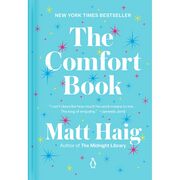
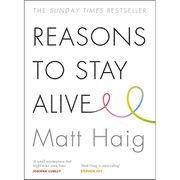
References
- ↑ "The Gift of Fear : Survival Signals That Protect Us From Violence". Library of Congress Catalog. Library of Congress. Retrieved 12 November 2025.
- ↑ "The gift of fear: survival signals that protect us from violence (First edition)". WorldCat. OCLC. Retrieved 12 November 2025.
- ↑ 3.0 3.1 "Gift of Fear: Survival Signals That Protect Us From Violence". Office of Justice Programs. U.S. Department of Justice. Retrieved 12 November 2025.
- ↑ 4.0 4.1 4.2 4.3 Avins, Mimi (3 March 2002). "Driven by the Fear Factor". Los Angeles Times. Retrieved 12 November 2025.
- ↑ 5.0 5.1 5.2 5.3 "Don't Ignore Your Fear". Newsweek. 20 July 1997. Retrieved 12 November 2025.
- ↑ "The gift of fear : survival signals that protect us from violence". Colorado Mountain College Library Catalog. Colorado Mountain College. Retrieved 12 November 2025.
- ↑ "Gavin de Becker and Associates: Home". GDBA. Gavin de Becker & Associates. Retrieved 12 November 2025.
- ↑ 8.0 8.1 "THE GIFT OF FEAR: Survival Signals that Protect Us from Violence". Kirkus Reviews. Kirkus Media. 9 June 1997. Retrieved 12 November 2025.
- ↑ 9.0 9.1 9.2 "The Gift of Fear". Hachette Book Group. Hachette Book Group. 30 March 2021. Retrieved 12 November 2025.
- ↑ "Public Education". Gavin de Becker and Associates. Gavin de Becker & Associates. Retrieved 12 November 2025.
- ↑ 11.0 11.1 Linkins, Julie R. (June 2002). "The Gift of Fear (Book)" (PDF). FBI Law Enforcement Bulletin. Federal Bureau of Investigation. Retrieved 12 November 2025.
- ↑ 12.0 12.1 Corrigan, Hope (5 October 2022). "Rereading 'The Gift of Fear' in the age of mass shootings". The Washington Post. Retrieved 12 November 2025.
- ↑ "'Gift of Fear' — a primer on impending violence". Deseret News. 7 September 1997. Retrieved 12 November 2025.
- ↑ "Judicial Independence: Threats and Security Considerations". The National Judicial College. The National Judicial College. 17 March 2016. Retrieved 12 November 2025.