
Maybe You Should Talk to Someone: Difference between revisions
No edit summary |
No edit summary |
||
| (18 intermediate revisions by the same user not shown) | |||
| Line 1: | Line 1: | ||
{{Insert top}}{{Insert quote panel |
{{Insert top}}{{Insert quote panel |
||
| {{ |
| {{The Let Them Theory/random quote}} |
||
}} |
}} |
||
{{Section separator}} |
|||
== Introduction == |
== Introduction == |
||
{{Infobox book |
{{Infobox book |
||
| name = |
| name = The Let Them Theory |
||
| image = |
| image = the-let-them-theory-mel-robbins.jpg |
||
| full_title = '' |
| full_title = ''The Let Them Theory: A Life-Changing Tool That Millions of People Can't Stop Talking About'' |
||
| author = |
| author = Mel Robbins; Sawyer Robbins |
||
| country = United States |
| country = United States |
||
| language = English |
| language = English |
||
| subject = |
| subject = Personal development; Self-help; Interpersonal relations |
||
| genre = Nonfiction; |
| genre = Nonfiction; Self-help |
||
| publisher = |
| publisher = Hay House LLC |
||
| pub_date = |
| pub_date = 24 December 2024 |
||
| media_type = Print (hardcover |
| media_type = Print (hardcover); e-book; audiobook |
||
| pages = |
| pages = 336 |
||
| isbn = 978-1- |
| isbn = 978-1-4019-7136-6 |
||
| goodreads_rating = |
| goodreads_rating = 4.08 |
||
| goodreads_rating_date = |
| goodreads_rating_date = 6 November 2025 |
||
| website = [https:// |
| website = [https://www.melrobbins.com/book/the-let-them-theory/ melrobbins.com] |
||
}} |
}} |
||
📘 ''''' |
📘 '''''{{Tooltip|The Let Them Theory}}''''' is a nonfiction self-help book by {{Tooltip|Mel Robbins}}, co-authored with {{Tooltip|Sawyer Robbins}} and published by {{Tooltip|Hay House}} on 24 December 2024 (336 pp.).<ref name="PRH2024">{{cite web |title=The Let Them Theory |url=https://www.penguinrandomhouse.com/books/743134/the-let-them-theory-by-mel-robbins/ |website=Penguin Random House |publisher=Penguin Random House |access-date=27 October 2025}}</ref><ref name="OCLC1474363307">{{cite web |title=The let them theory : a life-changing tool that millions of people can’t stop talking about |url=https://search.worldcat.org/title/The-let-them-theory-%3A-a-life-changing-tool-that-millions-of-people-can%27t-stop-talking-about/oclc/1474363307 |website=WorldCat |publisher=OCLC |access-date=27 October 2025}}</ref> It sets out a two-step “{{Tooltip|let them}}/{{Tooltip|let me}}” method that asks readers to stop trying to manage other people’s opinions or behavior and to redirect effort toward their own choices and responses.<ref name="PWReview2024">{{cite news |title=The Let Them Theory: A Life-Changing Tool That Millions of People Can’t Stop Talking About |url=https://www.publishersweekly.com/9781401971366 |work=Publishers Weekly |date=9 December 2024 |access-date=27 October 2025}}</ref> Robbins writes in down-to-earth, anecdotal prose.<ref name="PWReview2024" /> The publisher bills it as a step-by-step guide that applies the idea across eight key areas and mixes stories, research, and expert interviews.<ref name="PRH2024" /> In late July 2025, ''{{Tooltip|Publishers Weekly}}'' reported the title again at #1 on its hardcover nonfiction bestseller list.<ref name="PWBest2025Jul28">{{cite news |title=This Week’s Bestsellers: July 28, 2025 |url=https://www.publishersweekly.com/pw/by-topic/industry-news/bookselling/article/98293-this-week-s-bestsellers-july-28-2025.html |work=Publishers Weekly |date=25 July 2025 |access-date=27 October 2025}}</ref> By 30 August 2025, ''{{Tooltip|The Washington Post}}'', quoting {{Tooltip|Hay House}}’s chief executive, reported 3.6 million English-language copies sold and described a wave of reader tattoos and community book clubs around the mantra.<ref name="WP2025Aug30">{{cite news |last=Nguyen |first=Sophia |title=‘The Let Them Theory’ started as self-help. Now it’s a whole lifestyle. |url=https://www.washingtonpost.com/books/2025/08/30/let-them-theory-mel-robbins/ |work=The Washington Post |date=30 August 2025 |access-date=27 October 2025}}</ref> |
||
{{Section separator}} |
|||
== Chapter summary == |
|||
== Part I – The Let Them Theory == |
|||
''This outline follows the Thorndike Press large-print edition (2019), reproducing the book’s four-part table of contents.''<ref name="SchlowTOC2019">{{cite web |title=Table of Contents: Maybe you should talk to someone [LP] |url=https://search.schlowlibrary.org/Record/446417/TOC |website=Schlow Centre Region Library |publisher=Schlow Centre Region Library |access-date=27 October 2025}}</ref> ''First U.S. hardcover edition: Houghton Mifflin Harcourt (2 April 2019), xi, 415 pages, ISBN 978-1-328-66205-7.''<ref name="OCLC1054264731">{{cite web |title=Maybe you should talk to someone : a therapist, her therapist, and our lives revealed |url=https://search.worldcat.org/title/Maybe-you-should-talk-to-someone-%3A-a-therapist-her-therapist-and-our-lives-revealed/oclc/1054264731 |website=WorldCat.org |publisher=OCLC |access-date=27 October 2025}}</ref><ref name="Harper2019">{{cite web |title=Maybe You Should Talk to Someone |url=https://www.harpercollins.com/products/maybe-you-should-talk-to-someone-lori-gottlieb |website=HarperCollins |publisher=HarperCollins |date=2 April 2019 |access-date=27 October 2025}}</ref> |
|||
=== Chapter 1 – Stop Wasting Your Life on Things You Can’t Control === |
|||
=== I === |
|||
🛑 Prom day at the Robbins house goes sideways: her son Oakley dismisses the corsage she ordered, there is no dinner reservation, and the teens want a casual pre-prom taco bar. The urge to manage everything spikes until her daughter cuts through the chaos with a blunt reminder—“it’s their prom”—and the tension drops as the evening unfolds without interference. The vignette shows how choreographing other people’s choices breeds anxiety, resentment, and unnecessary project management around someone else’s milestone. Stepping aside does not fix weather or tuxedos; it changes where attention and energy go. Redirect time and mental bandwidth from monitoring others to decisions within reach—what to say, do, or let pass. The pivot reduces rumination and restores agency by separating externals (others’ preferences, timing, opinions) from internals (your actions and boundaries). In the book’s language, “{{Tooltip|Let Them}}” is the release valve that interrupts control-seeking and creates space for better choices. |
|||
=== Chapter 2 – Getting Started: {{Tooltip|Let Them}} + {{Tooltip|Let Me}} === |
|||
🙄 '''1 – Idiots.''' The chapter opens with a chart note for a new patient—“John”—who wants help “managing the idiots,” and then cuts to a second session in a Los Angeles office with a forty‑year‑old man rapid‑firing complaints. He calls out a dental hygienist who asks too many questions, a coworker who only asks questions, a driver who stops at a yellow light, and the Apple Genius Bar technician who can’t fix his laptop. His previous therapist lasted three sessions and was “nice, but an idiot,” a detail that sets the tone as he tests boundaries. Gottlieb tries to move him from monologue to dialogue, noticing a dazzling smile and the way he watches the clock on her bookshelf—process clues more than content. A training memory surfaces—there is “something likable in everyone”—even as she remembers John paying cash the prior week so his wife won’t know he’s in therapy. He’d half‑joked she could be his “mistress,” then “my hooker,” signaling defenses that keep closeness at bay. As John rants about his wife Margo, Gottlieb weighs whether to chase details or slow the tempo and name what’s happening in the room. The setting’s objects—the clock, the couch, the chart—become tools to reflect the interaction back to him. The core idea is that contempt and global labeling (“idiots”) are defenses against grief and fear; the therapeutic mechanism is to shift attention from the story’s content to the relational process so contact, not complaint, leads. In this frame, anger softens once the function of the anger is understood, opening space for empathy and truth. ''Have compassion, have compassion, have compassion.'' |
|||
🔀 On her couch, she scrolls a carousel of photos and sees friends from her small suburban town on a weekend trip without her. The gut-punch lands, doom-scrolling begins, and Chris asks why she cares so much; the storylines still bloom. Instead of texting for reassurance or triangulating through mutuals, she repeats “{{Tooltip|Let Them}}” again and again—dozens of times—until the knot in her chest loosens. The precise insight follows: their weekend had nothing to do with her, and trying to “fix” it only amplified hurt. The chapter formalizes the two-step method: “{{Tooltip|Let Them}}” releases the illusion of control over other people; “{{Tooltip|Let Me}}” turns immediately to the next wise action. Practically, that might mean closing the app, planning your own connection, or choosing calm; the emphasis is agency, not approval. The sequence pairs {{Tooltip|cognitive defusion}} (naming and letting thoughts pass) with values-aligned behavior, moving attention from social comparison to deliberate choice—the book’s central theme. ''It was about releasing myself from the control I never had in the first place.'' |
|||
{{Section separator}} |
|||
👑 '''2 – If the Queen had balls.''' A new chart note turns the lens on the narrator herself: a mid‑forties patient arrives after an unexpected breakup, hoping for “just a few sessions” to steady herself. The chapter defines a clinician’s starting point—the “presenting problem”—and shows how tidy explanations can conceal deeper themes. In the quiet of her apartment and the fluorescent light of a medical building hallway, she rehearses counterfactuals and scripts she wishes would make the pain vanish. Colleagues are off‑limits as therapists, so she combs for names and finds one: Wendell, whose office she is about to enter. The title’s line—“If the queen had balls, she’d be king”—becomes shorthand for the futility of “if‑only” stories that fight reality. Concrete rituals (calling for an appointment, filling out forms, sitting on an unfamiliar couch) mark the first step from rumination to help‑seeking. The prose toggles between clinic and interior monologue to show how certainty collapses after loss. The core idea is that people come in with a tidy complaint, but the work is to discover the problem beneath the problem; the mechanism is moving from counterfactual thinking to radical acceptance so emotions can be felt rather than litigated. Therapy begins not when the facts are perfect but when the story can be revised in contact with another person. |
|||
== Part II – You and the Let Them Theory == |
|||
=== Chapter 3 – Shocker: Life Is Stressful === |
|||
👣 '''3 – The space of a step.''' The vignette starts at social gatherings—barbecues, dinner parties, a Fourth of July event—where saying “I’m a psychotherapist” cues jokes, awkwardness, or a quick retreat. People ask, “Are you going to analyze me?” and “What kind of people do you see?,” and a curious couple even drifts into an argument on the spot, illustrating the fear of being seen. The morning after her breakup, the narrator does ordinary tasks with unusual effort: wake her son, make breakfast, pack a lunch, drive to school. She rides an elevator to her office and measures the day in the profession’s unit of time: one fifty‑minute session. The chapter lays out a humane form of behavioral activation—doing the next right thing—even when the heart feels stalled. It links public discomfort with therapy to private reluctance to begin it, and shows how motion precedes motivation. Specifics (holiday, hallway hellos, a door unlocking, a calendar of back‑to‑back appointments) anchor small wins that accumulate. The core idea is that change is granular and visible only in hindsight; the mechanism is to shrink time horizons and stack doable actions until feeling follows doing. In that way, the book’s larger theme—finding meaning while still in pain—takes shape one motion at a time. ''A lot can happen in the space of a step.'' |
|||
🌩️ A weekday morning slips off the rails: calendar pings stack up, the group chat floods with last-minute changes, and the commute stalls while emails pile up. The first instinct is to tighten your grip—text reminders, push, persuade—until every moving part depends on you. Instead, do a quick triage at the kitchen counter: list the stressors, mark those driven by other people, and write “{{Tooltip|Let Them}}” beside each item you do not control. What remains—packing the bag, setting a departure time, choosing a calmer reply—falls under “{{Tooltip|Let Me}}.” As attention returns to the next steps, the body settles, rumination fades, and the day regains a workable rhythm. Stress does not disappear; energy wasted on managing others becomes fuel for actions you can actually take. Accepting that life is stressful turns the mantra into a boundary tool that separates externals from internals in real time. Shifting attention and behavior toward controllable moves restores agency and reduces overthinking and over-managing. |
|||
=== Chapter 4 – {{Tooltip|Let Them}} Stress You Out === |
|||
🧠 '''4 – The smart one or the hot one.''' The chapter opens in Hollywood after college with a trial day at a large talent agency, where, from an adjacent room, she overhears a boss ask a mentor whether to hire “the smart one or the hot one.” An hour later she’s offered the job and learns, implicitly, which label she wears; the twinge stays even as she answers phones and tracks deals. The office language—coverage, clients, assistants, lunches—offers a crash course in how reductive frames move decisions. Inside that world she’s drawn less to power than to stories: how people pitch them, shape them, and get trapped by them. The memory becomes a lens on clinical work: patients also arrive with loglines about who they are, and those loglines can be as confining as a casting note. She notices how binaries (smart/hot, victim/villain, weak/strong) flatten complexity and keep people stuck in roles they didn’t audition for. The scene’s specifics—a corridor, a closed door, a stray sentence—show how identity can be assigned in seconds and rehearsed for years. The core idea is that narratives organize experience but can calcify; the mechanism in therapy is to listen not just to the story but for flexibility with the story, widening the script so new choices become possible. When labels loosen, people can step out of caricature and into a fuller self. |
|||
🧘 In a team chat, a colleague broadcasts urgency for instant weekend work while a manager drops a curt update that changes the plan. The urge to jump in, soothe everyone, and rescue the timeline surges. A counterintuitive practice helps: allow their urgency to be theirs—“{{Tooltip|Let Them}}”—and watch what it pulls up in you without obeying it. Then set a concrete boundary: acknowledge the update, state when you will review, and return to the task that already matters. Treat the spike in your chest as data, not a command; use a short pause to choose tone, timing, and scope. The ripple effect is measurable: fewer reactive messages, cleaner commitments, less resentment from over-functioning. Stress becomes a training signal for boundary-setting rather than a trigger for people-pleasing. Other people’s stress can inform your priorities without dictating them, and repeated small boundaries shift rescuing into intentional response. |
|||
=== Chapter 5 – {{Tooltip|Let Them}} Think Bad Thoughts about You === |
|||
🛌 '''5 – Namast'ay in bed.''' |
|||
🗣️ After declining a standing invite, a friend leaves your message on “seen,” and a neighbor’s offhand comment suggests you have become distant. Mind-reading fills the gaps with worst-case stories: they are offended, they are judging, they are done. {{Tooltip|Let them}} have their thoughts, because you cannot proofread other people’s minds. Write one clear sentence about what matters now—family time, health, focused work—and act on it, whether that means showing up where you promised or staying offline without apology. Resist over-explaining; send a simple, truthful note only if it serves the relationship, not your anxiety. You will notice more time, steadier mood, and fewer circular conversations aimed at approval. The point is alignment, not indifference. Releasing control over others’ opinions frees attention for values-matched choices and keeps behavior anchored to what you can decide next. |
|||
=== Chapter 6 – How to Love Difficult People === |
|||
🧭 '''6 – Finding Wendell.''' |
|||
🤝 A long weekend with extended family turns tense when a relative critiques your choices at dinner and tries to pull you into old arguments. The first impulse is to correct, defend, and smooth things over so everyone stays comfortable. Slow that reflex with a simple drill: notice what belongs to them—opinions, timing, tone—and what belongs to you—availability, topics you will discuss, when you leave. Two short lists make the split visible: under “{{Tooltip|Let Them}},” write what you will no longer manage; under “{{Tooltip|Let Me}},” write the next action you will take. That might mean changing seats, ending a circular conversation with one neutral sentence, or stepping outside to reset before rejoining. Caring remains; rescuing stops. The atmosphere shifts because you stop over-functioning, not because the other person changes. Loving difficult people looks like warmth plus limits rather than appeasement. When you stop trying to control someone else’s reactions, you recover agency for your choices, and relationships simplify because expectations are honest. |
|||
=== Chapter 7 – When Grown-Ups Throw Tantrums === |
|||
🌅 '''7 – The beginning of knowing.''' |
|||
👶 In a crowded checkout line, a raised voice, fast breath, and pointed finger turn a minor delay into a scene. Matching the volume or explaining harder feeds the spiral, so use a different sequence. First, recognize the telltales of an adult meltdown—tight jaw, rapid speech, absolute language—and label it as their reaction. Second, remove heat: lower your voice, slow your pace, give space, and decide whether the moment is safe or needs an exit. If the relationship matters, a short boundary—“I’ll talk when this is calmer”—beats debating facts that will not land mid-surge. If it does not, disengage without flinching, because managing another adult’s nervous system is not your job. After the spike passes, choose whether any follow-up is needed and on what terms. Treating the outburst as data rather than a command prevents you from absorbing it. Letting others feel their feelings while you choose your response breaks rescuing and keeps behavior aligned with what you can control. |
|||
=== Chapter 8 – The Right Decision Often Feels Wrong === |
|||
🌹 '''8 – Rosie.''' |
|||
🧭 A job offer, a breakup, or a move lines up on paper, yet your stomach drops the moment you commit. Bodies flag change as threat even when minds see fit, and other people’s reactions magnify doubt. Skip the reassurance poll and anchor to a small, dated next step—a calendar entry to send notice, a one-line email, a packed box—and expect discomfort to ride along. Expect pushback, too: a coworker warns you are making a mistake, a friend projects fear, a relative negotiates you back to familiar. “{{Tooltip|Let Them}}” names those reactions as theirs; “{{Tooltip|Let Me}}” keeps you moving one concrete action at a time. A brief check—sleep, food, a walk—helps separate nerves from true red flags, and if a fact changes, adjust without shame. The sense of wrongness often marks identity shedding, not bad judgment; clarity grows after steps, not before them. Letting others hold their opinions while you honor your plan converts second-guessing into momentum and keeps choices tethered to values rather than noise. |
|||
=== Chapter 9 – Yes, Life Isn’t Fair === |
|||
📸 '''9 – Snapshots of ourselves.''' |
|||
⚖️ You invest months in a project, a last-minute reorg moves the decision elsewhere, and someone with more access walks away with the credit. Courtroom thinking follows—replaying slights and drafting speeches nobody will hear. Reset at the kitchen table or in a parked car: name what is unfair without sugarcoating it, then mark every part you do not control. Next, choose one small response inside your lane—document your work, ask for a clarifying meeting, or redirect effort to an opportunity that does not depend on gatekeepers. When the mind returns to scorekeeping, repeat the split: “{{Tooltip|Let Them}}” handle their choices and politics; “{{Tooltip|Let Me}}” keep momentum by choosing the next concrete move. The point is not to excuse imbalance but to stop spending your best energy on outcomes owned by other people. Over time, focus tightens, resentment drops, and a track record builds. Seen this way, unfairness becomes information for strategy, not a lifelong grievance. Accepting what sits outside your reach creates room to act where your actions matter. |
|||
=== Chapter 10 – How to Make Comparison Your Teacher === |
|||
⏳ '''10 – The future is also the present.''' |
|||
🧑🏫 The scroll starts with a friend’s promotion photo, a runner’s pace screenshot, a colleague’s launch day; in minutes, curiosity turns to smallness. Rather than unfollow everything that stings, turn envy into a syllabus. Pause on one example and study it like a film coach: what behaviors, skills, and choices produced that result; what parts are replicable; what timeline fits you. Write one practice to try this week—schedule a weekly portfolio review, send two pitches, or learn a tool the person mastered—and put it on your calendar. If the comparison highlights a path you do not want, say so and let it go; admiration does not equal assignment. Use someone else’s highlight as a breadcrumb trail, not a verdict on your worth. The sting fades when feelings become actions that match your season and constraints. Letting them have their path frees you to build your own, step by step. Turning judgment into inquiry and scrolling into practice keeps focus on what you can choose next. |
|||
{{Section separator}} |
|||
🎬 '''11 – Goodbye, Hollywood.''' |
|||
== Part III – Your Relationships and the Let Them Theory == |
|||
=== Chapter 11 – The Truth No One Told You about Adult Friendship === |
|||
🇳🇱 '''12 – Welcome to Holland.''' |
|||
🧑🤝🧑 Graduation caps are barely down before the group chat thins out and friends spread to new cities, jobs, and routines—the chapter calls this season “the {{Tooltip|Great Scattering}}.” It lays out three conditions that make adult friendship work: proximity (how often you are physically near each other), timing (whether life stages align), and energy (the felt click when you are together). It also points to {{Tooltip|University of Kansas}} research showing that friendships deepen with time invested—roughly dozens of hours for casual bonds and over 200 hours for close ones—so drift often reflects logistics, not betrayal. With that lens, being left off a weekend trip stings less; it is usually a pillar shifting, not a verdict on your worth. Run a simple audit: list your circle, label which pillar is missing, and decide whether to flex or release. If proximity is the issue, choose recurring contact points; if timing is off, keep a light touch and let seasons change; if energy fades, wish them well and stop forcing it. “{{Tooltip|Let Them}}” reframes the story you tell yourself when friendships change, and “{{Tooltip|Let Me}}” turns attention to invitations, routines, and places where connection can grow. Friendship is built by conditions you can influence, not by managing other people; shifting focus from others’ choices to repeatable behaviors converts comparison into practice and keeps relationships honest. |
|||
=== Chapter 12 – Why Some Friendships Naturally Fade === |
|||
🧒 '''13 – How kids deal with grief.''' |
|||
🍂 A once-daily text thread goes quiet, plans stall, and you notice a dinner photo without you; the reflex is to assume rejection. Treat fading as a normal signal that one or more pillars—proximity, timing, energy—has shifted after a move, new caregiving load, or changed schedule. A “rubber band” metaphor helps: give the relationship slack instead of yanking, and it can snap back when conditions line up again. Pause the chase, drop the detective work, and set a gentle cadence—reply when you can, send a periodic “thinking of you,” and stop over-explaining. If there is a repair to make, do it clearly once; if not, release the expectation that the friendship should look like last year’s version. Avoid resentment-building “maintenance texts” that mask a demand for proof; they corrode goodwill faster than silence. Grieve what is changing and notice where effort feels mutual. Endings and ebbs are not personal failures; they are data to right-size investment. Letting others be where they are while you choose how to show up turns fading from drama into boundary and reduces rumination while restoring agency. |
|||
=== Chapter 13 – How to Create the Best Friendships of Your Life === |
|||
🎞️ '''14 – Harold and Maude.''' |
|||
🌟 The chapter pivots from diagnosis to a build plan that favors action over wishing: go first, in small, scheduled ways. Use a three-step loop—identify two people you enjoy, make one specific ask (day, time, place), and put the next touchpoint on the calendar before you part—then repeat weekly for six weeks. Because proximity and time do most of the work, choose “sticky” contexts: a standing coffee at 8 a.m. near your gym, a Thursday walk after work, or a monthly potluck with a rotating host. Accelerate comfort with micro-rituals (a question of the week, a quick check-in round) and low-lift hospitality (store-bought snacks, simple routes, predictable start/stop). Count awkwardness as the price of admission; if someone declines, {{Tooltip|Let them}} and keep inviting elsewhere. Track what energizes you and prune what does not so the hours you invest compound with people who reciprocate. Ask for help directly and receive it without apology; letting others contribute strengthens the bond. Extraordinary friendships are the by-product of ordinary, repeated behaviors; pairing “{{Tooltip|Let Them}}” (release others’ pace and preferences) with “{{Tooltip|Let Me}}” (own consistent, values-aligned outreach) builds a circle that fits the life you are living. |
|||
=== Chapter 14 – People Only Change When They Feel Like It === |
|||
🥪 '''15 – Hold the mayo.''' |
|||
🔄 A familiar loop: you send reminders, make plans for someone else’s habit change, and carry the frustration when nothing sticks. A phone call becomes a lecture, a text thread becomes checking up, and the calendar fills with their deadlines instead of your own. The pattern is expensive—time, energy, and goodwill drain—while the other person’s motivation stays flat. Reset by describing the line once, offering specific help tied to their effort, and then stopping the outcome management you do not control. If they take a step, meet it; if not, let the situation play out. Shift focus to “{{Tooltip|Let Me}}” tasks that improve your day regardless of their choice—sleep, movement, work blocks, or plans with people who follow through. The space reveals whether the change is theirs to make now or not at all. Trade pressure for clarity: people change on their own timeline, and your leverage is a boundary, not an argument. Allowing others to own their decisions keeps your behavior aligned with what you can choose next. |
|||
=== Chapter 15 – Unlock the Power of Your Influence === |
|||
🎁 '''16 – The whole package.''' |
|||
🎯 Influence here does not mean pushing harder; it means becoming easy to follow. A small team misses handoffs and a parent–teen standoff at home stalls—both stuck in nag–defend loops. The fix is the same: model the behavior you want, make clean requests with a clear by-when, and remove the hidden rescues that let others opt out. Short, specific cues replace speeches—what, when, where, and how you will follow up—while appreciation closes the loop when someone meets the mark. Audit the environment so the right action is the easiest one: shared checklists, visible calendars, recurring slots that make showing up default. When someone declines, {{Tooltip|Let them}} and move forward with those who engage; commitment becomes unmistakable. Over time, consistency and clarity compound into trust, and people begin to match the tone and pace you set. This is social learning, not control; people respond to what you repeatedly do, not what you repeatedly demand. {{Tooltip|Let them}} choose while you model and invite, and influence emerges from boundaries and example. |
|||
=== Chapter 16 – The More You Rescue, The More They Sink === |
|||
🗂️ '''17 – Without memory or desire.''' |
|||
🛟 A classic money-mess cycle: a loved one overspends, hides the bill, panics, and you quietly pay it to “keep the peace.” Relief is brief; the pattern returns because the consequence never lands where it belongs. Start by naming the line—what you will and will not do—and separating support from rescue. Support looks like sitting with them while they call the bank, sharing a budget template, or offering a ride to a meeting they scheduled; rescue is doing those steps for them, funding the shortfall, and absorbing the stress. Expect pushback when the safety net disappears and stay calm, repeating the boundary without a lecture. If a crisis is urgent, help in ways that leave responsibility intact, then step back so learning can happen. As the cycle breaks, you gain time, steadier mood, and a cleaner relationship because roles are no longer blurred. Letting people meet the results of their choices is not abandonment; it is how accountability—and real change—takes root. Shifting from rescuing to responsible support releases control of others and invests energy where your actions matter. |
|||
=== Chapter 17 – How to Provide Support the Right Way === |
|||
=== II === |
|||
🤗 A late-night call lands at your kitchen table: a friend just lost a job, and the reflex is to fix everything before sunrise. Instead of launching advice, send one text with options—“advice, action, or company?”—and wait for a one-letter reply. When “C” comes back, set a 20-minute FaceTime, listen, and resist the urge to network on their behalf without permission. After the call, propose one small action they can own—a résumé draft by noon tomorrow—and offer a specific assist if they choose it, like sharing a template or proofreading at 5 p.m. Put the check-in on a calendar, not in a string of anxious messages, and let silence mean they are handling it, not that you should step in. If they pivot to “A” or “B,” follow their lead; if not, keep your boundary and your evening. Keep help visible but lightweight: a ride, a link, a meal drop-off they scheduled. Care remains while control drops, and the friendship feels lighter because roles are clear. Real support honors another person’s agency and protects your time; pairing “{{Tooltip|Let Them}}” with a menu of specific offers prevents rescuing and channels effort into actions the other person wants and will own. |
|||
=== Chapter 18 – {{Tooltip|Let Them}} Show You Who They Are === |
|||
⏰ '''18 – Fridays at four.''' |
|||
🕵️ The first month of dating offers a clean lab: text threads, plans, and small frictions reveal patterns long before big promises do. Watch the basics—do they confirm times, show up when they say, repair after a missed cue, speak respectfully to service staff, and make room for your priorities without nudging you off your calendar. Instead of coaching, log what happens over two ordinary weeks, noting green flags (keeps commitments, follows through) and yellow ones (chronic “busy,” shifting stories, jokes at others’ expense). Ask one clear question—“What does next month look like for you?”—and let the answer stand without translating it into what you hope it means. When actions diverge from words, adjust your availability rather than your standards. If behavior improves with no prompting, match the effort; if it stalls, step back and stop auditioning. The exercise applies beyond romance: colleagues, friends, and family show who they are in how they handle time, conflict, and accountability. Observe, do not persuade; let patterns surface and decide from evidence. “{{Tooltip|Let Them}}” exposes reality faster, and “{{Tooltip|Let Me}}” turns that reality into a choice you can execute without drama. |
|||
=== Chapter 19 – How to Take Your Relationship to the Next Level === |
|||
💭 '''19 – What we dream of.''' |
|||
💍 A Sunday sit-down replaces guessing games: two cups of coffee, phones face down, and a short agenda—what “next level” means in concrete terms. Name specifics like exclusivity, keys, shared calendars, money basics, or a plan for holidays, and ask for their version in equal detail. Then propose one near-term experiment, such as a 30-day schedule with two date nights, a weekly logistics check-in, and a simple budget for a weekend trip. Watch results, not enthusiasm: do plans stick, do repairs happen within 24 hours, do both of you carry the load you agreed to carry. If yes, scale gently; if no, stop renegotiating the same promise and decide what you will do next. Keep requests short, time-bound, and measurable, and let a “no” be a “no” rather than a puzzle to solve. Pressure drops because progress or mismatch becomes obvious without speeches. Moving up becomes the product of repeated, shared actions rather than declarations. In short, “{{Tooltip|Let Them}}” creates a clean read on readiness, and “{{Tooltip|Let Me}}” aligns your next step—deepen, pause, or exit—with the evidence in front of you. |
|||
=== Chapter 20 – How Every Ending Is a Beautiful Beginning === |
|||
🗝️ '''20 – The first confession.''' |
|||
🌅 The chapter closes with a practical unwinding: a box for keeps, a box for donate, a last walk through empty rooms, and keys on a counter—whether the ending is a job, a relationship, or a season. Mark what is finished without rewriting history, then clear the residue that keeps you tethered: unsubscribes, returned items, canceled renewals, and a brief note if one is owed. A small ritual—deleting a thread, a final drive past the old route, a photo of the packed trunk—signals your brain that the chapter is over. Set one first step for the new phase on a dated calendar entry: a class registration, a call, a walk in the new neighborhood at 7 a.m. tomorrow. When grief or second-guessing spikes, let it move through without returning to bargains that kept you stuck. Let other people keep their version of the story while you keep yours simple and factual. Endings stop consuming you when treated as decisions and transitions, not verdicts on worth. “{{Tooltip|Let Them}}” releases what is not yours to hold, and “{{Tooltip|Let Me}}” begins again with one small, deliberate move you can control. |
|||
''—Note: The above summary follows the {{Tooltip|Hay House}} hardcover edition (United States, 24 December 2024, ISBN 978-1-4019-7136-6).''<ref name="PRH2024" /> ''For publication date and page count corroboration, see the UK edition metadata.''<ref name="HayUK2024">{{cite web |title=The Let Them Theory |url=https://www.hayhouse.co.uk/the-let-them-theory-uk |website=Hay House UK |publisher=Hay House UK Ltd |access-date=27 October 2025}}</ref> |
|||
🛡️ '''21 – Therapy with a condom on.''' |
|||
{{Section separator}} |
|||
🚓 '''22 – Jail.''' |
|||
== Background & reception == |
|||
🖋️ '''Author & writing'''. {{Tooltip|Mel Robbins}} is a lawyer-turned motivational speaker, author, and podcaster.<ref name="GuardianProfile2025">{{cite news |last=Saner |first=Emine |title=‘Women have more power than they think’: self-help superstar Mel Robbins on success, survival and silencing her critics |url=https://www.theguardian.com/lifeandstyle/2025/jul/19/mel-robbins-self-help-superstar-success-survival-silencing-critics |work=The Guardian |date=19 July 2025 |access-date=27 October 2025}}</ref> The book is co-authored with {{Tooltip|Sawyer Robbins}}.<ref name="PRH2024" /> Robbins introduced “{{Tooltip|Let Them}}” to her audience via social media and podcasting in 2023 before expanding it into a book.<ref name="GuardianWellness2025">{{cite news |last=Aggeler |first=Madeleine |title=‘Let them’: can this viral self-help mantra change your life? |url=https://www.theguardian.com/wellness/2025/jan/29/let-them-mel-robbins-self-help-mantra |work=The Guardian |date=29 January 2025 |access-date=27 October 2025}}</ref> Reviewers describe the framework as a “{{Tooltip|let them}}/{{Tooltip|let me}}” method that clarifies what is and is not under one’s control, delivered in direct, down-to-earth prose.<ref name="PWReview2024" /> {{Tooltip|Kirkus Reviews}} called it “a truly helpful treatise on seeing others as they are, and letting that be.”<ref name="Kirkus2024">{{cite web |title=THE LET THEM THEORY |url=https://www.kirkusreviews.com/book-reviews/mel-robbins/the-let-them-theory/ |website=Kirkus Reviews |date=23 December 2024 |access-date=27 October 2025}}</ref> An {{Tooltip|OCLC WorldCat}} record corroborates first-edition details (Hay House, 2024; 336 pages; ISBN 978-1-4019-7136-6).<ref name="OCLC1474363307" /> |
|||
🛒 '''23 – Trader Joe's.''' |
|||
👨👩👧👦 '''24 – Hello, family.''' |
|||
📦 '''25 – The UPS guy.''' |
|||
😳 '''26 – Embarrassing public encounters.''' |
|||
👵 '''27 – Wendell's mother.''' |
|||
⚠️ '''28 – Addicted.''' |
|||
🚫 '''29 – The rapist.''' |
|||
🕒 '''30 – On the clock.''' |
|||
=== III === |
|||
♀️ '''31 – My wandering uterus.''' |
|||
🚑 '''32 – Emergency session.''' |
|||
🔄 '''33 – Karma.''' |
|||
🧘 '''34 – Just be.''' |
|||
❓ '''35 – Would you rather?.''' |
|||
🏎️ '''36 – The speed of want.''' |
|||
🕯️ '''37 – Ultimate concerns.''' |
|||
🧱 '''38 – Legoland.''' |
|||
🦋 '''39 – How humans change.''' |
|||
👨 '''40 – Fathers.''' |
|||
⚖️ '''41 – Integrity versus despair.''' |
|||
🕊️ '''42 – My neshama.''' |
|||
🤐 '''43 – What not to say to a dying person.''' |
|||
📧 '''44 – Boyfriend's email.''' |
|||
🧔 '''45 – Wendell's beard.''' |
|||
=== IV === |
|||
🐝 '''46 – The bees.''' |
|||
🇰🇪 '''47 – Kenya.''' |
|||
🩺 '''48 – Psychological immune system.''' |
|||
💬 '''49 – Counseling versus therapy.''' |
|||
🦖 '''50 – Deathzilla.''' |
|||
💌 '''51 – Dear Myron.''' |
|||
👩👧 '''52 – Mothers.''' |
|||
🤗 '''53 – The hug.''' |
|||
💥 '''54 – Don't blow it.''' |
|||
🎉 '''55 – It's my party and you'll cry if you want to.''' |
|||
🙂 '''56 – Happiness is sometimes.''' |
|||
🛋️ '''57 – Wendell.''' |
|||
⏸️ '''58 – A pause in the conversation.''' |
|||
== Background & reception == |
|||
📈 '''Commercial reception'''. ''{{Tooltip|Publishers Weekly}}'' reported the title at #1 on its hardcover nonfiction list for the week of 28 July 2025.<ref name="PWBest2025Jul28" /> By 30 August 2025, ''{{Tooltip|The Washington Post}}'' reported 3.6 million English-language copies sold, citing {{Tooltip|Hay House}} CEO {{Tooltip|Reid Tracy}}.<ref name="WP2025Aug30" /> The publisher and distributor also market the book as a #1 ''{{Tooltip|New York Times}}'' and ''{{Tooltip|Sunday Times}}'' bestseller and claim “over 7 million copies sold.”<ref name="PRH2024" /> |
|||
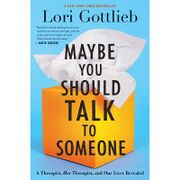
🖋️ '''Author & writing'''. Gottlieb is a practicing psychotherapist who also writes the Atlantic’s “Dear Therapist” column and co-hosts the iHeart “Dear Therapists” podcast. <ref name="AtlanticDearTherapist">{{cite web |title=Dear Therapist |url=https://www.theatlantic.com/projects/dear-therapist/ |website=The Atlantic |publisher=The Atlantic |access-date=27 October 2025}}</ref><ref name="iHeartPodcast">{{cite web |title=Dear Therapists with Lori Gottlieb and Guy Winch |url=https://www.iheart.com/podcast/1119-dear-therapists-with-lori-68853191/ |website=iHeartRadio |publisher=iHeartMedia |access-date=27 October 2025}}</ref> The memoir grew out of her own course of therapy after a breakup and interweaves that experience with patients’ stories to explain core ideas of talk therapy in plain language. <ref name="KCUR2019">{{cite news |title=A Psychotherapist Goes To Therapy — And Gets A Taste Of Her Own Medicine |url=https://www.kcur.org/2019-04-01/a-psychotherapist-goes-to-therapy-and-gets-a-taste-of-her-own-medicine |work=KCUR (NPR) |date=1 April 2019 |access-date=27 October 2025}}</ref><ref name="PWReview2019" /> Structurally, she alternates her sessions with “Wendell” and case narratives; the U.S. hardcover is arranged in four parts and 58 concise chapters. <ref name="PWReview2019" /><ref name="SchlowTOC2019" /><ref name="WaPo2019Sheehan" /> In media interviews she emphasized permissions and the altering or combining of identifying details when portraying patients. <ref name="EW2019">{{cite news |last=Canfield |first=David |title=Lori Gottlieb’s ''Maybe You Should Talk to Someone'' will change the way you look at therapy — and life |url=https://ew.com/author-interviews/2019/04/04/lori-gottlieb-maybe-you-should-talk-to-someone/ |work=Entertainment Weekly |date=4 April 2019 |access-date=27 October 2025}}</ref> Critics frequently describe the voice as smooth, candid, and humane. <ref name="Kirkus2019" /> |
|||
👍 '''Praise'''. ''{{Tooltip|Publishers Weekly}}'' called it an “upbeat guide” and noted Robbins’s “down-to-earth prose,” adding that fans “will want to snap this up.”<ref name="PWReview2024" /> ''{{Tooltip|Kirkus Reviews}}'' praised it as “a truly helpful treatise.”<ref name="Kirkus2024" /> ''{{Tooltip|The Guardian}}'' profile highlighted {{Tooltip|Oprah Winfrey}}’s endorsement on her podcast, calling it “one of the best self-help books I’ve ever read.”<ref name="GuardianProfile2025" /> |
|||
📈 '''Commercial reception'''. The book debuted at #9 on Publishers Weekly’s Hardcover Frontlist Nonfiction (week of 15 April 2019), selling 9,055 print units, and remained a presence on later lists (e.g., #13 on 8 July 2019). <ref name="PWBestsellers20190415" /><ref name="PWBestsellers20190708">{{cite web |title=Hardcover Frontlist Nonfiction — July 8, 2019 |url=https://www.publishersweekly.com/pw/nielsen/HardcoverNonfiction/20190708.html |website=Publishers Weekly |publisher=PWxyz, LLC |date=8 July 2019 |access-date=27 October 2025}}</ref> It also appeared on the American Booksellers Association’s Indie Bestseller lists in April 2019. <ref name="Indie20190417">{{cite web |title=Indie Bestseller Lists: April 17, 2019 |url=https://www.bookweb.org/indie-bestseller-lists/april-17-2019 |website=American Booksellers Association |publisher=ABA |date=17 April 2019 |access-date=27 October 2025}}</ref> TIME named it one of the “100 Must-Read Books of 2019.” <ref name="Time2019" /> According to the author’s official bio, it has sold over three million copies and been translated into more than 30 languages. <ref name="AuthorBio" /> |
|||
👎 '''Criticism'''. ''{{Tooltip|The Washington Post}}'' noted that the book’s central insight is not new, tracing antecedents in {{Tooltip|Buddhism}}, {{Tooltip|Stoicism}}, and the {{Tooltip|Serenity Prayer}}, and it observed a back-half grab bag of life tips.<ref name="WP2025Aug30" /> A ''Guardian'' column recorded critiques that the concept repackages {{Tooltip|stoicism}} and highlighted allegations that Robbins did not credit a 2022 viral poem by Cassie B. Phillips; Robbins rejects the plagiarism claim.<ref name="GuardianWellness2025" /> ''{{Tooltip|Vox}}'' argued the advice can be overly simple and bound up in a self-optimization culture that risks fueling inadequacy.<ref name="Vox2025">{{cite news |title=Is the viral “let them” theory really that simple? |url=https://www.vox.com/culture/402666/mel-robbins-let-them-theory-self-help-guru-tik-tok |work=Vox |date=10 March 2025 |access-date=27 October 2025}}</ref> |
|||
🌍 '''Impact & adoption'''. ''{{Tooltip|The Washington Post}}'' described a grassroots movement around the book, including dedicated book clubs and a {{Tooltip|Facebook}} group with thousands of “Let Them” tattoo posts.<ref name="WP2025Aug30" /> ''{{Tooltip|The Guardian}}'' reported sold-out theatre events on Robbins’s tour and a largely female audience responding to its boundary-setting message.<ref name="GuardianProfile2025" /> The ''Guardian'' wellness column noted therapists who use the mantra with clients to simplify boundary work, and it recorded the title’s mainstream media uptake.<ref name="GuardianWellness2025" /> |
|||
👎 '''Criticism'''. In the Washington Post, Susan Sheehan faulted passages for “psychobabble,” jargon, and overuse of expletives while acknowledging the book’s narrative pull. <ref name="WaPo2019Sheehan" /> Kirkus’s description of the reading experience as “entertainingly voyeuristic” underscored concerns some readers may have about boundaries when real clinical material is rendered for a general audience. <ref name="Kirkus2019" /> Entertainment Weekly raised ethical questions about confidentiality; Gottlieb responded that patient permissions were obtained and details altered or combined—an exchange that reflects ongoing debates about therapist memoirs. <ref name="EW2019" /> |
|||
{{Section separator}} |
|||
🌍 '''Impact & adoption'''. ABC put a scripted TV drama based on the book into development with Eva Longoria and Maggie Friedman, a project the author continues to note on her site. <ref name="Deadline2018">{{cite news |last=Andreeva |first=Nellie |title=ABC Nabs 'Maybe You Should Talk To Someone' Therapist Drama From Maggie Friedman & Eva Longoria Based On Book |url=https://deadline.com/2018/10/abc-maybe-you-should-talk-to-someone-drama-maggie-friedman-eva-longoria-lori-gottlieb-1202493162/ |work=Deadline |date=31 October 2018 |access-date=27 October 2025}}</ref><ref name="AuthorSiteTV">{{cite web |title=Maybe You Should Talk to Someone |url=https://lorigottlieb.com/books/maybe-you-should-talk-to-someone/ |website=LoriGottlieb.com |publisher=Lori Gottlieb |access-date=27 October 2025}}</ref> Public-facing programs and media have featured the book and its themes, including a PBS “A Word on Words” segment (2020) and library author-talk events. <ref name="PBS2020">{{cite web |title=Maybe You Should Talk to Someone |url=https://www.pbs.org/video/maybe-you-should-talk-to-someone-lori-gottlieb-npt-92ofcg/ |website=NPT / PBS |publisher=Nashville Public Television |date=10 June 2020 |access-date=27 October 2025}}</ref><ref name="SalinasLibrary2024">{{cite web |title=Maybe You Should Talk To Someone: Examining the Truths and Fictions We Tell Ourselves — Author Talk with Lori Gottlieb |url=https://libraryc.org/salinaspubliclibrary/58216 |website=Salinas Public Library |publisher=City of Salinas |date=22 October 2024 |access-date=27 October 2025}}</ref> |
|||
== See also == |
|||
{{Youtube thumbnail | x8wgk9hBrQU | Mel Robbins on ''The Let Them Theory'' (TODAY interview)}} |
|||
== Related content & more == |
|||
{{Youtube thumbnail | dAsjfm9I-CU | ''The Let Them Theory'' — Book summary}} |
|||
=== YouTube videos === |
|||
{{Youtube thumbnail | -RHPPm_orOc | Summary of ''Maybe You Should Talk to Someone'' (8 min)}} |
|||
{{Youtube thumbnail | tIlGCRTgmg8 | Book summary of ''Maybe You Should Talk to Someone'' (13 min)}} |
|||
=== CapSach articles === |
|||
{{Breath/thumbnail}} |
|||
{{Outlive/thumbnail}} |
|||
{{Come as You Are/thumbnail}} |
|||
{{How to Stop Worrying and Start Living/thumbnail}} |
{{How to Stop Worrying and Start Living/thumbnail}} |
||
{{Emotional Intelligence/thumbnail}} |
{{Emotional Intelligence/thumbnail}} |
||
{{ |
{{Rising Strong/thumbnail}} |
||
{{Braving the Wilderness/thumbnail}} |
|||
{{Maybe You Should Talk to Someone/thumbnail}} |
|||
{{book summaries/thumbnail}} |
|||
{{Insert before References}} |
{{Insert before References}} |
||
{{Section separator}} |
|||
== References == |
== References == |
||
{{reflist}} |
{{reflist}} |
||
[[Category:Self-improvement books]] |
|||
[[Category:CS articles]] |
|||
{{Insert bottom}} |
{{Insert bottom}} |
||
Latest revision as of 22:06, 2 February 2026
"And just like that, the knot in my chest began to loosen. The pressure to “fix” the situation faded, and I realized something that changed everything: Their weekend away had nothing to do with me."
— Mel Robbins, The Let Them Theory (2024)
Introduction
| The Let Them Theory | |
|---|---|
 | |
| Full title | The Let Them Theory: A Life-Changing Tool That Millions of People Can't Stop Talking About |
| Author | Mel Robbins; Sawyer Robbins |
| Language | English |
| Subject | Personal development; Self-help; Interpersonal relations |
| Genre | Nonfiction; Self-help |
| Publisher | Hay House LLC |
Publication date | 24 December 2024 |
| Publication place | United States |
| Media type | Print (hardcover); e-book; audiobook |
| Pages | 336 |
| ISBN | 978-1-4019-7136-6 |
| Goodreads rating | 4.1/5 (as of 6 November 2025) |
| Website | melrobbins.com |
📘 The Let Them Theory is a nonfiction self-help book by Mel Robbins, co-authored with Sawyer Robbins and published by Hay House on 24 December 2024 (336 pp.).[1][2] It sets out a two-step “let them/let me” method that asks readers to stop trying to manage other people’s opinions or behavior and to redirect effort toward their own choices and responses.[3] Robbins writes in down-to-earth, anecdotal prose.[3] The publisher bills it as a step-by-step guide that applies the idea across eight key areas and mixes stories, research, and expert interviews.[1] In late July 2025, Publishers Weekly reported the title again at #1 on its hardcover nonfiction bestseller list.[4] By 30 August 2025, The Washington Post, quoting Hay House’s chief executive, reported 3.6 million English-language copies sold and described a wave of reader tattoos and community book clubs around the mantra.[5]
Part I – The Let Them Theory
Chapter 1 – Stop Wasting Your Life on Things You Can’t Control
🛑 Prom day at the Robbins house goes sideways: her son Oakley dismisses the corsage she ordered, there is no dinner reservation, and the teens want a casual pre-prom taco bar. The urge to manage everything spikes until her daughter cuts through the chaos with a blunt reminder—“it’s their prom”—and the tension drops as the evening unfolds without interference. The vignette shows how choreographing other people’s choices breeds anxiety, resentment, and unnecessary project management around someone else’s milestone. Stepping aside does not fix weather or tuxedos; it changes where attention and energy go. Redirect time and mental bandwidth from monitoring others to decisions within reach—what to say, do, or let pass. The pivot reduces rumination and restores agency by separating externals (others’ preferences, timing, opinions) from internals (your actions and boundaries). In the book’s language, “Let Them” is the release valve that interrupts control-seeking and creates space for better choices.
Chapter 2 – Getting Started: Let Them + Let Me
🔀 On her couch, she scrolls a carousel of photos and sees friends from her small suburban town on a weekend trip without her. The gut-punch lands, doom-scrolling begins, and Chris asks why she cares so much; the storylines still bloom. Instead of texting for reassurance or triangulating through mutuals, she repeats “Let Them” again and again—dozens of times—until the knot in her chest loosens. The precise insight follows: their weekend had nothing to do with her, and trying to “fix” it only amplified hurt. The chapter formalizes the two-step method: “Let Them” releases the illusion of control over other people; “Let Me” turns immediately to the next wise action. Practically, that might mean closing the app, planning your own connection, or choosing calm; the emphasis is agency, not approval. The sequence pairs cognitive defusion (naming and letting thoughts pass) with values-aligned behavior, moving attention from social comparison to deliberate choice—the book’s central theme. It was about releasing myself from the control I never had in the first place.
Part II – You and the Let Them Theory
Chapter 3 – Shocker: Life Is Stressful
🌩️ A weekday morning slips off the rails: calendar pings stack up, the group chat floods with last-minute changes, and the commute stalls while emails pile up. The first instinct is to tighten your grip—text reminders, push, persuade—until every moving part depends on you. Instead, do a quick triage at the kitchen counter: list the stressors, mark those driven by other people, and write “Let Them” beside each item you do not control. What remains—packing the bag, setting a departure time, choosing a calmer reply—falls under “Let Me.” As attention returns to the next steps, the body settles, rumination fades, and the day regains a workable rhythm. Stress does not disappear; energy wasted on managing others becomes fuel for actions you can actually take. Accepting that life is stressful turns the mantra into a boundary tool that separates externals from internals in real time. Shifting attention and behavior toward controllable moves restores agency and reduces overthinking and over-managing.
Chapter 4 – Let Them Stress You Out
🧘 In a team chat, a colleague broadcasts urgency for instant weekend work while a manager drops a curt update that changes the plan. The urge to jump in, soothe everyone, and rescue the timeline surges. A counterintuitive practice helps: allow their urgency to be theirs—“Let Them”—and watch what it pulls up in you without obeying it. Then set a concrete boundary: acknowledge the update, state when you will review, and return to the task that already matters. Treat the spike in your chest as data, not a command; use a short pause to choose tone, timing, and scope. The ripple effect is measurable: fewer reactive messages, cleaner commitments, less resentment from over-functioning. Stress becomes a training signal for boundary-setting rather than a trigger for people-pleasing. Other people’s stress can inform your priorities without dictating them, and repeated small boundaries shift rescuing into intentional response.
Chapter 5 – Let Them Think Bad Thoughts about You
🗣️ After declining a standing invite, a friend leaves your message on “seen,” and a neighbor’s offhand comment suggests you have become distant. Mind-reading fills the gaps with worst-case stories: they are offended, they are judging, they are done. Let them have their thoughts, because you cannot proofread other people’s minds. Write one clear sentence about what matters now—family time, health, focused work—and act on it, whether that means showing up where you promised or staying offline without apology. Resist over-explaining; send a simple, truthful note only if it serves the relationship, not your anxiety. You will notice more time, steadier mood, and fewer circular conversations aimed at approval. The point is alignment, not indifference. Releasing control over others’ opinions frees attention for values-matched choices and keeps behavior anchored to what you can decide next.
Chapter 6 – How to Love Difficult People
🤝 A long weekend with extended family turns tense when a relative critiques your choices at dinner and tries to pull you into old arguments. The first impulse is to correct, defend, and smooth things over so everyone stays comfortable. Slow that reflex with a simple drill: notice what belongs to them—opinions, timing, tone—and what belongs to you—availability, topics you will discuss, when you leave. Two short lists make the split visible: under “Let Them,” write what you will no longer manage; under “Let Me,” write the next action you will take. That might mean changing seats, ending a circular conversation with one neutral sentence, or stepping outside to reset before rejoining. Caring remains; rescuing stops. The atmosphere shifts because you stop over-functioning, not because the other person changes. Loving difficult people looks like warmth plus limits rather than appeasement. When you stop trying to control someone else’s reactions, you recover agency for your choices, and relationships simplify because expectations are honest.
Chapter 7 – When Grown-Ups Throw Tantrums
👶 In a crowded checkout line, a raised voice, fast breath, and pointed finger turn a minor delay into a scene. Matching the volume or explaining harder feeds the spiral, so use a different sequence. First, recognize the telltales of an adult meltdown—tight jaw, rapid speech, absolute language—and label it as their reaction. Second, remove heat: lower your voice, slow your pace, give space, and decide whether the moment is safe or needs an exit. If the relationship matters, a short boundary—“I’ll talk when this is calmer”—beats debating facts that will not land mid-surge. If it does not, disengage without flinching, because managing another adult’s nervous system is not your job. After the spike passes, choose whether any follow-up is needed and on what terms. Treating the outburst as data rather than a command prevents you from absorbing it. Letting others feel their feelings while you choose your response breaks rescuing and keeps behavior aligned with what you can control.
Chapter 8 – The Right Decision Often Feels Wrong
🧭 A job offer, a breakup, or a move lines up on paper, yet your stomach drops the moment you commit. Bodies flag change as threat even when minds see fit, and other people’s reactions magnify doubt. Skip the reassurance poll and anchor to a small, dated next step—a calendar entry to send notice, a one-line email, a packed box—and expect discomfort to ride along. Expect pushback, too: a coworker warns you are making a mistake, a friend projects fear, a relative negotiates you back to familiar. “Let Them” names those reactions as theirs; “Let Me” keeps you moving one concrete action at a time. A brief check—sleep, food, a walk—helps separate nerves from true red flags, and if a fact changes, adjust without shame. The sense of wrongness often marks identity shedding, not bad judgment; clarity grows after steps, not before them. Letting others hold their opinions while you honor your plan converts second-guessing into momentum and keeps choices tethered to values rather than noise.
Chapter 9 – Yes, Life Isn’t Fair
⚖️ You invest months in a project, a last-minute reorg moves the decision elsewhere, and someone with more access walks away with the credit. Courtroom thinking follows—replaying slights and drafting speeches nobody will hear. Reset at the kitchen table or in a parked car: name what is unfair without sugarcoating it, then mark every part you do not control. Next, choose one small response inside your lane—document your work, ask for a clarifying meeting, or redirect effort to an opportunity that does not depend on gatekeepers. When the mind returns to scorekeeping, repeat the split: “Let Them” handle their choices and politics; “Let Me” keep momentum by choosing the next concrete move. The point is not to excuse imbalance but to stop spending your best energy on outcomes owned by other people. Over time, focus tightens, resentment drops, and a track record builds. Seen this way, unfairness becomes information for strategy, not a lifelong grievance. Accepting what sits outside your reach creates room to act where your actions matter.
Chapter 10 – How to Make Comparison Your Teacher
🧑🏫 The scroll starts with a friend’s promotion photo, a runner’s pace screenshot, a colleague’s launch day; in minutes, curiosity turns to smallness. Rather than unfollow everything that stings, turn envy into a syllabus. Pause on one example and study it like a film coach: what behaviors, skills, and choices produced that result; what parts are replicable; what timeline fits you. Write one practice to try this week—schedule a weekly portfolio review, send two pitches, or learn a tool the person mastered—and put it on your calendar. If the comparison highlights a path you do not want, say so and let it go; admiration does not equal assignment. Use someone else’s highlight as a breadcrumb trail, not a verdict on your worth. The sting fades when feelings become actions that match your season and constraints. Letting them have their path frees you to build your own, step by step. Turning judgment into inquiry and scrolling into practice keeps focus on what you can choose next.
Part III – Your Relationships and the Let Them Theory
Chapter 11 – The Truth No One Told You about Adult Friendship
🧑🤝🧑 Graduation caps are barely down before the group chat thins out and friends spread to new cities, jobs, and routines—the chapter calls this season “the Great Scattering.” It lays out three conditions that make adult friendship work: proximity (how often you are physically near each other), timing (whether life stages align), and energy (the felt click when you are together). It also points to University of Kansas research showing that friendships deepen with time invested—roughly dozens of hours for casual bonds and over 200 hours for close ones—so drift often reflects logistics, not betrayal. With that lens, being left off a weekend trip stings less; it is usually a pillar shifting, not a verdict on your worth. Run a simple audit: list your circle, label which pillar is missing, and decide whether to flex or release. If proximity is the issue, choose recurring contact points; if timing is off, keep a light touch and let seasons change; if energy fades, wish them well and stop forcing it. “Let Them” reframes the story you tell yourself when friendships change, and “Let Me” turns attention to invitations, routines, and places where connection can grow. Friendship is built by conditions you can influence, not by managing other people; shifting focus from others’ choices to repeatable behaviors converts comparison into practice and keeps relationships honest.
Chapter 12 – Why Some Friendships Naturally Fade
🍂 A once-daily text thread goes quiet, plans stall, and you notice a dinner photo without you; the reflex is to assume rejection. Treat fading as a normal signal that one or more pillars—proximity, timing, energy—has shifted after a move, new caregiving load, or changed schedule. A “rubber band” metaphor helps: give the relationship slack instead of yanking, and it can snap back when conditions line up again. Pause the chase, drop the detective work, and set a gentle cadence—reply when you can, send a periodic “thinking of you,” and stop over-explaining. If there is a repair to make, do it clearly once; if not, release the expectation that the friendship should look like last year’s version. Avoid resentment-building “maintenance texts” that mask a demand for proof; they corrode goodwill faster than silence. Grieve what is changing and notice where effort feels mutual. Endings and ebbs are not personal failures; they are data to right-size investment. Letting others be where they are while you choose how to show up turns fading from drama into boundary and reduces rumination while restoring agency.
Chapter 13 – How to Create the Best Friendships of Your Life
🌟 The chapter pivots from diagnosis to a build plan that favors action over wishing: go first, in small, scheduled ways. Use a three-step loop—identify two people you enjoy, make one specific ask (day, time, place), and put the next touchpoint on the calendar before you part—then repeat weekly for six weeks. Because proximity and time do most of the work, choose “sticky” contexts: a standing coffee at 8 a.m. near your gym, a Thursday walk after work, or a monthly potluck with a rotating host. Accelerate comfort with micro-rituals (a question of the week, a quick check-in round) and low-lift hospitality (store-bought snacks, simple routes, predictable start/stop). Count awkwardness as the price of admission; if someone declines, Let them and keep inviting elsewhere. Track what energizes you and prune what does not so the hours you invest compound with people who reciprocate. Ask for help directly and receive it without apology; letting others contribute strengthens the bond. Extraordinary friendships are the by-product of ordinary, repeated behaviors; pairing “Let Them” (release others’ pace and preferences) with “Let Me” (own consistent, values-aligned outreach) builds a circle that fits the life you are living.
Chapter 14 – People Only Change When They Feel Like It
🔄 A familiar loop: you send reminders, make plans for someone else’s habit change, and carry the frustration when nothing sticks. A phone call becomes a lecture, a text thread becomes checking up, and the calendar fills with their deadlines instead of your own. The pattern is expensive—time, energy, and goodwill drain—while the other person’s motivation stays flat. Reset by describing the line once, offering specific help tied to their effort, and then stopping the outcome management you do not control. If they take a step, meet it; if not, let the situation play out. Shift focus to “Let Me” tasks that improve your day regardless of their choice—sleep, movement, work blocks, or plans with people who follow through. The space reveals whether the change is theirs to make now or not at all. Trade pressure for clarity: people change on their own timeline, and your leverage is a boundary, not an argument. Allowing others to own their decisions keeps your behavior aligned with what you can choose next.
Chapter 15 – Unlock the Power of Your Influence
🎯 Influence here does not mean pushing harder; it means becoming easy to follow. A small team misses handoffs and a parent–teen standoff at home stalls—both stuck in nag–defend loops. The fix is the same: model the behavior you want, make clean requests with a clear by-when, and remove the hidden rescues that let others opt out. Short, specific cues replace speeches—what, when, where, and how you will follow up—while appreciation closes the loop when someone meets the mark. Audit the environment so the right action is the easiest one: shared checklists, visible calendars, recurring slots that make showing up default. When someone declines, Let them and move forward with those who engage; commitment becomes unmistakable. Over time, consistency and clarity compound into trust, and people begin to match the tone and pace you set. This is social learning, not control; people respond to what you repeatedly do, not what you repeatedly demand. Let them choose while you model and invite, and influence emerges from boundaries and example.
Chapter 16 – The More You Rescue, The More They Sink
🛟 A classic money-mess cycle: a loved one overspends, hides the bill, panics, and you quietly pay it to “keep the peace.” Relief is brief; the pattern returns because the consequence never lands where it belongs. Start by naming the line—what you will and will not do—and separating support from rescue. Support looks like sitting with them while they call the bank, sharing a budget template, or offering a ride to a meeting they scheduled; rescue is doing those steps for them, funding the shortfall, and absorbing the stress. Expect pushback when the safety net disappears and stay calm, repeating the boundary without a lecture. If a crisis is urgent, help in ways that leave responsibility intact, then step back so learning can happen. As the cycle breaks, you gain time, steadier mood, and a cleaner relationship because roles are no longer blurred. Letting people meet the results of their choices is not abandonment; it is how accountability—and real change—takes root. Shifting from rescuing to responsible support releases control of others and invests energy where your actions matter.
Chapter 17 – How to Provide Support the Right Way
🤗 A late-night call lands at your kitchen table: a friend just lost a job, and the reflex is to fix everything before sunrise. Instead of launching advice, send one text with options—“advice, action, or company?”—and wait for a one-letter reply. When “C” comes back, set a 20-minute FaceTime, listen, and resist the urge to network on their behalf without permission. After the call, propose one small action they can own—a résumé draft by noon tomorrow—and offer a specific assist if they choose it, like sharing a template or proofreading at 5 p.m. Put the check-in on a calendar, not in a string of anxious messages, and let silence mean they are handling it, not that you should step in. If they pivot to “A” or “B,” follow their lead; if not, keep your boundary and your evening. Keep help visible but lightweight: a ride, a link, a meal drop-off they scheduled. Care remains while control drops, and the friendship feels lighter because roles are clear. Real support honors another person’s agency and protects your time; pairing “Let Them” with a menu of specific offers prevents rescuing and channels effort into actions the other person wants and will own.
Chapter 18 – Let Them Show You Who They Are
🕵️ The first month of dating offers a clean lab: text threads, plans, and small frictions reveal patterns long before big promises do. Watch the basics—do they confirm times, show up when they say, repair after a missed cue, speak respectfully to service staff, and make room for your priorities without nudging you off your calendar. Instead of coaching, log what happens over two ordinary weeks, noting green flags (keeps commitments, follows through) and yellow ones (chronic “busy,” shifting stories, jokes at others’ expense). Ask one clear question—“What does next month look like for you?”—and let the answer stand without translating it into what you hope it means. When actions diverge from words, adjust your availability rather than your standards. If behavior improves with no prompting, match the effort; if it stalls, step back and stop auditioning. The exercise applies beyond romance: colleagues, friends, and family show who they are in how they handle time, conflict, and accountability. Observe, do not persuade; let patterns surface and decide from evidence. “Let Them” exposes reality faster, and “Let Me” turns that reality into a choice you can execute without drama.
Chapter 19 – How to Take Your Relationship to the Next Level
💍 A Sunday sit-down replaces guessing games: two cups of coffee, phones face down, and a short agenda—what “next level” means in concrete terms. Name specifics like exclusivity, keys, shared calendars, money basics, or a plan for holidays, and ask for their version in equal detail. Then propose one near-term experiment, such as a 30-day schedule with two date nights, a weekly logistics check-in, and a simple budget for a weekend trip. Watch results, not enthusiasm: do plans stick, do repairs happen within 24 hours, do both of you carry the load you agreed to carry. If yes, scale gently; if no, stop renegotiating the same promise and decide what you will do next. Keep requests short, time-bound, and measurable, and let a “no” be a “no” rather than a puzzle to solve. Pressure drops because progress or mismatch becomes obvious without speeches. Moving up becomes the product of repeated, shared actions rather than declarations. In short, “Let Them” creates a clean read on readiness, and “Let Me” aligns your next step—deepen, pause, or exit—with the evidence in front of you.
Chapter 20 – How Every Ending Is a Beautiful Beginning
🌅 The chapter closes with a practical unwinding: a box for keeps, a box for donate, a last walk through empty rooms, and keys on a counter—whether the ending is a job, a relationship, or a season. Mark what is finished without rewriting history, then clear the residue that keeps you tethered: unsubscribes, returned items, canceled renewals, and a brief note if one is owed. A small ritual—deleting a thread, a final drive past the old route, a photo of the packed trunk—signals your brain that the chapter is over. Set one first step for the new phase on a dated calendar entry: a class registration, a call, a walk in the new neighborhood at 7 a.m. tomorrow. When grief or second-guessing spikes, let it move through without returning to bargains that kept you stuck. Let other people keep their version of the story while you keep yours simple and factual. Endings stop consuming you when treated as decisions and transitions, not verdicts on worth. “Let Them” releases what is not yours to hold, and “Let Me” begins again with one small, deliberate move you can control.
—Note: The above summary follows the Hay House hardcover edition (United States, 24 December 2024, ISBN 978-1-4019-7136-6).[1] For publication date and page count corroboration, see the UK edition metadata.[6]
Background & reception
🖋️ Author & writing. Mel Robbins is a lawyer-turned motivational speaker, author, and podcaster.[7] The book is co-authored with Sawyer Robbins.[1] Robbins introduced “Let Them” to her audience via social media and podcasting in 2023 before expanding it into a book.[8] Reviewers describe the framework as a “let them/let me” method that clarifies what is and is not under one’s control, delivered in direct, down-to-earth prose.[3] Kirkus Reviews called it “a truly helpful treatise on seeing others as they are, and letting that be.”[9] An OCLC WorldCat record corroborates first-edition details (Hay House, 2024; 336 pages; ISBN 978-1-4019-7136-6).[2]
📈 Commercial reception. Publishers Weekly reported the title at #1 on its hardcover nonfiction list for the week of 28 July 2025.[4] By 30 August 2025, The Washington Post reported 3.6 million English-language copies sold, citing Hay House CEO Reid Tracy.[5] The publisher and distributor also market the book as a #1 New York Times and Sunday Times bestseller and claim “over 7 million copies sold.”[1]
👍 Praise. Publishers Weekly called it an “upbeat guide” and noted Robbins’s “down-to-earth prose,” adding that fans “will want to snap this up.”[3] Kirkus Reviews praised it as “a truly helpful treatise.”[9] The Guardian profile highlighted Oprah Winfrey’s endorsement on her podcast, calling it “one of the best self-help books I’ve ever read.”[7]
👎 Criticism. The Washington Post noted that the book’s central insight is not new, tracing antecedents in Buddhism, Stoicism, and the Serenity Prayer, and it observed a back-half grab bag of life tips.[5] A Guardian column recorded critiques that the concept repackages stoicism and highlighted allegations that Robbins did not credit a 2022 viral poem by Cassie B. Phillips; Robbins rejects the plagiarism claim.[8] Vox argued the advice can be overly simple and bound up in a self-optimization culture that risks fueling inadequacy.[10]
🌍 Impact & adoption. The Washington Post described a grassroots movement around the book, including dedicated book clubs and a Facebook group with thousands of “Let Them” tattoo posts.[5] The Guardian reported sold-out theatre events on Robbins’s tour and a largely female audience responding to its boundary-setting message.[7] The Guardian wellness column noted therapists who use the mantra with clients to simplify boundary work, and it recorded the title’s mainstream media uptake.[8]
See also
References
- ↑ 1.0 1.1 1.2 1.3 1.4 "The Let Them Theory". Penguin Random House. Penguin Random House. Retrieved 27 October 2025.
- ↑ 2.0 2.1 "The let them theory : a life-changing tool that millions of people can't stop talking about". WorldCat. OCLC. Retrieved 27 October 2025.
- ↑ 3.0 3.1 3.2 3.3 "The Let Them Theory: A Life-Changing Tool That Millions of People Can't Stop Talking About". Publishers Weekly. 9 December 2024. Retrieved 27 October 2025.
- ↑ 4.0 4.1 "This Week's Bestsellers: July 28, 2025". Publishers Weekly. 25 July 2025. Retrieved 27 October 2025.
- ↑ 5.0 5.1 5.2 5.3 Nguyen, Sophia (30 August 2025). "'The Let Them Theory' started as self-help. Now it's a whole lifestyle". The Washington Post. Retrieved 27 October 2025.
- ↑ "The Let Them Theory". Hay House UK. Hay House UK Ltd. Retrieved 27 October 2025.
- ↑ 7.0 7.1 7.2 Saner, Emine (19 July 2025). "'Women have more power than they think': self-help superstar Mel Robbins on success, survival and silencing her critics". The Guardian. Retrieved 27 October 2025.
- ↑ 8.0 8.1 8.2 Aggeler, Madeleine (29 January 2025). "'Let them': can this viral self-help mantra change your life?". The Guardian. Retrieved 27 October 2025.
- ↑ 9.0 9.1 "THE LET THEM THEORY". Kirkus Reviews. 23 December 2024. Retrieved 27 October 2025.
- ↑ "Is the viral "let them" theory really that simple?". Vox. 10 March 2025. Retrieved 27 October 2025.